Happy New Year! I hope you had a lovely time over Christmas!
Following on from Part 1 of my festive Favourites that I posted on Christmas Day, I’m now going to talk about a free exhibition I was given a tour of, give an update on events at home, and trawl through the many things I’ve been watching and listening to. And while the tour was courtesy of a PR invite, there have been no other incentives for anything to appear here, and all opinions are my own regardless.
So let’s dive into this bumper post, with an accompanying video that also features everything I mentioned in Part 1. I hope you enjoy!
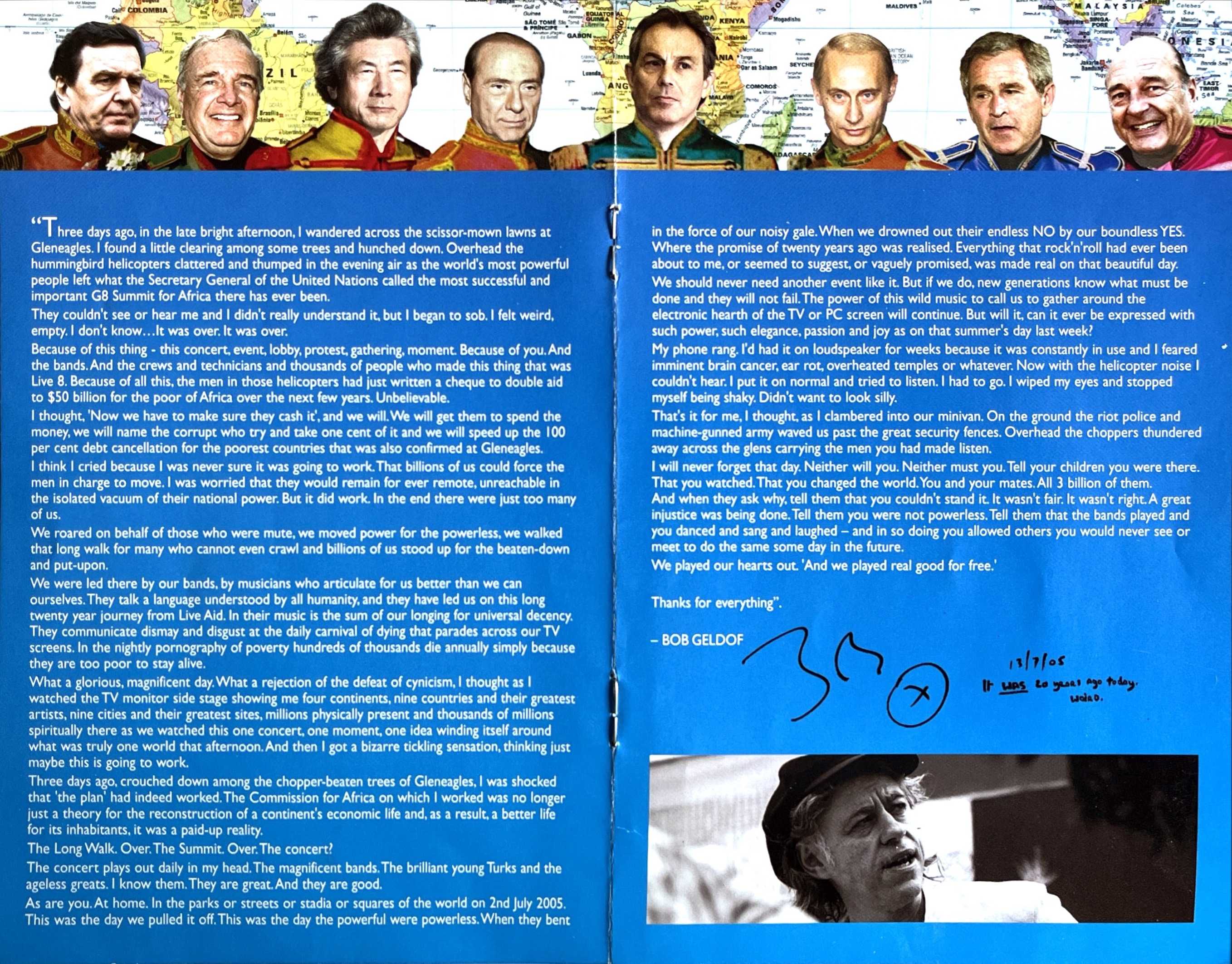
In any case, the concerts featured a huge variety of artists, and whilst I felt it was much more of a mixed bag compared to Live Aid, it was still a lot of fun. I had also been far too young to see Live Aid when it took place, which meant I only got to watch it when it was released on DVD many years later, whereas I was able to see Live 8 when it was actually broadcast, as I recalled in my journal at the time.
I also bought the DVD box set of Live 8 that was released in November that year, presenting a wide selection of tracks, and that’s what I’m going to review in this post, along with some online videos that fill in the gaps. I’ve also created Youtube playlists for the UK concerts and the rest of the world, with lots of performances from the official Live 8 Youtube channel (where they’ve uploaded quite a few that were omitted from the DVD set), plus a selection of other clips. I’ve linked to a lot of the videos during this post as well.
So without further ado, and as a sequel to my earlier Live Aid post, I hope you enjoy this run-through of the different concerts and my thoughts on some of the performances!
Updated in July 2025 to include the 40th anniversary broadcasts.
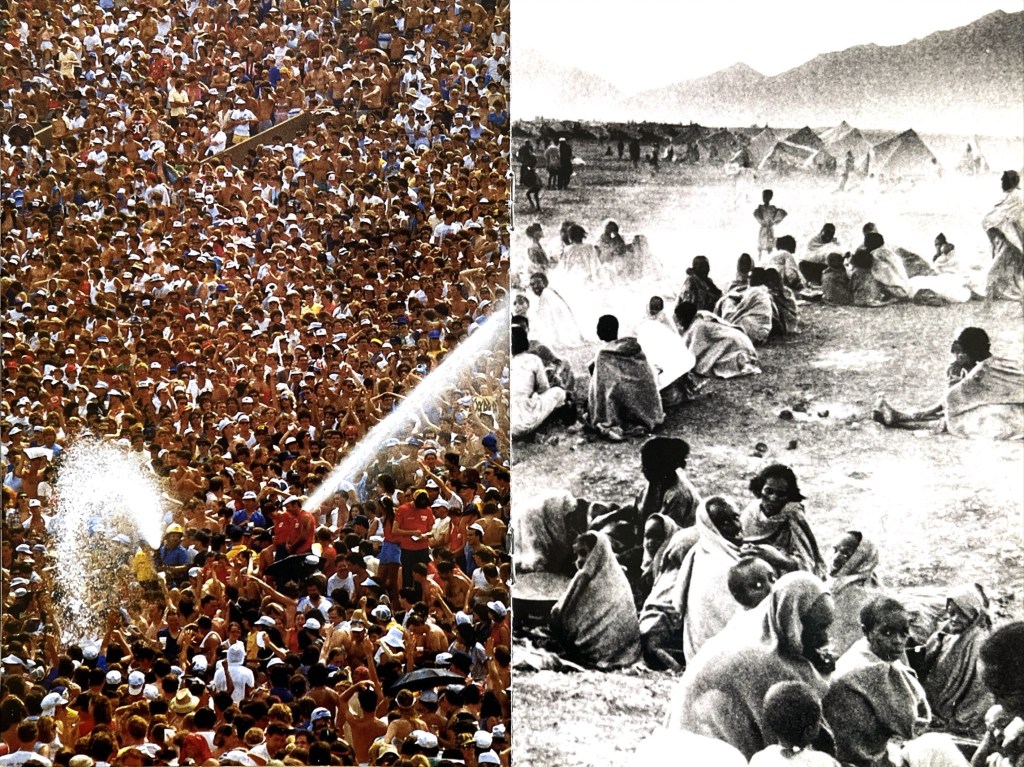
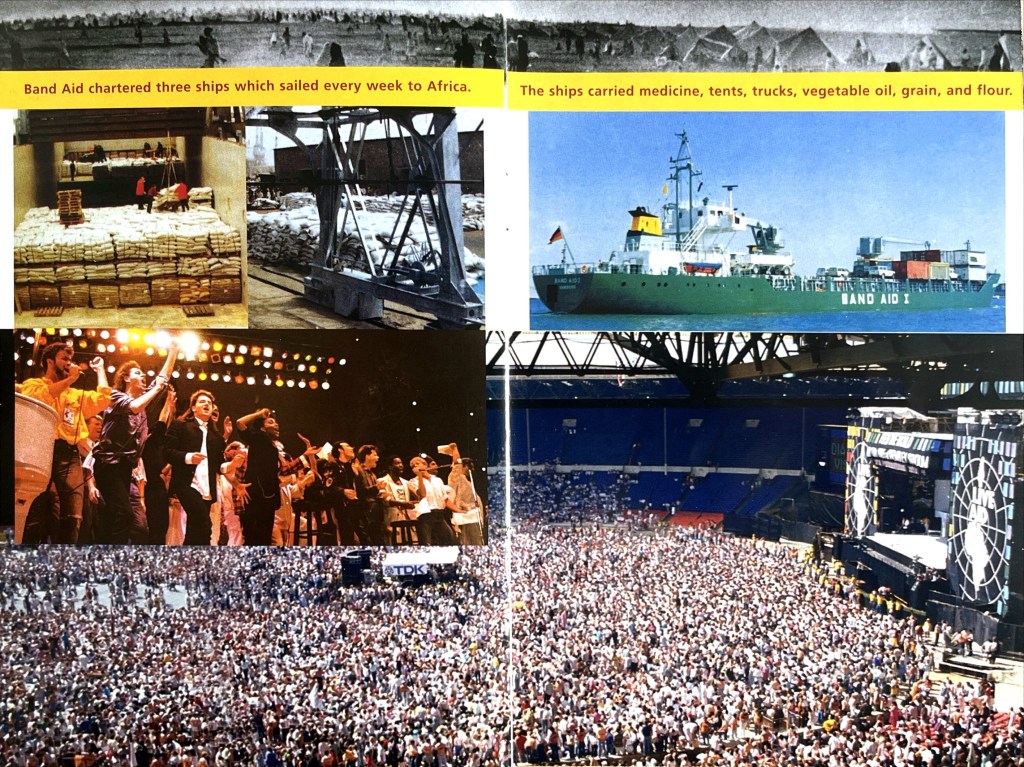
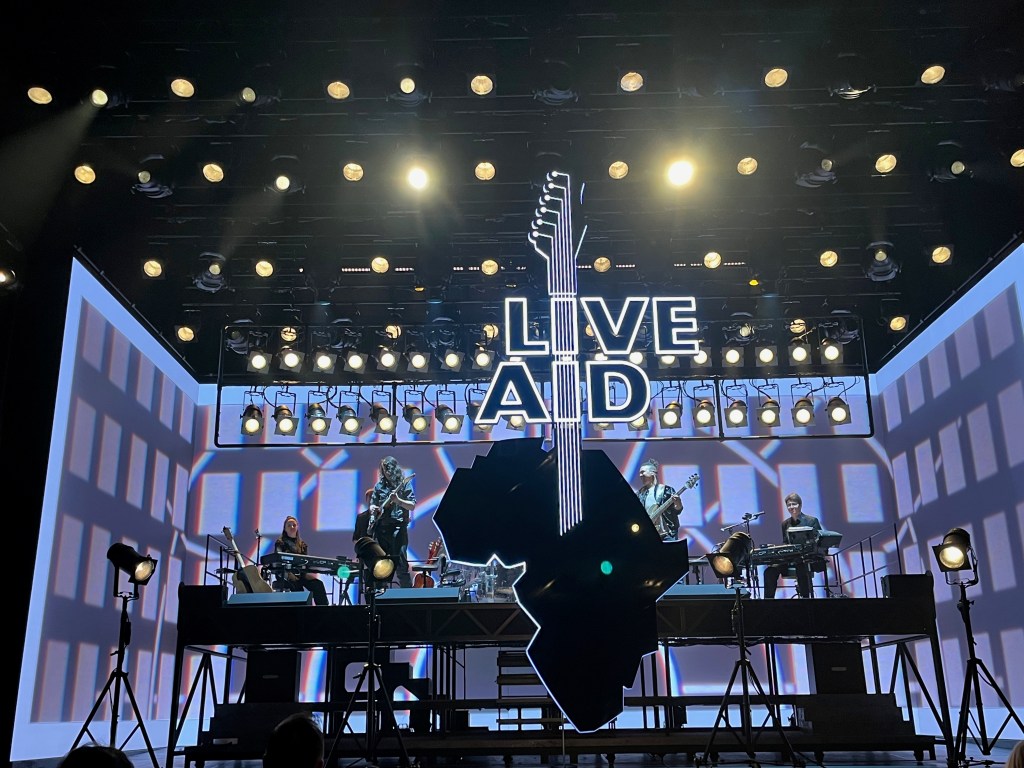
July 13, 1985, was arguably the greatest day in the history of rock and pop music. As if anyone needs reminding, the extraordinary Live Aid concert was organised by Bob Geldof from the Boomtown Rats and Midge Ure from Ultravox to raise funds for the victims of the devastating famine in Ethiopia. It brought together many of the world’s biggest music stars in London’s Wembley Stadium and Philadelphia’s JFK Stadium, along with some additional contributions from other countries, and was broadcast live for 16 hours to nearly 2 billion viewers in 150 nations.
An event of such magnitude had never been attempted before. So given the speed in which everything was organised and coordinated in just a few months, the generosity of the performers and other personnel who gave their time and expertise for free, and the challenges of running and broadcasting it all using the limited technology of the mid-80s, it was a colossal achievement.
It wasn’t a magic bullet that fixed all the problems in Africa of course, nor was it ever intended or expected to be. But it had a huge impact, exposing the suffering of Africans in a way that couldn’t be ignored by politicians, the media or the public, and it raised an estimated £150 million that saved countless lives. It also launched a movement to fight poverty and injustice that has continued in various forms to this day, including the Live 8 concerts that followed in 2005, plus other charity records and events.
I wasn’t old enough to see Live Aid when it was originally held, as I was only a toddler at the time. I did hear a bit about it while I was growing up, and saw occasional clips here and there, but it was only when they released a DVD in 2004 that I finally got to really appreciate what it was like. Granted, several tracks were missed out, many of which have since been posted on the official Live Aid Youtube channel, and there are unofficial uploads of most of the others. So it would be amazing if they did an extended release in the future to fill in at least some of the gaps. One can hope at least. But as things stand, the DVD is still a fabulous record of the event, containing 10 hours of material.
So as a special extended post, I thought I’d take a deep dive into this massive event, by reviewing the DVD in conjunction with other videos online that fill in the gaps and add further context. I’ve also created UK and US playlists on Youtube with nearly all of the performances, along with a selection of interviews and other extras. So I hope you enjoy!
I’ve thoroughly enjoyed revisiting the glorious London Olympics from 10 years ago, hence my recent lengthy reviews of the Opening Ceremony, Days 1-8 and Days 9-16. There are loads of great memories, and some things I’d forgotten about that I’ve been happily reminded of. So naturally it’s time to look back at the Closing Ceremony, which was overseen by creative director Kim Gavin.
As big and important as the occasion was, it’s fair to say it wasn’t quite as epic or impressive as the Opening Ceremony – but then it didn’t need to be. We had already put on a fantastic show over the previous few weeks, and so now we could just let our hair down and have fun, and thank everyone for making the Games such a success. This was more of a party than a ceremony really, focusing on the best of British music and culture with a variety of big-name artists. Most of the tracks appeared on the soundtrack album A Symphony Of British Music, compiled by the ceremony’s musical director David Arnold, which I own in my collection. It contains a mixture of original music written for the ceremony, cover versions of well-known songs, and special re-recordings by artists of their own tracks for the event.
And it was still very enjoyable on the whole. It’s very unlikely that everything would have appealed to everyone but, depending on your musical and cultural tastes, there would have been a few particularly memorable or special moments for each person watching. That was certainly the case for me anyway – there are some parts I can easily skip over, and other bits I can watch over and over again.
And visually it looked very cool as well, not just in terms of the costumes, dancing, fireworks and so on, but also the creative use of the ‘pixels’ – the coloured lights behind each audience member – that created animated patterns around the stadium throughout the show, and the impressive Union Jack stage – designed by artist Damien Hirst – that filled the floor of the stadium.
The ceremony lasted 3 hours and 10 minutes, and is included in its entirety on the final fifth disc of the BBC’s Blu-ray set. There are no alternative audio options and no scene selection menu (though there are chapter points you can skip through). You simply get the broadcast coverage with the BBC commentators led by Huw Edwards, but that’s generally fine as they don’t interfere too much. They’re most involved when the athletes are making their way into the stadium, while at other times they just give a bit of contextual information, which is actually very useful. And by all accounts we had much better TV coverage than some overseas viewers. The only extra on the disc is a long PDF with the full list of credits for the ceremony, which you can see if you put it into a computer’s Blu-ray drive. Not quite as long as the equivalent document for the Opening Ceremony, but still pretty lengthy.
You can also watch the full ceremony on the Olympics Youtube channel, where they have their own commentators. As with their Opening Ceremony coverage, it starts with a beautiful helicopter shot travelling slowly over London towards and around the stadium, showing off the city and the venue wonderfully. And there are other videos online relating to the ceremony as well, including a bit of footage from the audience and behind the scenes. So, like I’ve done with my previous posts, I’ve compiled a Ceremony Playlist on Youtube, with relevant clips and the complete music soundtrack if you want to look through it.
And so, with all that said, let’s crack on with my look back at the ceremony. It won’t be anywhere near as lengthy as my Opening Ceremony coverage, as there’s much less to discuss this time. But I hope you enjoy!
Finally, after nearly 120 journal posts – and thank you so much for reading if you’ve gone through some or all of them – my mother and I have now moved away from Devon into my Nan’s house in London, which we inherited when she passed away.
So in this post you’ll find out how we’ve settled in over the festive period, sorting through various bits and pieces, having problems with BT, going shopping and taking some nice walks. I also got to see my best mate and his wife who were visiting the city, signed up for some social events in January, watched a lot of TV, and was shocked to hear about the deaths of 3 very popular entertainers.
Going forward, I’ll be sharing my (hopefully many) adventures in London in a monthly roundup format, as I’ll explain at the end. But for now, I hope you enjoy this bumper post about my long-awaited arrival in the capital!
Here’s another set of journal entries to wrap up the year, including a friend’s birthday, new DVDs, an accidental recovery for Nan, and our first Christmas without Dad, as well as some more jokes I’ve received via email. I hope you enjoy!
Here’s another set of entries from my journal. This month there are updates on my temporary contract at work, and various bits of entertainment news, including a top 100 poll about cartoons, an extensive review of the Red Nose Day telethon, and my initial reaction to the highly anticipated relaunch of a certain sci-fi show. So I hope you enjoy as always!








 Well Eye Never
You must be logged in to post a comment.