

At the beginning of August I wrote about the decline in my mother’s physical and mental health, given her struggles to adapt to her blindness and the fact she was having a lot of falls, one of which had fractured her collarbone. And that in turn was impacting my own wellbeing, as I had to devote a lot more time and energy to her needs.
We were in a bad way at the time, with no certainty as to if, how or when things would get better, so that we could get back to some sense of a normal life. Several people have said they’ve found those posts very moving, and my friends have kept in close contact to ensure that I’m ok, for which I’m very grateful.
Shortly after making that trilogy of posts, things took a further turn for the worse, as Mum fell and broke her wrist. My big fear of things spiralling even more out of control appeared to have been realised.
However, alongside the stressful and lengthy recovery process, the incident also triggered a chain of events that have resulted in Mum receiving a lot more help and support than either of us expected, to such an extent that she’s now in a much more relaxed and positive state than I’ve seen her in for ages. It’s a shame that it took an accident to be the catalyst for all that support, but so far it seems to have been a bit of a blessing in disguise.
We’re not out of the woods yet, as she is still finding some things difficult, and I’m still having to spend a lot of time looking after her. So it is still tiring and stressful sometimes, there’s still a lot of stuff we need to sort out, and there will always be the risk of further setbacks. But we are getting through the days much more easily now, and we have greater hope and optimism for the weeks and months ahead, and all being well there should be more big developments by the end of the year.
So I want to reflect on our journey in the last few months, to bring things up to date. I have been writing extensive journal posts as well, but this is a good opportunity to summarise what’s been happening, and I hope you find it interesting.
Contents
Care Needs
Broken Wrist
In early August, Mum lost her balance and fell as she was beginning to climb the stairs, breaking two bones in her wrist as a result. It was a huge knock back for both of us, as she’d only just got over the worst of her collarbone fracture. And this time she ended up in hospital for nearly a week, which was of course very stressful for her, although the staff did look after her brilliantly.
She then ended up in a cast for 10 weeks. And that was a long 2½ months, I can tell you! She was understandably upset and frustrated that she couldn’t do very much, and there was nothing I could do to make it better, so the time seemed to pass by incredibly slowly. It was also pretty painful to begin with, although it gradually settled after a few weeks.


The cast did eventually come off in late October, which has been a huge relief for her. The doctor was satisfied that her bones were “rock solid”, and encouraged her to get back into her normal activities again – and that’s exactly what she’s been doing. Within just a couple of days of the cast coming off she was getting back into making lunches, washing up and showering. Her wrist is still a bit stiff, naturally, so there are still certain things she can’t do easily or at all. But the more she keeps using it, the more it will regain its strength and dexterity.

But it’s not just the recovery of the wrist itself. A lot of other things have happened alongside that, which have really moved things forward for us in one way or another.
Reablement Care
Because of her injury, Mum’s discharge from hospital initiated what’s called a reablement period, which means carers have been coming round every day to help her while she recovers. Reablement lasts around 6 weeks on average, but with Mum still being in a cast beyond that, our local social services team extended it to mid-November, effectively doubling it to around 3 months altogether.
I wouldn’t really call it reablement though, as that’s really about helping people get back into doing their usual tasks independently, rather than having things done for them. And with Mum in her cast, that hasn’t been possible. So the carers have simply been coming round in the mornings to wash and dress her, at lunchtimes to see if she needs anything, and in the evenings to put her in her nightdress. They’re still doing that now she’s out of her cast too, so they haven’t been encouraging her to wash and dress herself again. But Mum has been getting back into having showers again some days anyway, knowing she can call out for me if she needs anything, and has been able to dress herself afterwards, albeit slowly and with occasional help from me. And she changes her clothes if going out for an appointment too.
So we’re grateful for the help the carers have been providing, they are nice and polite people, and the service is free of charge. Nevertheless, there are aspects of the care provision that have made things more difficult for us rather than easier.
Their timing has been all over the place for starters. Initially it was somewhat consistent, but has gone on to become more and more random, such that there’s now a 2-3 hour range of times they’ve been known to turn up for each of the morning, lunchtime and evening shifts, and we often don’t know what time they’re due to come or who it will be. So that’s made it rather difficult for us to have a routine in terms of when to get up, eat breakfast, have dinner, etc. I can’t have a shower in the morning until they’ve been, for example, as I have to let them in, so on some days I haven’t had time for one at all. And in the evenings we’ve sometimes had dinner quite late, as we don’t want to be in the middle of eating when the carer arrives to change Mum’s clothes.
In addition, while I have every respect and admiration for people of any nationality working in such a demanding and worthy profession, most of the carers have had strong foreign accents and don’t speak very good English, so Mum’s felt very frustrated as she can’t always understand what they’re saying, and I’ve struggled at times as well. That’s in no way intended to add fuel to the fire of those spouting offensive and ill-informed rhetoric about immigration at the moment. It’s just a point of fact, which I brought up once when a member of staff from the agency visited to get our feedback, and they just shrugged it off as there’s nothing they can do about it.
So it’s been a mixed bag altogether, being both useful and frustrating in equal measure. If we were paying for the care and had a direct contract with the agency, we’d kick up more of a fuss, but as it’s free and temporary and largely out of our control, we’re just living with it, as we don’t want to make things more difficult.
Future Care
The good thing is that when the reablement period ends, we’ll then be able to have full control over what care Mum receives going forward and from whom. The local council aren’t able to help fund it with direct payments, because our savings are well over the threshold required, but that’s fine. We’d rather self-fund it so we have a complete say in everything.
For instance, she could do with better help at a consistent time each morning, such as a carer supervising her when she showers and dresses, rather than just doing it for her, before helping her with breakfast and cups of tea. That would give me a proper amount of time and space to get up and sort myself out for the day. And it would be wonderful for her to have some companionship care from people she gets on well with, so that I can go out for social events, theatre shows, museum visits, long walks or whatever, knowing that she’s safe and happy. Even better if they can take her out to places too. I’ll still take her out as well of course, but I don’t always have time to do that, and I’m not always able to describe things to her very well given my own visual impairment.
With that in mind, therefore, I’ve been looking at information about care agencies online, including inspection reports and client reviews, and have shortlisted some to get in touch with. So it’ll be interesting to see what kind of help we are able to get. If you happen to live in London and know of a good care agency, by all means let me know.
Mobility
Therapists
Apart from the carers, Mum also had regular visits from an occupational therapist for about a month after she returned from hospital. The guy was from the frailty team, and had already been visiting once a week after her collarbone injury, but stepped it up to 3 times a week after the wrist incident. He was very gentle and encouraging with her, and gave her a noticeable boost in confidence.
For the most part he was training her to use her long cane indoors – which, in all honesty, she’s stopped practising with since he left as she doesn’t like using it. But he also helped her to cope a bit better with her moments of disorientation in the house, encouraging her to be less afraid to move and find surfaces that she’s familiar with to get back on track. She still struggles with it sometimes and needs a bit of encouragement from me, but she’s better than she was.
Then more recently she’s been having weekly visits from a physiotherapist as well. So far they’ve given Mum simple exercises to help with her balance, which she’s picked up easily. But now she’s come out of her cast they’re going to see if she needs some wrist exercises as well.
The occupational therapist and physiotherapist also made referrals for little adaptations to help Mum out, so she’s had new grab rails installed on the upstairs landing and by the toilet, and has been given a shower seat. The occupational therapist also said he would order a better armchair for Mum, but we’ve heard nothing about that since, so I don’t know if he did it in the end.
In terms of balance, incidentally, Mum has had a couple more falls in recent weeks, one while trying to get up a step outside our back door, and one while trying to step off a deep kerb in the street. But thankfully they’ve been minor with no injuries resulting from them, and given the more positive things that have been going on, they haven’t knocked her confidence too much. Indeed, the next thing I’m going to mention has done wonders for her fear of falls.
Wheelchair
The most significant development in terms of mobility is that she’s just received a new wheelchair, which is on loan to her for however long she needs it, with all repairs and maintenance funded by social services. And the process of getting it was a lot quicker than we’d expected, taking just 6½ weeks from our initial enquiry to actually receiving it, within which it took just 2 days for our referral form to be approved, and then just a month for it to be manufactured and delivered. Given how much resources are stretched these days, that’s quite remarkable, and hugely appreciated.

I have no experience whatsoever in what makes a good wheelchair or not, but as first impressions go, it’s a very nice bit of kit. It’s an Invacare Action 2 NG wheelchair in a smart black colour, with solid tyres that can’t get punctures, assistant brake levers under the handlebars (as well as the main brake levers by the wheels), a seatbelt and a cushion. I’ve already taken Mum out for a ride in it, pushing her around our local park and nearby streets for an hour and a half, so we could get a feel for it, and we really enjoyed it.


Mum found it very comfortable and secure, and thought we were moving faster than we actually were sometimes. Her neck was a bit sore near the end, because she has a tendency to lean to the side, so I might need to get her some kind of neck support or a headrest. And once we got home she felt a little bit sick, so it’ll be worth her taking travel sickness pills for long journeys, like she does when using cars. But those effects wore off very quickly. And from my perspective, the lightweight chair was very easy for me to push along, and I had no problems manoeuvring it, coping well with corners, slopes and kerbs. I didn’t feel any tiredness or back pain by the end of it either.
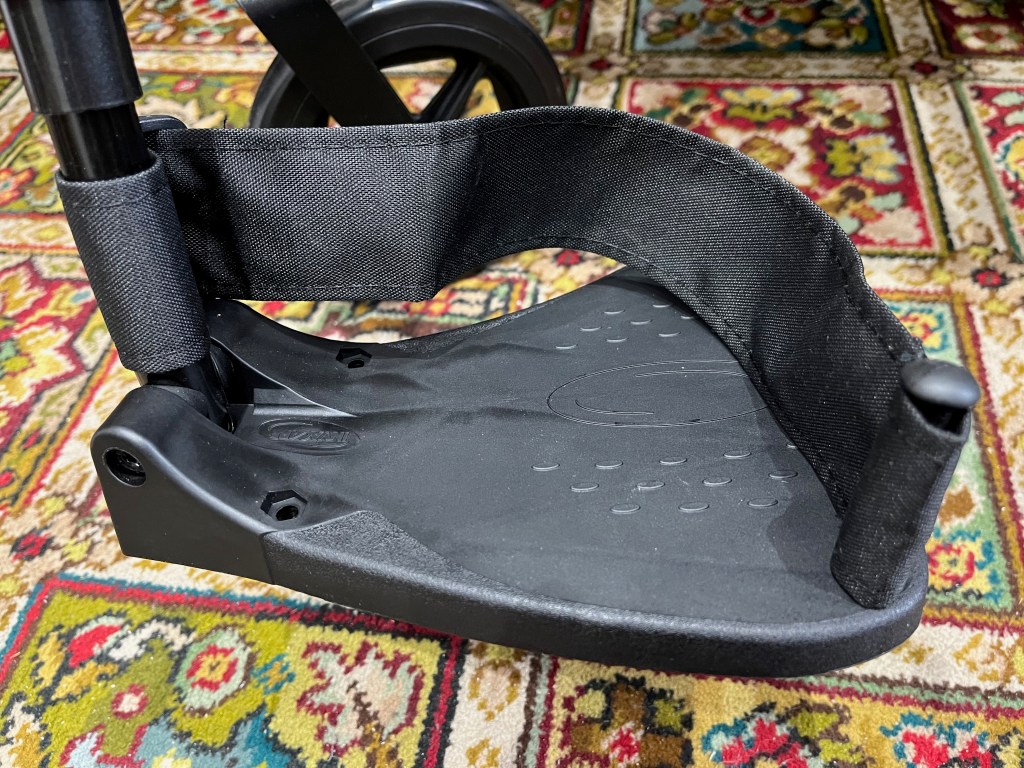

So we’re both delighted with it, because it opens up so many opportunities for her to get out more. It completely removes her fear and anxiety about falling over and getting tired, and she’s even started getting ideas of places she might want to go, including the seaside in the summer and attending theatre shows, which she’d previously given up all hope of being able to do.
So we’ll keep venturing out with it to see how we get on. It’ll be interesting to see how we manage on the buses and the Tube, for example, and I have no doubt we’ll encounter faulty lifts and other issues occasionally. But ultimately it’s lovely for us to be able to go out and do things together, and for her to enjoy going out a lot more than she has done for a very long time.
Mental Health
Anxiety & Sleep
The mental health issues that I’ve mentioned previously, with Mum’s anxiety, panic attacks, visions, etc, have naturally continued throughout this period of time. But they have reduced recently, because of all the help and support that Mum has been getting.
At the end of August, following a referral made by our GP in July, we had our first visit from a lovely mental health doctor, talking to her about everything that’s been going on. And we agreed that trying to get Mum’s sleep sorted out was the first issue, because her lack of light perception has caused her body clock to go haywire, resulting in her sleeping more during the day and much less or not at all at night. And when she does sleep during the day, she often gets confused and panicky about where she is when she wakes up in her armchair, which doesn’t tend to happen when she’s in bed.
The doctor was therefore happy to prescribe melatonin at our request, to see how Mum gets on with it, because I know it’s helped a lot of other blind people to sleep better at night. To begin with, Mum tried the lowest possible 2mg dose for a month, which didn’t have any effect, so that was then upped to 4mg. That was also going to be for a month, but given the doctor’s availability for her next appointment, it was extended for a further month.
And during that time on the 4mg dose, Mum’s sleep cycle has slowly improved. For the first month, she started to get a bit more sleep at night, and the times that she tended to nod off during the day gradually shifted from the afternoon into the evening. And then on top of that we also had several positive developments in October – getting her cast off, learning that we’ll be able to choose our own care, and most of all receiving her wheelchair – which have given her a huge boost in her mood and reduced her anxiety quite a bit.
As a result, during the past week she’s actually not slept at all during the day, and has just been sleeping at night. Whether she’s getting enough hours at night, I don’t know, because I know she’s awake sometimes when I go up to bed. But she seems to be more alert and relaxed during the daytime now. There have still been occasional moments of disorientation or confusion, and she still sees random colours and lights or visions of me. But they’re not having as much impact as before, and she hasn’t been getting panicky as often as she used to.
It’s been very easy for me to make her smile and laugh too, and indeed when I took her out in the wheelchair for the first time she was laughing happily on several occasions, as she was having the time of her life! It was so liberating for her, and I’ve not seen her like that for ages, dare I say years. It’s amazing.
She also still has the teddy bear with her at night that I gave her, and has him on her armchair with her during the day too, sometimes holding him in her lap, which is adorable. Likewise, the big cuddly toy lion from my childhood that I’ve also given her still sits on a chair near her at night, and on the dining table near her during the day, just watching over her. She really likes it when I carry him over to her and use his big soft paw to stroke her cheek for a while, as she finds it really calming, and it makes her laugh sometimes as well. So I do that at night when I’m putting her to bed, and sometimes during the day as well, knowing that she enjoys it.

And for me, because she isn’t as restless at night as she was earlier in the year, it means that over the past couple of months or so I’ve been able to have a few hours to myself every night after she goes to bed, so I can relax and browse the web, do some blogging, listen to music, watch TV, etc, without her getting into a panic and calling out for me, or trying to come downstairs to see where I am. And she’s not waking me up in the middle of the night or at the crack of dawn in a panic either. So that’s helped me to sleep better as well, even if the mornings are still tiring because of the unpredictability of the carers.
The mental health doctor is visiting again during November, so we’ll be able to bring her up to date, and see what she recommends next. She had been considering an alternative form of medication to help Mum sleep given her anxiety, but I’m not sure if we need it now, as the melatonin seems to be doing the job. The doctor also knows that GPs are reluctant to prescribe melatonin long term, but if we could get it on repeat prescription for Mum, I think it would really help to keep her body clock in check. So we’ll have to see what happens.
Talking & Counselling
Mum has also started talking to a fellow member of the Aniridia Network through their befriending service, who is lovely and has a lot of understanding about what she’s going through. We had our first call with them during October, which gave Mum some much-needed reassurance that everything she was experiencing was normal and she’s not alone, and we’ll be talking to them again soon. If they happen to be reading this, as I know the Aniridia Network have been sharing some of my posts with their members, then thank you for putting time aside for her.
Similarly, a blind friend from the local area also came round to visit Mum one morning over the summer, and it was really nice to chat to her too, because she gave us some useful tips and advice, and a lot of encouragement.
And talking of visitors, Mum’s sister has also popped in to see her sometimes, and has taken her out on a couple of occasions, for a walk in the park or for fish and chips, which has been nice.
Back to phonecalls though, and Mum is still on the list for RNIB counselling as well. After a lengthy wait of several weeks, which was then further delayed by her stay in hospital, Mum eventually had a call for an initial assessment, where she was asked various questions about her situation and what she hopes to get from the counselling. And as a result of that, she’s now on another long waiting list for the actual counselling itself, which will consist of 8 weekly telephone sessions. It might not feel like she needs it so much at this point given all the positive stuff that’s been going on, but she does still have difficulties and anxious moments, so it wouldn’t do any harm for her to talk to someone. She’s never had counselling before (and neither have I), but any further boost to her confidence, however small, can only be a good thing.
She decided not to continue with the Sightline befriending service though. The volunteer she was talking to was really nice, and very generous with their time, but they weren’t as chatty and engaging as Mum had been hoping for, being more of a listener for the most part, and they couldn’t really relate to some of the difficulties Mum was experiencing. So Mum found it increasingly difficult to keep the conversation going, which made it feel less relaxing for her. We could have asked for her to be matched with someone else, but given her broken wrist and all the resulting issues that we had to focus on at the time anyway, the service had become very low priority for us. And the Aniridia Network’s befriending scheme has since filled that need much more effectively.
Other Updates
Carer Support
While Mum has quite rightly been receiving a lot of help, which has made my life easier, getting direct support as an unpaid carer has been harder to access.
I have joined my local carers community group, and while their monthly workshops always happen on a weekday when I’m usually working, I was able to attend one of their sessions online about making effective complaints, which was interesting, although I hope I’ll never have to make use of it. The monthly newsletters I receive from them also contain very helpful information.
I also applied for a Carer’s Assessment back in early July, along with a Care Needs Assessment for Mum, because we’re both entitled to them. Mum has naturally been assessed by default since then, due to her hospital admission, but my assessment’s never happened. I had a phone call from someone asking preliminary questions to gauge my need for the assessment, and they said that one would be arranged, but I never heard anything more. I’ve since enquired about it more recently with the reablement officer, and they’ve said they’ll arrange it alongside the assessment they’re going to do for Mum’s ongoing needs when reablement ends. So we’ll see if it happens. They did at least refer me for a benefits check, where it turned out there’s nothing new I’m eligible to claim, but that’s what I expected anyway. We are going to look at getting Mum’s Disability Living Allowance (DLA) reassessed though.
I applied for a Carers Emergency Card at the end of July as well, which would enable additional support to be triggered for Mum if anything happens to me while I’m out and about. But again I never heard anything in response, not even an acknowledgement that my emailed form had been received. It took until the end of October for someone to finally call me about it, and even then they had somehow got the wrong first name on file, despite having the other details correct. They’ve said they’ll amend it and send the card out, so we’ll see if it eventually arrives.
I’ve also had a similar waiting time to have a wisdom tooth taken out, because I was referred to a specialist in mid-July, and have only just got an appointment for a consultation with them in November. That will obviously affect my ability to support Mum while I recover from it, so it’s just as well that she’s a bit more independent than she was. My aunt could come round if need be though, and if it happens before the reablement care stops, the carers can do a bit more for her too. In any case, It’ll be good to get that operation done before Christmas, that’s for sure.
On the plus side, I have been able to meet up with a couple of friends of mine for lunches now and again, which has been really lovely. They’ve kindly come down to my area so I don’t have to travel too far away from Mum, and it’s been a welcome bit of escapism for me. My friends have also stayed in contact in general as well, via text messages and online chats, to see how things are going, so it’s ensured I haven’t felt alone. I’ve managed to keep up with the support work I do as well, although some days I have fallen behind a bit and have had to catch up in the evenings or at weekends, so I’m grateful to my friend and colleague Emily (and her editor) for being patient with me.
Looking Ahead
While things have therefore been positive overall, there is still much to be done to ensure that things are safe, comfortable and easy for Mum. In particular, these are our main goals at the moment:
- Signing up with a care agency to support us long-term. As noted earlier, I’ve been doing some research into this, and we had no idea there were so many agencies out there. It’s completely uncharted territory for us, but if we get it right it could make things a lot easier.
- Arranging a regular cleaner to help us out, as that’s one of the chores I haven’t had much time to do extensively and it’s very difficult for Mum these days. Social services have given us the name of a company that looks good for this and other household jobs, so we’ll give them a go.
- Getting an accessible bathroom installed, because it’s become apparent that our current one is no longer suitable for Mum, in terms of layout and safety. I’ve seen a company that looks like it might be good for this, so we’ll get them in for a consultation.
- Getting double glazing installed, to regulate the temperature in the house better, and give us improved security. I did arrange for a quotation from one of the big players in the industry, before I had to put the idea aside due to Mum’s wrist injury, but I wasn’t very impressed with their sales technique during the consultation visit, or the occasional phonecalls I’ve been getting since to see if we’ve given any more thought to it. It feels like they’re desperate for work.
- Getting Mum’s DLA reassessed, as being on the lower rate for mobility is clearly no longer accurate or suitable for her, and we’ve got ample medical evidence to support her needs now.
- Getting Mum out and about more, using her wheelchair, and then getting her to walk around a bit e.g. in the parks or along by the Thames, so she’s not sat in it all the time.
Conclusion
So that’s where we stand right now. Things are still busy, and still sometimes stressful and tiring, but we are in a much better position than we were a few months ago. The wheelchair alone feels like it will make a huge difference, and the carers, therapists and doctors she’s seen have all played a vital part in helping with her physical and mental recovery. The wonderful people of the NHS have made sure that she’s looked after and not forgotten.
I’ll continue sharing journal posts here in the weeks ahead, to keep you up to speed on how things are progressing. But I’ll also do another summary update like this later on, probably at the end of the year. In any case, if you’ve been reading any of these posts, thank you so much. Everyone’s support has been very uplifting, which has really helped me to get through the tough events of this year so far. So I’ll see you for more updates very soon!
Share this:


 Well Eye Never
One thought on “Caring For Mum – Part 4 – Breaking Point”