
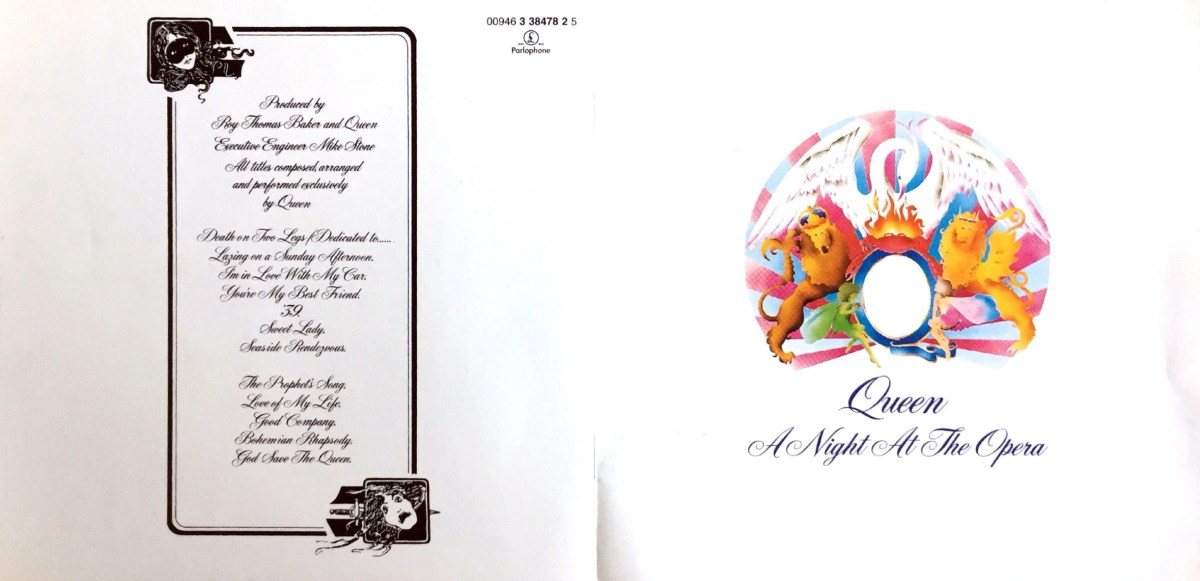
This is the big one, the album that launched Queen into the stratosphere. The previous release, Sheer Heart Attack, was already a joyous collection of majestic variety that sounded like perfection to many, and its predecessor Queen II was also (and still is) held in very high regard. And yet the band still felt they were learning and developing, and they were keen to push things further still for their next album.
They were also having a fresh start, having moved to EMI Records and recruited new manager John Reid (who also managed Elton John), after ending their contract with Trident Studios under a dark cloud. Queen hadn’t been getting paid fairly for the success of their previous work, due to the contract they’d signed up to, and that contract was very expensive to get out of. So they were broke, which placed considerable pressure on them. It was now all or nothing. Their next release had to be a big success, otherwise that would be it, Queen would be no more.
But they were up for the challenge, and determined to show the world what they were capable of. They had also been told by their new manager to make the best album they’ve ever done, with complete freedom to do whatever they wanted. So they made the most of the opportunity.
They incorporated everything they’d learned and played around with up to that point (clear influences can be heard on their earlier albums, e.g. songs on Queen II like My Fairy King), and took full advantage of the studio technology available to them (using 7 studios altogether). They had carefully written lyrics and distinctive melodies (with all 4 band members writing at least one track each), a range of simple to complicated song structures, multi-tracked harmonies (now working with 24-track tapes instead of 16), a myriad of musical styles and instruments (using what felt best for each song rather than sticking to a particular genre), and big production values. It was the most expensive album ever made at the time. And they named the album after a Marx Brothers film, even becoming good friends with Groucho Marx as a result.
Their incredible efforts gave us their first and most successful number 1 single, plus the first chart hit to be written by their bass player, and many other beautiful songs. It held the number 1 spot on 4 of its first 7 weeks in the chart (held off on the other 3 occasions by Perry Como’s 40 Greatest Hits, a very different record entirely!). It stayed in the top 40 for 34 weeks (including 12 weeks in the top 10 & 16 in the top 20), and as recently as last year it was still poking its head into the lower end of the Top 100 every so often, which it will continue to do now and again in the future, each time a new generation is introduced to the band in some way. Inevitably the most famous track on this album is the one that regularly draws people to it time and time again.




 Well Eye Never
You must be logged in to post a comment.