

It’s time to continue my 60th anniversary celebration of Doctor Who by doing an in-depth review of the third series and its Blu-ray steelbook, following on from my posts about Series 1 & 2.
Russell T Davies continues in his role as showrunner here, overseeing David Tennant in his second series as the Doctor. But here the Time Lord is accompanied by the fun-loving, strong-minded, logical and brave medical student Martha Jones (played by Freema Agyeman).
Unlike Rose, who was looking for excitement and an escape from her everyday existence, Martha is actually quite happy and busy with her family, career and social life. But the temptation to travel with the Doctor wins out, naturally. The one similarity that Martha has with Rose is that she soon falls in love with him, but the Doctor is still hurting from Rose’s departure and views Martha as a good friend rather than anything more. He simply needs a caring companion to support him and stop him feeling too lonely, which he knows only too well, but he’s reluctant to admit that to himself, and initially insists that Martha won’t be a full-time passenger. But he changes his mind when Martha proves her worth in various ways, and she ends up saving his life, and the lives of others, on several occasions.
So there’s a different dynamic in the Doctor’s relationship with Martha compared to Rose, and she’s a different character to her predecessor – all of which is a good thing, otherwise it would have felt repetitive. Actors David and Freema have a great chemistry together, evident from the behind the scenes material as well as in their performances, which makes them enjoyable to watch. It’s also worth celebrating the fact that she’s his first full-time black companion (whereas Mickey Smith didn’t travel with the Doctor very much), and therefore Martha does encounter occasional racism when they travel back in time (as did Freema in real life from a small sector of the fanbase, sadly). So it’s good that the show acknowledges those attitudes in small ways, rather than pretending they don’t exist.
Ultimately, although Martha is sadly only in the show for one series, she does make a very big impact on the stories and the Doctor himself, and likewise it all has a huge effect on her, as she goes through quite the journey of development. She also makes a few guest appearances in the show later on (and could still do so), as well as appearing in the Torchwood spin-off and a more recent Big Finish audiobook, plus the character featured in the Tenth Doctor audiobook adaptations by the BBC, some of which Freema narrated. So this isn’t the last we see or hear of her.
Before we meet Martha, we’re also introduced to Donna Noble in the Christmas special, for what at the time was intended to be a one-off guest appearance by Catherine Tate, though that changed in Series 4. And in the finale Martha gets to meet Captain Jack Harkness when John Barrowman returns in the role, as well as John Simm in his first appearance as the Master. Plus there are some other great stars who appear throughout the series.
So it’s another fantastic collection of episodes, I hope you enjoy my look through them all, as well as the extensive playlist of clips I’ve put together on Youtube.
[Note: This post was edited in November 2023 to mention the new Whoniverse collection on iPlayer and the Series 1-4 & Specials box set.]
Contents
Packaging
Blu-ray Steelbook
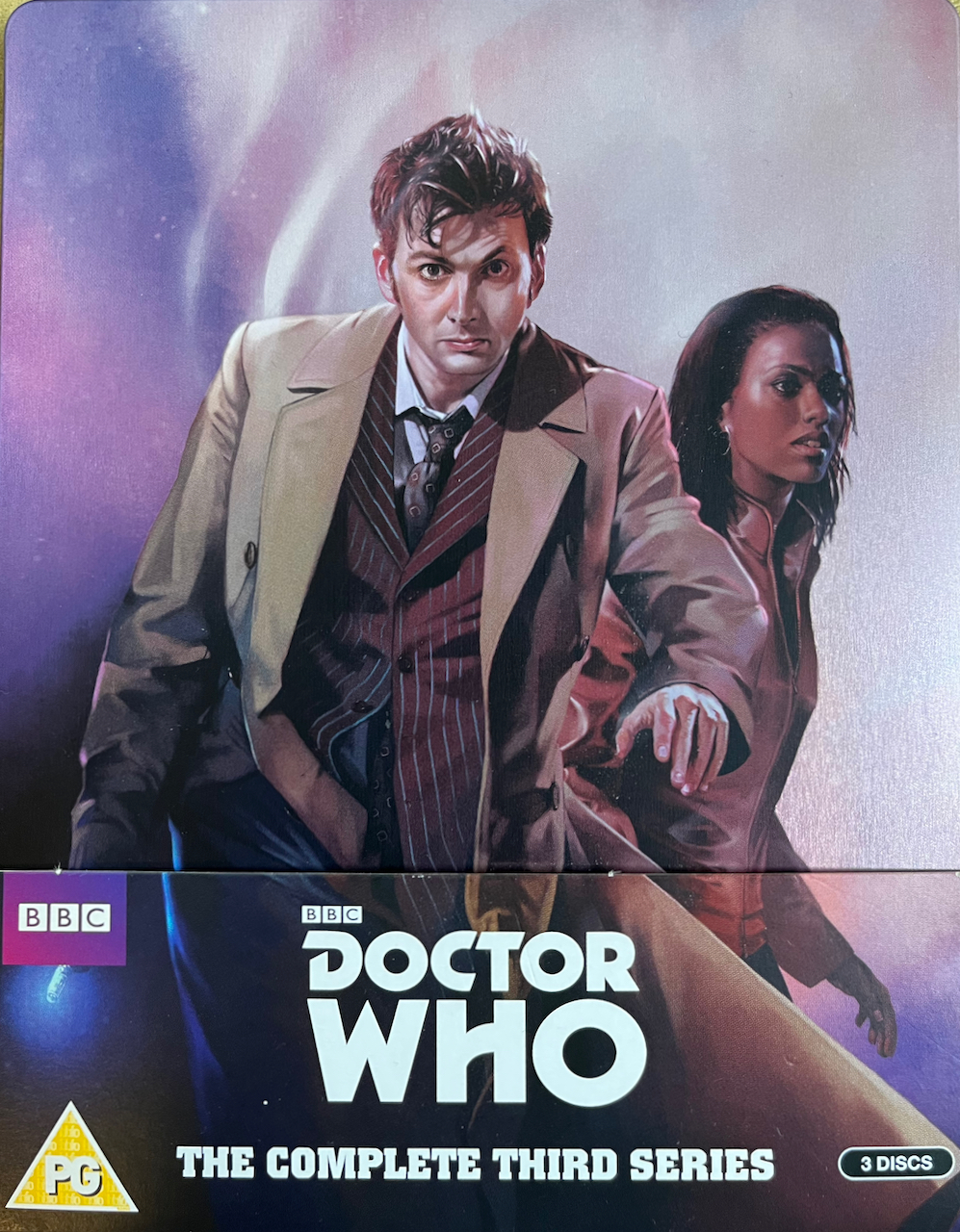
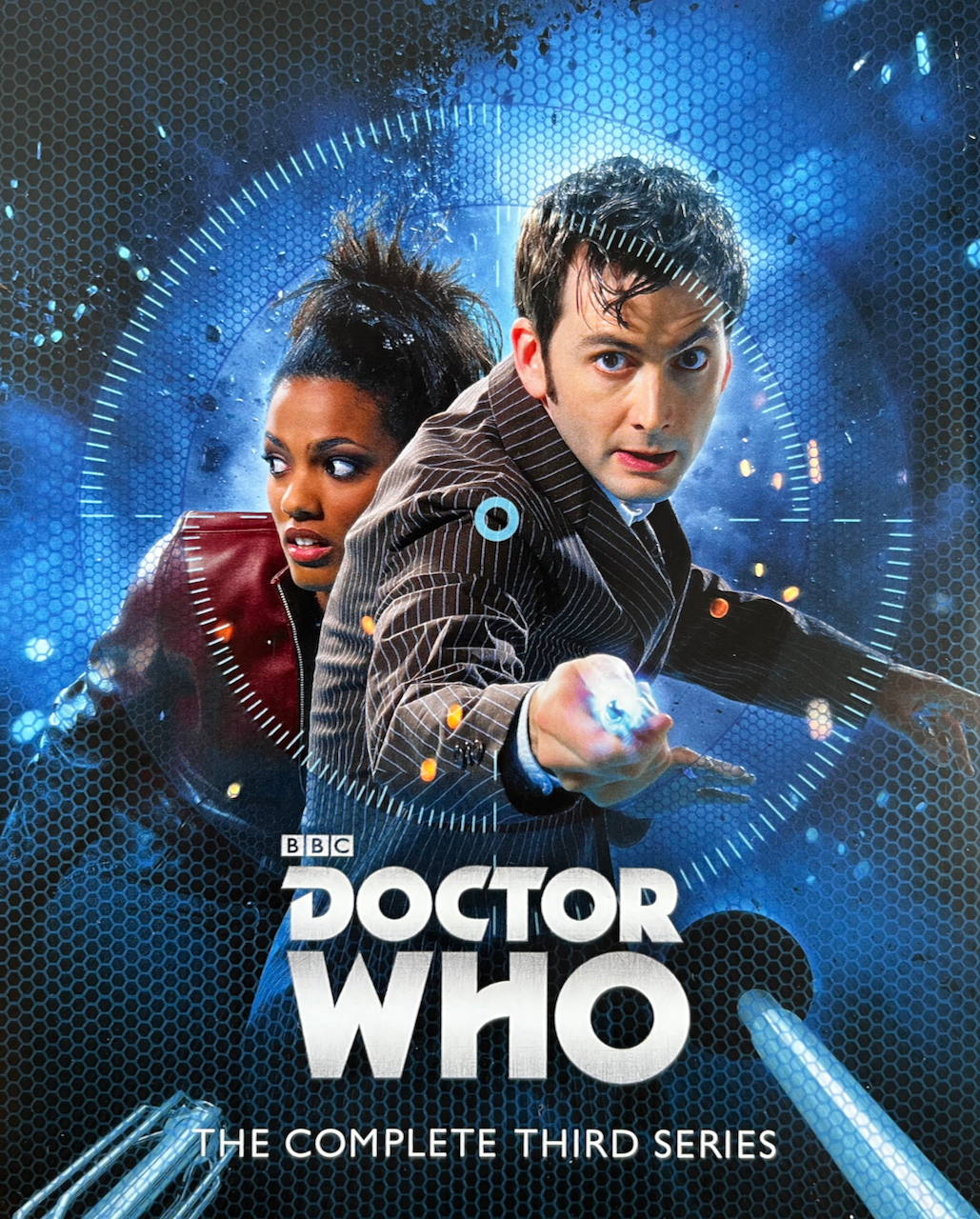
The Series 3 Blu-ray Steelbook was released in 2018, a few years after the standard Blu-ray release as usual. The beautiful artwork on the outside features the Doctor and Martha on the front, naturally, with the Master and the Weeping Angels on the back.

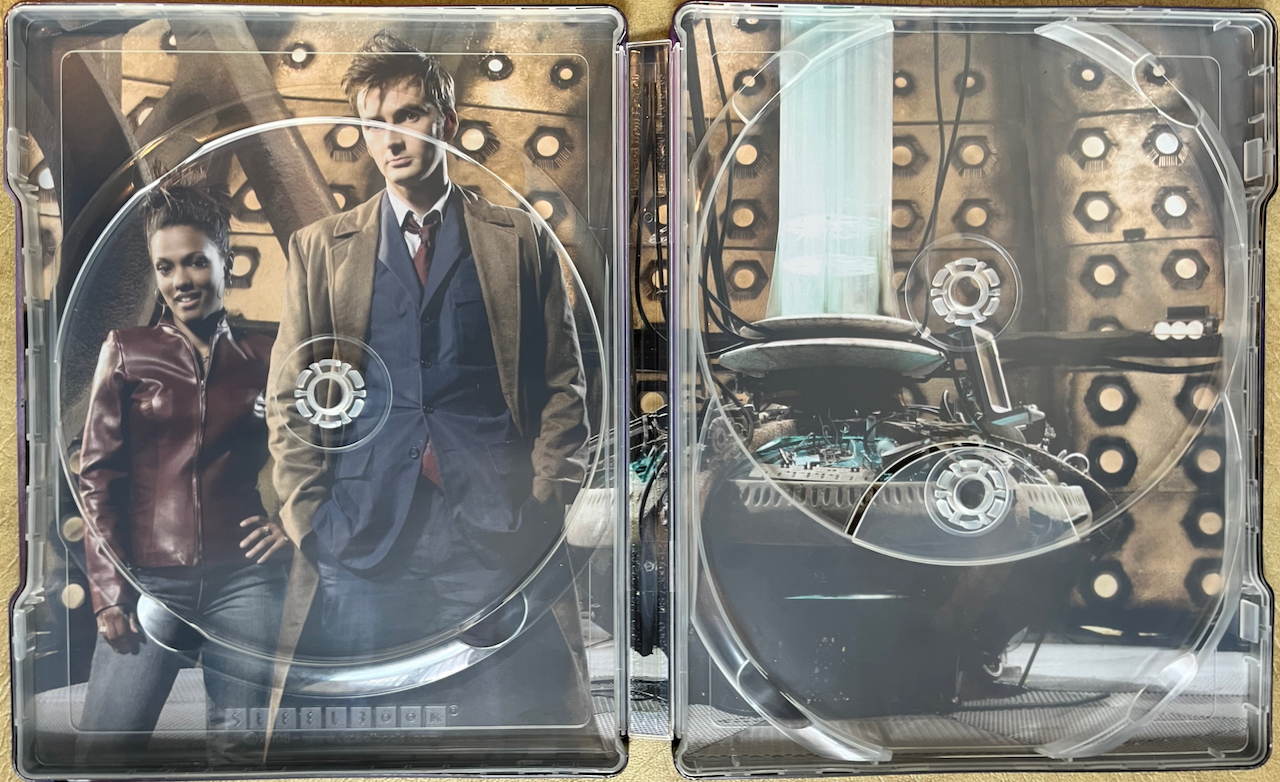
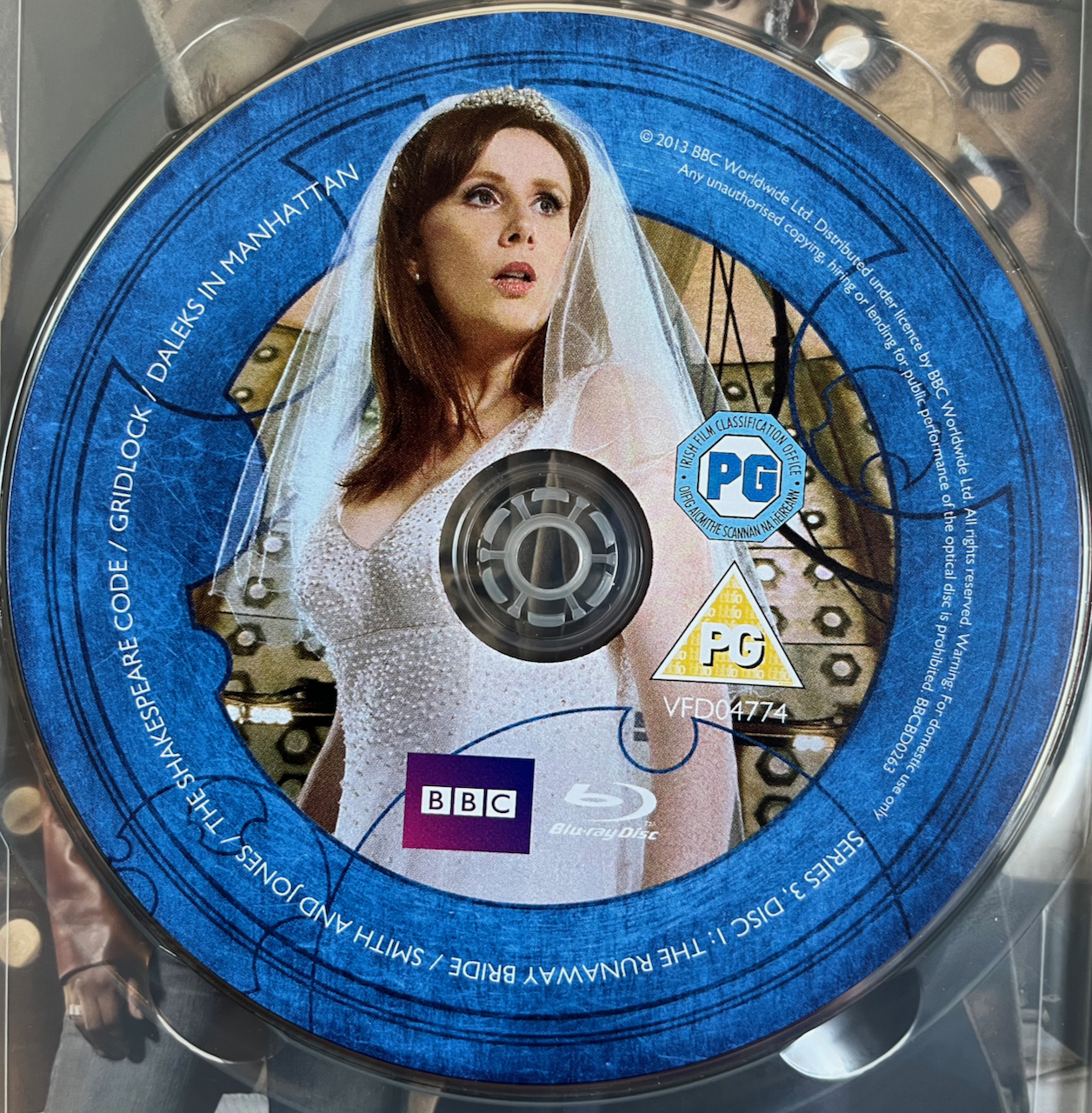
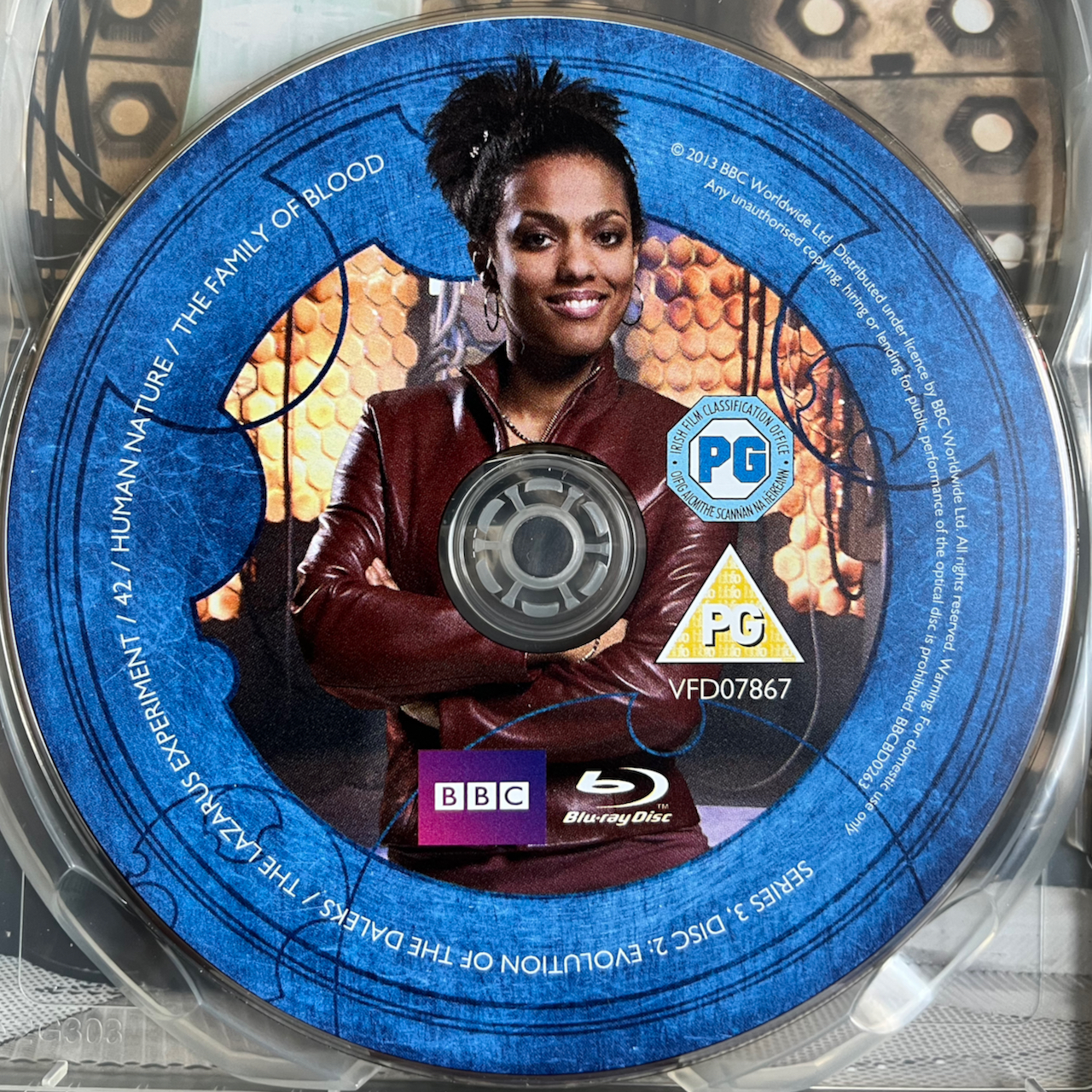
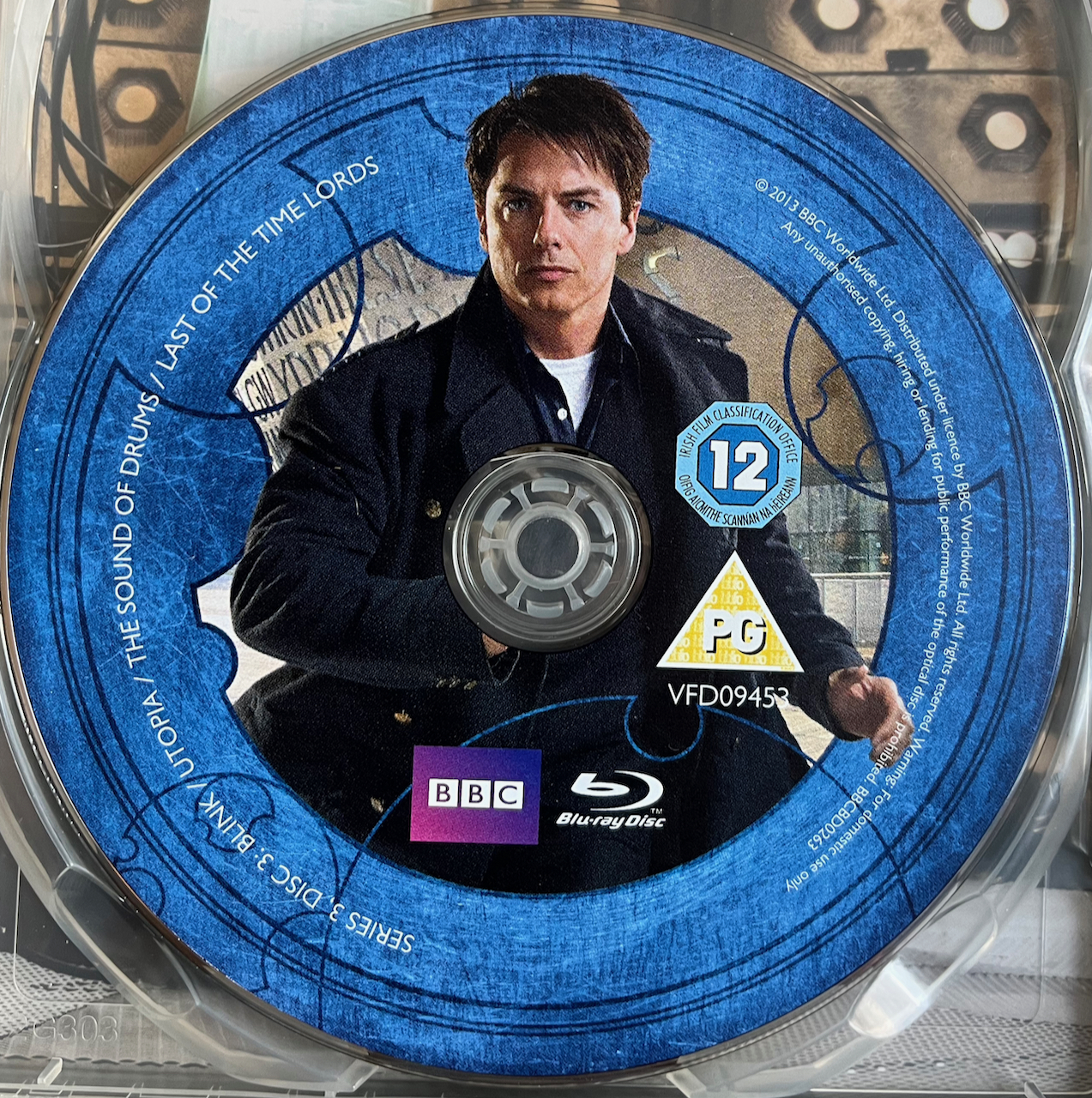
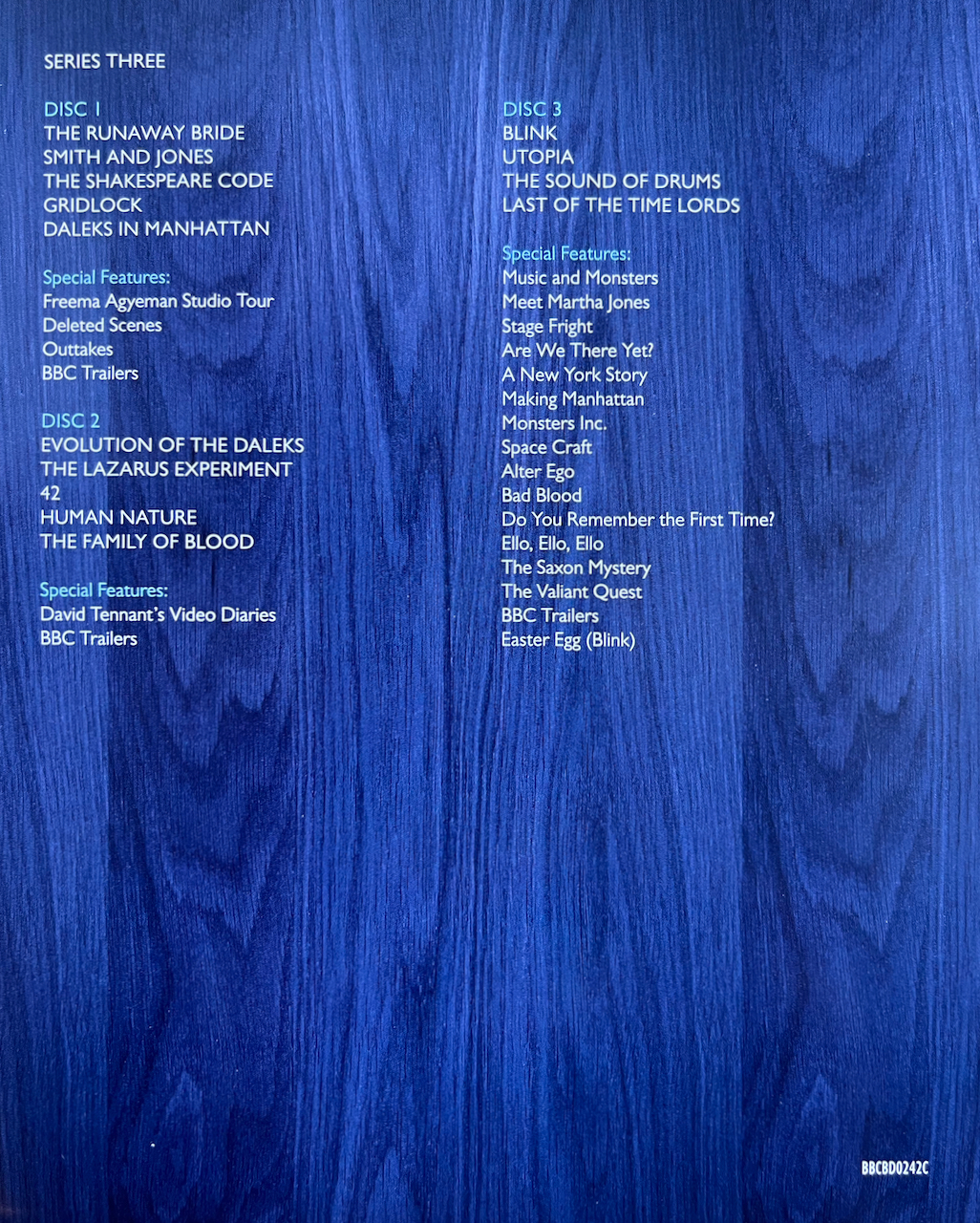
The inside of the steelbook also has an image of the Doctor and Martha, this time inside the Tardis, on top of which the 3 discs have images of bride Donna, companion Martha and Captain Jack respectively. There’s also a thin flyer inside the set as usual, that lists all of the episodes and extra features.
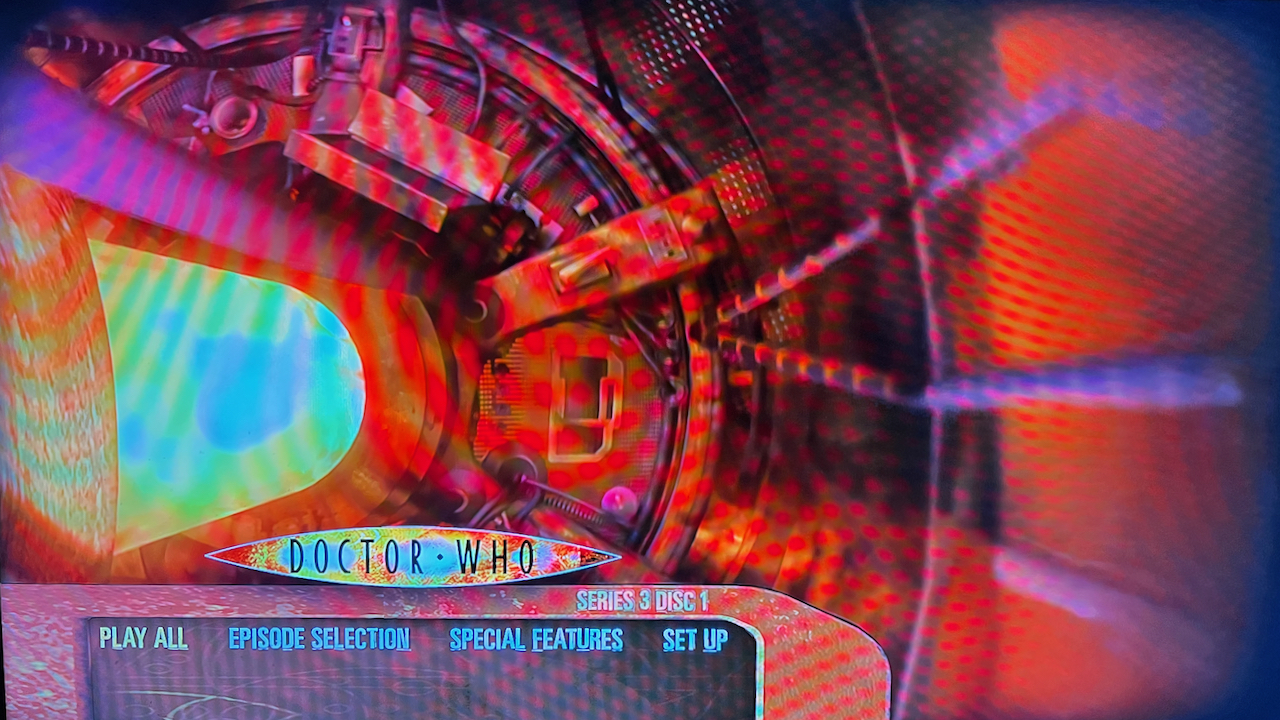
The menu is set against a backdrop of the Tardis console, accompanied by a variation of the Doctor’s Theme, a bit like the two previous series in that respect. This time, however, instead of a static shot in front of the computer monitor, the console now rotates as it’s viewed from above, bathed in a red light because it’s been turned into the paradox machine from the series finale. So it’s nice that the menu has more animation to it this time.
Old DVD Release
The old DVD set I used to own for the series had some nice design touches as well, so is also worth a quick mention. As well as an image of the Doctor and Martha, there was also a lenticular image of the Master, meaning that by tilting the case the card in his hand would say either “Saxon Is Your Man” or “I Am The Master”.
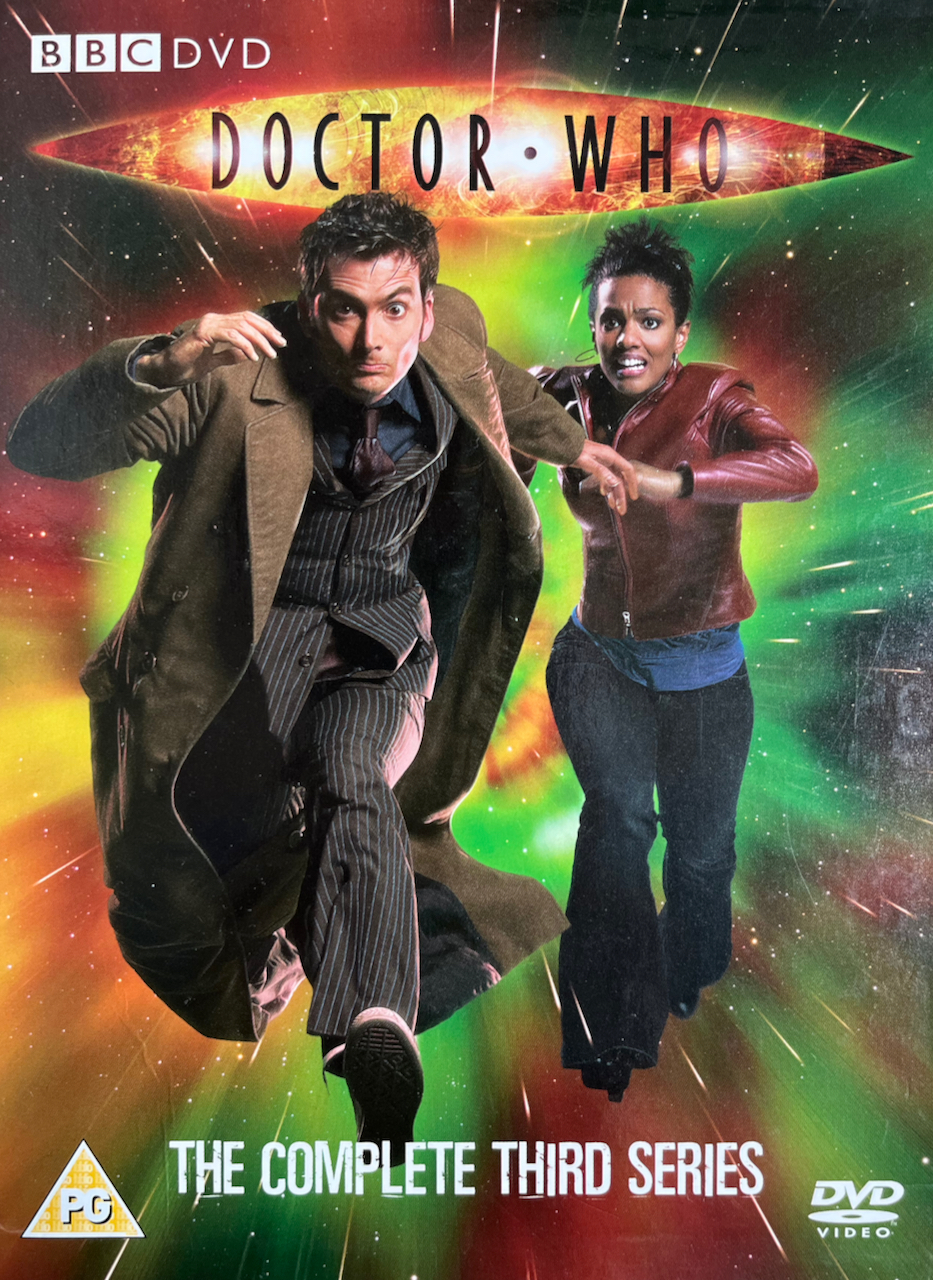
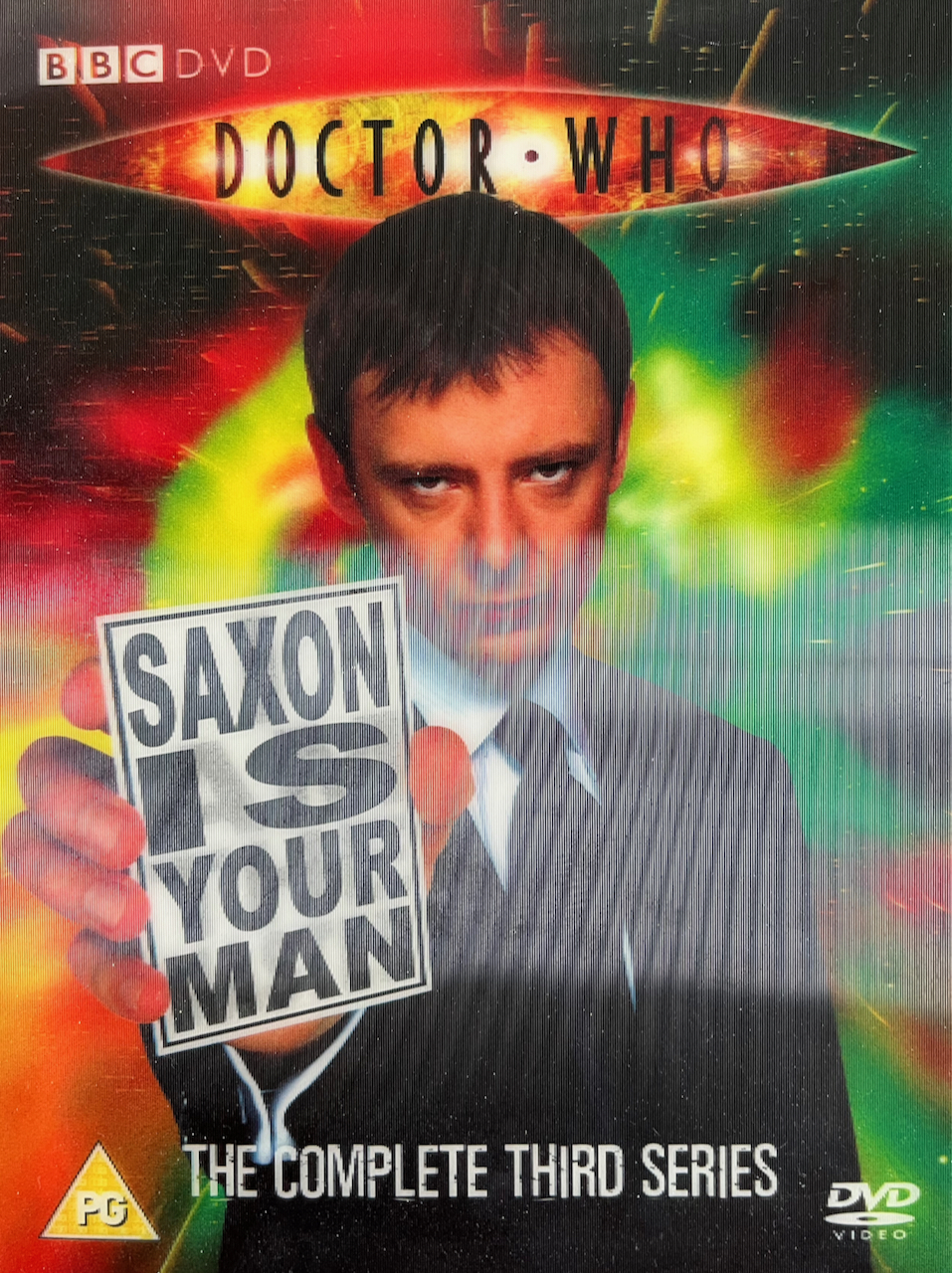
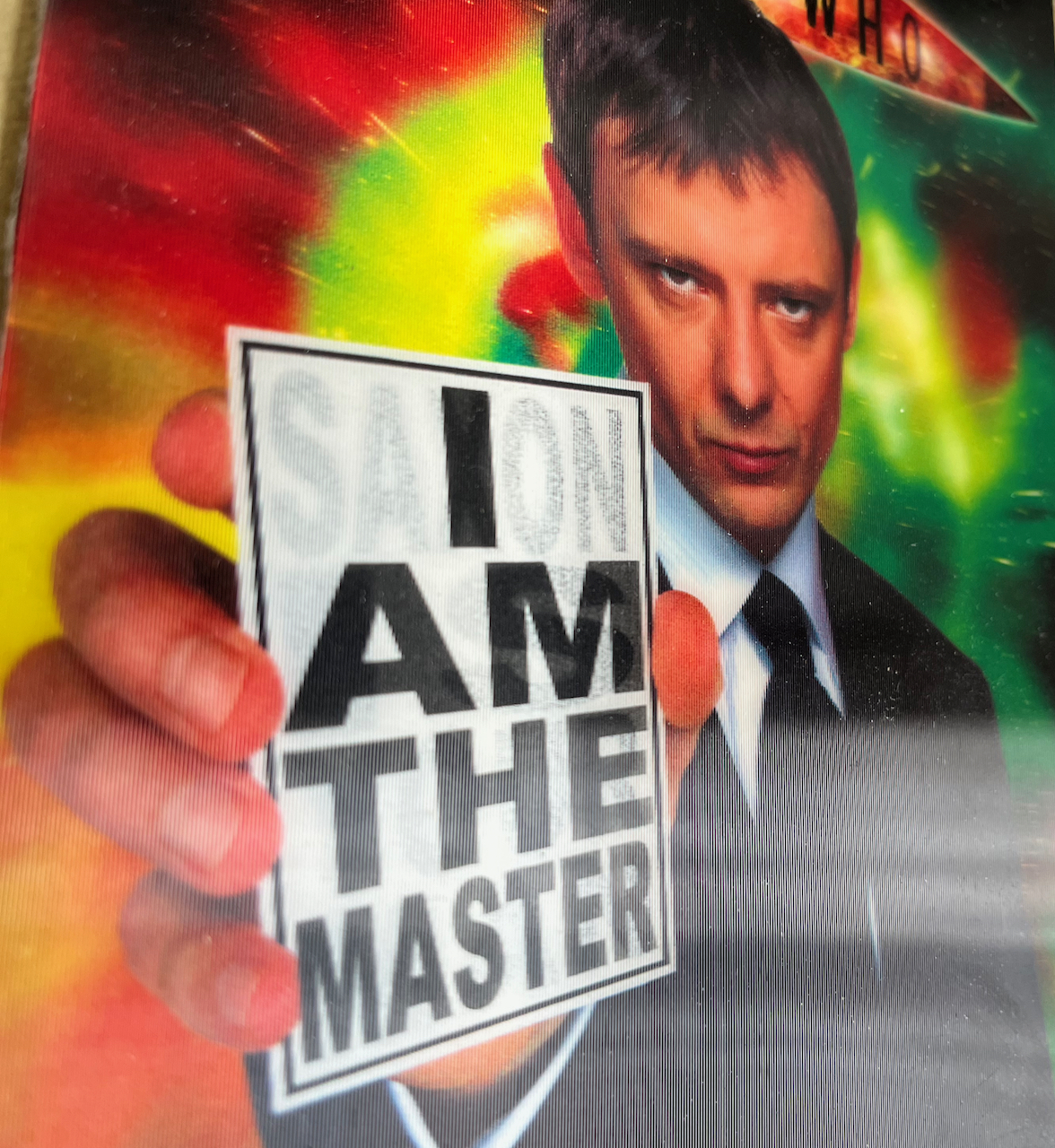
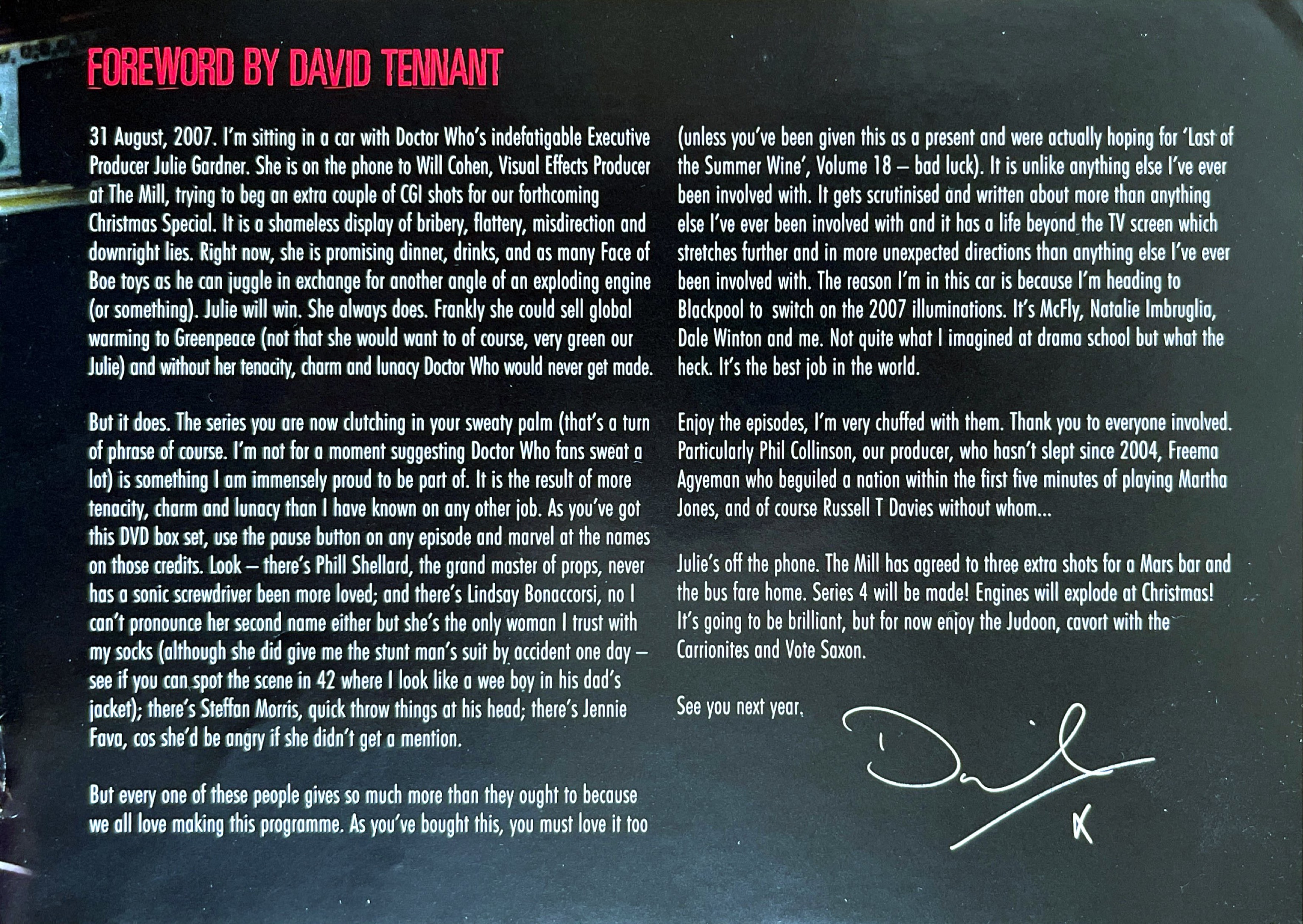
It also had a great booklet, with an amusing foreword by David Tennant, some nice images (which I’ll share for the relevant episodes in this post), information about each episode (synopses, writer and director credits, commentary participants and chapter points), and a list of the extras on each disc. It’s a shame they couldn’t replicate that book in some way for the Blu-ray.

It’s also a great pity that they couldn’t include audio navigation and audio description on the Blu-ray, as they had on the old DVD sets (with audio description from Series 1 onwards, plus audio navigation from Series 2). But sadly we have to wait until Series 6 until we get a properly accessible Blu-ray. However, audio description is available for every episode on BBC iPlayer, so if you don’t have the old DVDs that’s still an accessible way to watch it if you need it.
[November 2023 Update: The new Series 1-4 & specials box set includes audio description on every episode, but not audio navigation. It also corrects the conversion issue that causes the episodes to run 4% slower here, which I don’t notice anyway so I haven’t bought that new set.]
Episodes
Overview
As with the previous series, we get an hour-long Christmas special followed by 13 regular episodes of about 45 minutes each (though the final one is a few minutes longer), all spread across 3 Blu-ray discs. Altogether the episodes cover 10 stories (7 single episodes, 2 two-parters and a three-part finale), of which 4 stories are written by showrunner Russell T Davies, 2 are written by guys who would later become showrunners (Chris Chibnall & Steven Moffat), and the other 4 also have a different writer for each one. There are several seeds planted for the finale throughout the series as well, which all tie together really nicely, including references to a certain Mr Saxon.
At this stage the episodes were still being filmed in standard definition, not HD, so they’ve been upscaled for the Blu-ray. I don’t have the eyesight or expertise to assess the video and sound quality in-depth, which other people have analysed elsewhere anyway. But the episodes look awesome to me, especially with all the hard work that’s clearly gone into the gorgeous sets, costumes, prosthetics, etc, along with the spectacular special effects by The Mill.
Again the music was composed by Murray Gold, working with Ben Foster & the BBC National Orchestra Of Wales, and he released an excellent soundtrack album for the series. Unlike his first album combining elements from Series 1 & 2, from this point onwards he released a dedicated album for each individual series, and occasionally for certain specials. The album doesn’t feature every bit of the score of course, including themes reused from previous series, but several of the most important themes are included, and I’ll mention the various tracks as I go along here, pointing out my favourites. Some fans have also posted unreleased parts of the score on Youtube that they’ve extracted from the episode soundtracks, with variable quality, and I’ve added a selection on my Series 3 playlist.
Note: An animated special called The Infinite Quest was also broadcast on CBBC in 2007, starring Martha as the companion. However, this was included as an extra in the steelbook for the 2008-2010 Specials instead, so I’ll talk about it when I get around to reviewing that set.
Special: The Runaway Bride
- Writer – Russell T Davies
- First Broadcast – 25 December 2006
- Links – BBC / Wikipedia / Tardis Wiki
I will admit to feeling a bit apprehensive when Catherine Tate was revealed at the end of Series 2 to be in the Christmas special, as I wasn’t a big fan of her sketch show, which had been running for a few series by that point. Some of her characters in that just felt more irritating rather than funny to me.
However, credit where it’s due, she proved herself to be a great actress in this action-packed episode. Her character, Donna Noble, can be annoying to those around her, and isn’t at all afraid to stand up to the Doctor when she suddenly finds herself in his Tardis and can’t get back to her wedding. But after he saves her life in that spectacular Tardis vs taxi motorway chase sequence, and she gets to know him a bit, she learns to trust and respect him.
She also discovers, as is clear to us from the outset, how much he’s missing Rose. Given that the story happens immediately after the events of Doomsday, his feelings are still very raw. Donna’s sudden appearance gives him a vital diversion of someone else to focus on, as he has to return her home, figure out what happened to her, and keep her safe from the enemies that are after her. But every now and again, either because of Donna’s curious questioning or the Doctor’s observations of what’s going on around him, his grief becomes apparent, before he pushes it aside again.
It is then Donna who has to bring the Doctor back down to earth, during his defeat of the Empress of the Racnoss (played by Sarah Parish), pleading for him to stop when she can see him losing control of his grief and anger. And that’s despite the fact that she herself has just been thrown a devastating curveball by her fiancé Lance (Don Gilet), leaving her own emotions in a spin.
As a result of all that, the farewell scene between Donna and the Doctor is quite touching, accompanied by a nice bit of snow that the Tardis generates with some “atmospheric excitation”. The two of them have seen so much in their brief adventure together, including the creation of the Earth itself, which puts everything into perspective for Donna. But, to his surprise, she turns down his offer to keep travelling with him, scared of the danger and also of his emotional state. She does, however, offer wise words that he needs to find someone else. And he leaves her with the emotionally charged final line: “Her name was Rose.”
It’s lovely to see their friendship evolve during the story, and Catherine does play Donna very well, striking a good balance between the comedic and dramatic elements of the story, so it’s no wonder she was invited back full-time for Series 4. And David is great at playing those moments where the Doctor is pining for his former companion. It’s important that we see him going through the emotions, for the continuity of the story and his character, yet without making the episode feel too sad either, especially as it’s a Christmas special, and he gets the tone right here.

Other nice and notable elements in the episode include the zoom-in to Earth at the very start that is consistent with the opening visuals for Series 1 & 2, the fact that Donna’s arrival in the Tardis was reshot instead of reusing the Doomsday footage because they had a different director, the return of the robot Santas, Donna’s rant about not having pockets in her wedding dress and the Doctor’s later callback to it, the Doctor’s way of getting money out of a cash machine with his sonic screwdriver (which spewed out specially designed fake banknotes), the references to Torchwood, the use of the extrapolator as a callback to Boom Town in Series 1, the first mysterious mention of Mr Saxon when the army tank is told to fire at the Racnoss starship, and the cool way the Tardis shoots up in the air at the end instead of dematerialising. There’s always so much detail to enjoy in the show, always far more than I can mention or would want to spoil here, but those are examples of things that got my attention.
And underpinning it all is Murray Gold‘s evocative orchestral score of course, which is represented by a few tracks on the soundtrack album, my favourites being The Runaway Bride and Donna’s Theme, while After The Chase is also nice. We also get our first taste of The Doctor Forever, a beautiful and majestic theme that recurs throughout Series 3.
However, the fun and catchy Love Don’t Roam that people dance to at Donna’s wedding reception, sung by Neil Hannon from The Divine Comedy, is actually included on the Series 1 & 2 soundtrack album, as a teaser for the upcoming Christmas special (and a song from the next festive edition is on the Series 3 album for the same reason). In addition, the song was performed live by Gary Williams during the 2006 Celebration concert, where the BBC National Orchestra Of Wales also played a live rendition of the motorway chase score alongside a sneak preview of the scene. So it all helped to whet people’s appetite for the Christmas episode.
Also, in a nice win for accessibility, it’s worth noting that this episode was the first Doctor Who story to be broadcast with in-vision sign language, when it was repeated in the wee hours of the morning on 30 December 2006 as part of the BBC’s overnight Sign Zone strand.
Finally, as a bonus bit of trivia, David also appeared with a couple of the stars from this special in other TV shows, in the next few months prior to Series 3 launching. In February 2007 he was in a one-off drama called Recovery, where he plays a man who suffers serious head injuries in a road accident, and his wife is played by Sarah Parish (who had been Empress of the Racnoss and had also previously starred in Blackpool with him). It is on Youtube, and it’s very raw and heartbreaking, with David giving an incredible and very moving performance. And then in March, in complete and total contrast, he joined Catherine Tate for a very funny Comic Relief sketch, where he was the new English teacher for her “not bovvered” Lauren character, and she taunted him about looking like the Doctor (and they played similar roles for The Big Night In during lockdown in 2020 as well).
1. Smith And Jones
- Writer – Russell T Davies
- First Broadcast – 31 March 2007
- Links – BBC / Wikipedia / Tardis Wiki
Martha Jones makes a great entrance in this adventure, where the hospital she works in is suddenly transported to the Moon, in order for the rhino-like Judoon fleet to hunt down a Plasmavore they’ve been ruthlessly tracking down. The Plasmavore in question is posing as a human patient called Florence Finnegan (played by Anne Reid), and is able to evade scans for alien lifeforms by killing people and drinking their blood to assimilate their human biology.
But another new patient, Mr John Smith, grabs Martha’s attention with his two hearts and a cheeky grin, only a matter of hours after he had taken his tie off for her in the street with no explanation and then disappeared. And he takes a shine to her when she thinks logically during the crisis, instead of naturally going into a panicked meltdown like everybody else. So he reveals himself to be the Doctor, and Martha becomes increasingly fascinated by him as they work together to find and expose the Plasmavore for the Judoon to deal with.
The Doctor is under a bit of pressure too, given that his Tardis is back on Earth and he manages to break his sonic screwdriver in an x-ray machine. But he gives the ultimate sacrifice, by allowing the Plasmavore lady to drink his blood, knowing that his alien biology will make it impossible for her to hide the truth from the Judoon. Martha then has to save his life with CPR – and breathing air into his lungs isn’t the first time their lips meet, given the intense kiss the Doctor gives her earlier on, to transfer a bit of his alien DNA to her mouth as a distraction for the Judoon to find, and she’s quite taken aback by it!
So, having bonded strongly over that life-saving moment, the Doctor finds Martha back on Earth later that day, shows her the Tardis, proves it’s a time machine with the tie-removal trick, and invites her to join him for a trip, which of course she accepts. He insists it’s only one flight to say thank you, as he’s still in pain from losing Rose and would rather be on his own, but he’s clearly conflicted about whether to have another companion or not.
Amongst all of that, plus all the running up and down corridors that the show is famous for and the hospital lends itself perfectly to, there are again plenty of details to look out for and enjoy. For example, Martha’s striking similarity to the character Adeola, who Freema played in Army Of Ghosts in Series 2, is explained away as being a cousin of hers. She also utters what is believed to be the first use of a light swearword in the history of the series when she says, quite understandably, “We’re on the bloody moon!”. And she gets a lovely piece of theme music of her own, sung by Melanie Pappenheim, which pops up throughout the series. The song that plays when Martha is juggling phonecalls with different members of her family at the start of the episode is Sunshine by Arrested Development, which isn’t a track that I’m a big fan of on its own, but it fits the scene nicely enough.
Meanwhile the Doctor has a nice new blue suit, there’s a hint that he once had a brother (called Irving Braxiatel according to the novel Tears Of The Oracle by Justin Richards), he notices the little shop in the hospital (in a nice callback to his desire for one in New Earth), and he makes references to encounters he’s had with historical figures Emmeline Pankhurst and Benjamin Franklin.
There are also a couple more sneaky references to Mr Saxon, first by someone from the hospital who is being interviewed on the radio after their return to Earth, and then there are Vote Saxon posters on the walls of the alley where the Doctor introduces Martha to the Tardis.
So all in all it’s a strong start to what ultimately proves to be another excellent series. Martha has quite the life-changing journey ahead of her.
2. The Shakespeare Code
- Writer – Gareth Roberts
- First Broadcast – 7 April 2007
- Links – BBC / Wikipedia / Tardis Wiki
Martha’s first trip in the Tardis takes her back to London in 1599, where they meet William Shakespeare (played by Dean Lennox Kelly), a cheerful man who takes a shine to her, fascinated by her appearance and unusual lifestyle. So naturally there are numerous nods to Shakespeare’s life and work, as well as a few references to other people’s works and past episodes of the show. So there’s lots of in-jokes and details to look out for. Could Shakespeare’s use of the name Sycorax in The Tempest have been inspired by the Doctor’s mention of the alien race, for instance? It’s not the first time the playwright has been in the show either, as the character featured in The Chase in 1965 (which I haven’t seen), and there have been other references over the years to the Doctor’s encounters with him.
In this case, Shakespeare is writing a sequel to Love’s Labour’s Lost, called Love’s Labour’s Won. Doctor Who is great at taking real-life mysteries and adding an exciting sci-fi or fantasy twist to explain them, and this is a prime example, as it’s a play that’s long been rumoured to exist, but there are only theories about it rather than any definitive proof.
So here the play ends with a rather strange final page, as a trio of witchy Carrionites take control of Shakespeare in a voodoo-like manner, compelling him to write some phrases and numbers that will open up a portal for the rest of their kind to invade the Earth. The Doctor then uncovers the mystery of what’s going on and sets out to stop them, enlisting Shakespeare’s power of words to reverse the spell the author has unwittingly cast.
So it’s another lively story, and the way they’ve visualised the sets, costumes, props, etc really makes it feel like you’ve been transported back to Elizabethan times, especially as they were able to use the reconstructed Globe Theatre in London for some of the filming, which is such an impressive and iconic space. I think I might have gone in there once with my family as a kid, but I don’t remember it, and I’ve certainly never been there since. I should one day, even though I’m not into Shakespeare much. Over the past 5 years I have seen Much Ado About Nothing in Watford, an adaptation of his earliest work by Extant and an online Christmas show from the Globe during lockdown, but I don’t take a heavy interest in his stuff generally. A lot of it just doesn’t make sense to me, I’ve always struggled to interpret it since school.
Anyway, the connection between the Doctor and Martha also continues to develop here of course, and not smoothly, because he’s still grieving and conflicted, and not yet attuned to the way she’s feeling. He’s still adamant that this will be her one and only trip, and during the scene where they’re lying on a bed together he pours cold water on her excitement by talking about Rose. But then she almost has to save his life again, when Lilith, the younger of the Carrionites, stops his heart, little realising he has two. So Martha simply has to give his body a few slaps this time to get his system back to full working order.
Martha also helps to save the world by suggesting the final word for Shakespeare’s speech against the Carrionites – “expelliarmus” from Harry Potter. That franchise had also been mentioned earlier, with Martha comparing the magical events they were witnessing to the world of the boy wizard, and the Doctor responding to say how great the final book is (as the episode aired a few months before it was published). That scene is also accompanied by Murray Gold’s suitably epic piece The Carrionites Swarm, one of two tracks on the soundtrack album representing this episode (the other being Drowning Dry).
Finally, there’s an amusing moment at the end when Queen Elizabeth appears, declaring the Doctor her sworn enemy for reasons he’s unaware of, as he hasn’t yet met her in his timeline. It includes a triple exclamation of “What?” on his part, which is becoming a bit of a catchphrase for him, having uttered it 4 times when Donna appeared in the Tardis, and there are more instances to come later.
3. Gridlock
- Writer – Russell T Davies
- First Broadcast – 14 April 2007
- Links – BBC / Wikipedia / Tardis Wiki
Having seen how well she copes with a trip to the past – and it’s amusing to see the arrow that was fired at them is still stuck in the Tardis door to begin with – the Doctor amends his offer to Martha for just one trip, suggesting they take a leap into the far future as well. So he takes her to New Earth, which we first saw at the start of Series 2, and that in turn was a follow-on to the Series 1 episode The End Of the World, illustrating why humans had to leave for a new planet to begin with. So this is really the conclusion of a trilogy spread across the first 3 series. You don’t need to have seen the earlier episodes to enjoy this one, but if you have seen them then you’ll recognise the callbacks and some aspects of the story will make more sense.
Once again, however, the world is not how the Doctor expects it to be, especially when Martha is kidnapped by a couple of desperate strangers. He traces their route to a huge floating motorway deep under the city, where endless queues of seemingly identical cars are drifting incredibly slowly on multiple levels. It can take months to travel just a few miles, and years to get to your destination, if you ever get there at all, with no other way off the motorway. Martha was therefore taken because having 3 people gives access to a supposedly faster route further down – one that is actually filled with deadly crab-like creatures called Macra (40 years since their last appearance in the missing serial The Macra Terror), which are hidden to everyone above by all the layers of exhaust fumes.
Yet everyone seems quite content to accept this existence, aided by specially drugged neck patches, a reassuring woman on their TV screens, and their community spirit. There’s a particularly calm and sweet moment in amongst all of the action when everyone sings a hymn called The Old Rugged Cross, which is a regular ritual. It’s a shame that’s not on the soundtrack album really.
The Doctor, however, is having none of it. Something is clearly very amiss, so it baffles and irritates him that nobody is questioning it. As David succinctly puts it in the commentary, it’s “myopia of the masses”. He learns the basics of what’s been going on though in the first car he travels in, which is driven by a cat-person called Thomas Kincade Brannigan, played brilliantly by Ardal O’Hanlon. I love him as the dippy Dougal in the Irish sitcom Father Ted of course, and he’s been in lots of other things too.
The Doctor then sets about trying to reach Martha, by leaping dangerously down from car to car through the roof and floor panels. He encounters quite a variety of characters along the way, including a couple of nudists. It’s impressive how every car is decorated and populated very differently – that’s a huge amount of effort by the production team for some very brief moments on screen, but they have that keen attention to detail in every story, which is why the show always looks so great.
But when the Doctor gets to the final level above the fast lane, he’s interrupted and teleported away by Novice Hame (played by Anna Hope), who he’d met at the hospital on his previous visit to the planet. She takes him to the Senate building, where he learns the real reason that everyone is trapped on the motorway, and how they’re being kept alive by the Face Of Boe.
Boe is believed to be the longest living creature in the universe, and appeared in the previous two stories of this trilogy, initially as just a cameo in the first one before being given a slightly bigger role in the second. But this time it’s his swan song, as he’s spending his life force to keep the motorway running, and gifts his very last breath of energy to aid the Doctor in releasing everyone so they can fly up and emerge into daylight again.
So by the time Martha is reunited with the Doctor, The Face Of Boe is dying in front of them. But his last words – “You are not alone” – catch the Doctor off guard, and will come back to surprise him again later in the series.
As well as Boe dying, this was also the last time we saw Novice Hame in the TV show. But Anna Hope did reprise her role later on – firstly in two of the stories in the Tales From New Earth audiobook by Big Finish, and then in a beautiful audio story written by Russell T Davies with music by Murray Gold, where David Tennant returns as the Doctor and visits Novice Hame at her death bed as part of his goodbyes prior to his regeneration.
Anyway, meeting Boe gives the Doctor plenty to think about, but then so does Martha, as she sternly forces him to talk to her at the end of the episode, at which point he emotionally opens up about his beloved Gallifrey and how homesick he is for it. It’s a heartbreaking scene given David’s performance in particular, yet also heartwarming given that it marks a major step change in the relationship between the two characters. Whilst kept apart earlier in the episode, they had started to consider how they’d been behaving, with the Doctor showing off and lying to her, and Martha just getting into his time machine without considering the potential consequences. So this is a sad but nice way of bringing them back together in a stronger manner, as Martha now understands him a lot better, and they can trust and support each other more going forward.
That final scene is backed by another heavenly hymn, Abide With Me, which is on the soundtrack album. I don’t take an interest in hymns generally, but the two that are used in this show fit perfectly with their respective moments. Other relevant tracks on the album include the sublime theme for Boe and the Gridlocked Cassinis.
But one of my all-time favourites from the show that pops up in this episode is All The Strange, Strange Creatures. This was initially used in the trailer for Series 3 (and again for Series 4), hence it’s referred to as the Trailer Music, and this is the first of several episodes where variations of it appear as well. It’s absolutely glorious.
4 & 5. Daleks In Manhattan / Evolution Of The Daleks
- Writer – Helen Raynor
- First Broadcast – 21 & 28 April 2007
- Links (4) – BBC / Wikipedia / Tardis Wiki
- Links (5) – BBC / Wikipedia / Tardis Wiki
This 2-part adventure marks the first time that a woman had written a story in the modern era of the show, and Helen became the first female to have written a Dalek story in the entire history of the programme. It isn’t quite as thrilling as the Dalek stories from the last couple of series, but nevertheless it’s still a very well-written and suitable continuation from them, with an interesting twist on how the Daleks think and behave.
The Cult of Skaro are a group of 4 Daleks with a specially designated purpose, to think outside the box and find new ways to survive – or new ways of killing, as the Doctor interprets it. Unusually for Daleks they even have names, with leader Dalek Sec in charge of Daleks Caan, Jast & Thay. It was this group who attempted to take over the world in the Series 2 finale. But when the Doctor foiled their plans, they performed an emergency temporal shift to escape.
So in this new story we discover that they ended up in New York in 1930, during the Great Depression, where they’re working on the creation of a Human-Dalek hybrid. People are being forcefully taken – often the homeless in Hooverville that nobody will miss – and either converted into pig slaves or taken to the laboratory for conversion. And in order to perform those conversions, the Daleks need to harness the power of a gamma ray from the Sun that is about to strike the Earth, so they order local workmen to add a special mast to the newly-built Empire State Building (which I once visited many years ago).
The first episode therefore sees the Doctor and Martha looking into the mystery of who’s taking people and why, and then the second episode is about the Doctor trying to stop his oldest foes once again, much to his frustration (“They always survive while I lose everything.”). The fact that Martha is now on her third trip with the Doctor – despite his initial promise that there would be just one, which was then updated to one past and one future – is explained in a lovely opening scene that was sadly cut from the episode, where she persuades him to take her the long way home. He’s tempted to keep her around anyway, despite his insistence otherwise, but he finds it hard to say it, given that he’s still mourning the loss of Rose.
Along the way they meet people like Solomon (the leader of Hooverville, played by Hugh Quarshie), showgirl Tallulah (played by Spooks star Miranda Raison, whose jazz pianist father Nick joined the BBC National Orchestra Of Wales for these episodes), Laszlo (Tallulah’s boyfriend, who is turned into a pig slave, played by Ryan Carnes), Mr Diagoras (a keen businessman working with the Daleks, played by Eric Loren) and Frank (a young man from Hooverville, played by Andrew Garfield during the early stages of his TV career, before he became an international award-winning movie star, particularly as Spider-Man amongst many other roles).
But ultimately, despite the great supporting cast and the way in which the Doctor puts his life on the line again to save the day, it’s the Daleks themselves that hold the most fascination, as they openly question what they’re doing and argue with their leader, due to their growing concerns that the true Dalek form is being degraded by adding humanity into it. As a result, Dalek Sec, now in Human-Dalek form, is forcibly removed and replaced by Dalek Caan, who then commits genocide by killing their hybrid creations, before escaping from the infuriated Doctor with another emergency temporal shift. The Doctor is at least able to save Laszlo’s life though, even if he can’t restore his proper appearance.
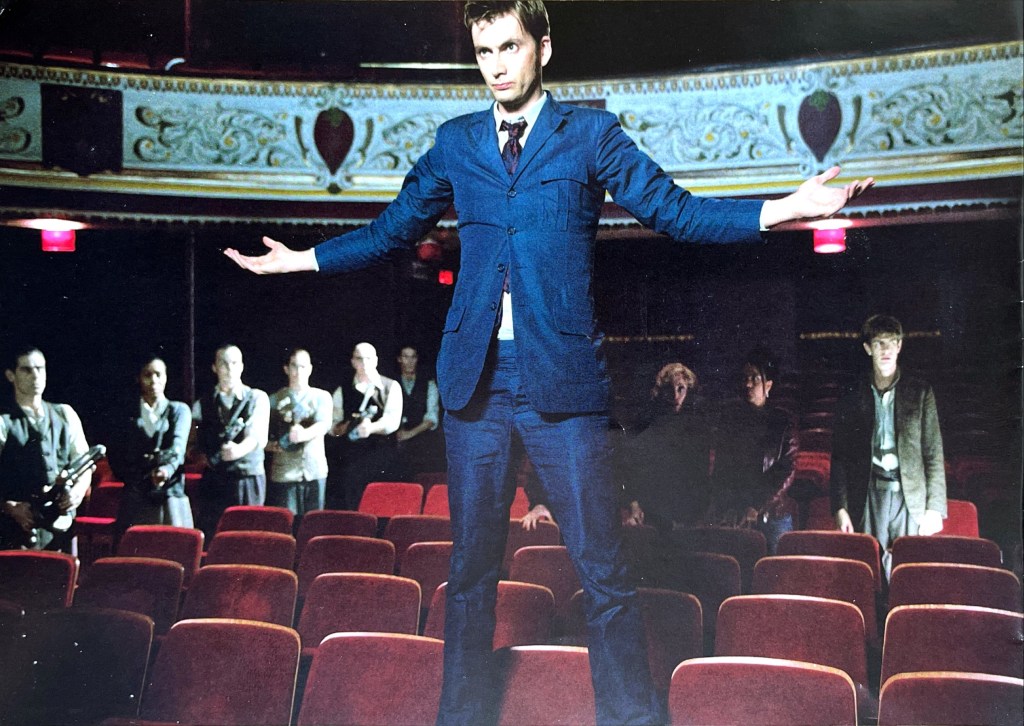
This story also features a catchy original song called My Angel Put The Devil In Me, which is sung by Tallulah in the show and Yamit Mamo on the album, alongside Murray’s ominous Evolution Of The Daleks theme and familiar Dalek music from the last couple of series. Plus during the episodes we also hear a recording of Putting On The Ritz by Irving Berlin (a song that I really enjoyed hearing when I saw the stage show Young Frankenstein in 2017), as well as a version of Happy Days Are Here Again.
6. The Lazarus Experiment
- Writer – Stephen Greenhorn
- First Broadcast – 5 May 2007
- Links – BBC / Wikipedia / Tardis Wiki
At the start of this episode, the Doctor brings Martha back home as he promised he would – and with impressive accuracy for once, landing in her bedroom the night after they had first left (unlike with Rose, where he was a whole year out). Martha is very disappointed of course, and we already know the Doctor is in two minds about it as well, but he’s prepared to sacrifice her companionship to ensure her safety, given what happened with Rose.
However, he becomes rather distracted from his departure by a TV news report featuring Martha’s sister Tish (played by Gugu Mbatha-Raw in one of her earliest TV roles, before she went on to star in several big films and dramas, get an MBE and become a UN ambassador for refugees). Tish has got a PR job working for Professor Lazarus (played by Mark Gatiss, who had written 2 Doctor Who episodes by this point and went on to write 7 more), and it’s him that the Doctor takes an interest in, given his wild claims about changing what it means to be human.
So the Doctor and Martha attend a posh event where the Professor shows off his new machine, which miraculously transforms him from an old man into a younger adult version of himself. But the Doctor knows it’s not that simple, and is proved right when the Professor’s destabilised DNA turns him into a horrifying creature that sets about attacking everyone.
Ultimately, therefore, it’s a typical adventure that involves running away from a deadly monster, until the Doctor figures out a way to stop it, resulting in a big showdown at Southwark Cathedral. Plus it raises the obvious questions about how much you could and should control and extend one’s life, and how lonely it can be to live for such a long time, as the Doctor knows only too well. So in those respects the story isn’t anything special, but it’s still fun regardless, and it does actually have great significance during the series finale.
The other important thing about the episode is that it shows Martha being reunited with her family for the first time, with her mother Francine (Adjoa Andoh) getting very suspicious of the Doctor and ultimately giving him a big slap, despite the fact that he’s saved their lives. It doesn’t help that a mysterious man maliciously fuels her doubts about him, leading to the final message that Martha misses on her answering machine, with a warning that comes direct from a certain Harold Saxon. He had earlier been mentioned as having a deep interest in the Professor’s experiments as well, and his name continues to be very prominent in subsequent episodes.
But yes, despite the Doctor’s intent to leave her behind, Martha is easily able to persuade him to take her on as a proper companion rather than just a casual guest. She’s more than proven herself to be very capable and trustworthy, and having her around is better for the Doctor than being on his own, so it is to his advantage.
The moment also marked a convenient halfway point for the series, which then had to skip a week because of the Eurovision Song Contest, so on its original broadcast a teaser trailer for all the remaining episodes was included before the credits. On the DVD, Blu-ray and most TV repeats, however, a standard trailer for the next episode is used instead, which makes sense.
7. 42
- Writer – Chris Chibnall
- First Broadcast – 19 May 2007
- Links – BBC / Wikipedia / Tardis Wiki
Alongside his work on spin-off Torchwood, Chris makes his writing debut on Doctor Who itself with a story that has a similar vibe to The Impossible Planet & The Satan Pit from the previous series, whereby the Doctor and his companion find themselves on a spaceship that’s on a dangerous collision course, and some members of the crew are possessed or killed by an unseen evil force that makes getting out of the situation all the more difficult. The Doctor even wears the same space suit, albeit repainted. But it’s still a fun adventure, with a lot of dramatic tension, a few deaths, cool visual effects, and a great music score underpinning it all that’s sadly not represented on the soundtrack album.
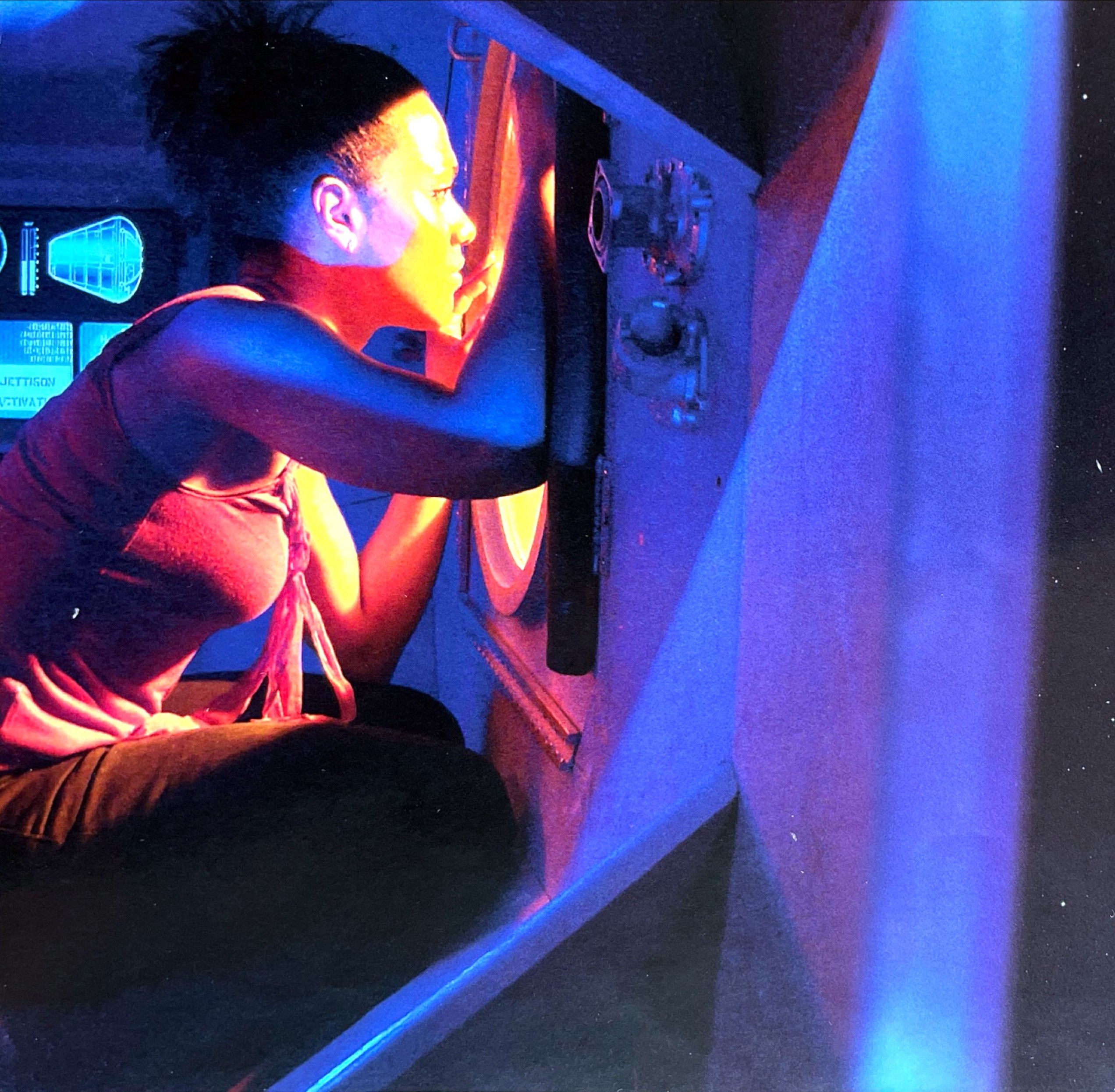
This time the ship is a cargo vessel led by Captain Kath McDonnell (Michelle Collins), and the enemy is the living sun they’re heading towards, which hasn’t taken at all kindly to the unwitting crew mining its heart for fuel. It therefore disables their engines so they start getting pulled in, and the crew send out a distress signal. Those early moments are given further detail in the online text prologue by Joseph Lidster that accompanied the episode.
So as our heroes arrive in response to the distress call, there are only 42 minutes until the ship crashes into the sun (hence the episode title, which is also a nod to drama series 24, and the crucial number in The Hitchhiker’s Guide To The Galaxy). We therefore see events unfold roughly in real time, which is a nice twist for the show and gives added urgency to the story, as they all have to race against the clock to find a solution, including a lot of running up and down corridors as is traditional. But the sun is also taking over a couple of members of the crew, who in turn start to obliterate their colleagues with the ominous phrase “Burn with me.”
Martha, now accustomed to this dangerous life with the Doctor, gets stuck in as she tries to help the crew, despite naturally being as frightened as everyone else of being burned alive. In particular, she partners up with Riley Vashtee (William Ash) to help him solve the passwords for all of the locked doors they have to pass through (they’re deadlock sealed, which is the standard story beat they add to explain why the Doctor can’t open something with his sonic screwdriver, otherwise it would be too easy).
But Martha and Riley are forced into an escape pod by the sun-possessed Dev Ashton (Gary Powell), who had been infected by the captain’s husband Hal Korwin (Matthew Chambers). Ashton then forces the pod to be jettisoned, and there’s a moving moment when the music and sound cuts out, and the Doctor can be seen silently shouting “I’ll save you” to a panic-stricken Martha as the pod drifts away towards the sun. It’s a moving moment, but he soon gets her back of course, by donning the spacesuit to go outside the ship and switch on a powerful magnet to retrieve the pod.
It’s then Martha’s turn to take control and help to save him, as the Doctor gets infected, and the only solution seems to be to freeze him, just long enough for the fiery entity inside him to be killed before he is. It’s very unusual to see the Doctor this terrified, which makes it all the more dramatic, even more so as the power is cut while he’s only partially frozen. But he’s able to give one final idea to Martha, and with a mad dash through the corridors she’s able to tell a couple of the remaining crew members what to do. So they save the day with just a few seconds to spare, as is typical for a story like this.
In addition to all that, having earned the “frequent flyer’s privilege” of universal roaming on her mobile phone (and a Tardis key by the end of the episode), Martha calls her mother a few times during the story – to get help with one of the password questions, then when she thinks she’s going to die in the pod, and finally to let her know everything’s alright. But her mother, still very suspicious, presses her for information about the Doctor. Martha doesn’t respond to that, but she also doesn’t realise that there are agents listening in and tracing the call on behalf of Mr Saxon, who also happens to be standing for election that day.
8 & 9. Human Nature / The Family Of Blood
- Writer – Paul Cornell
- First Broadcast – 26 May & 2 June 2007
- Links (8) – BBC / Wikipedia / Tardis Wiki
- Links (9) – BBC / Wikipedia / Tardis Wiki
This story, adapted by Paul from his 1995 novel, is really striking and interesting, because it sees David Tennant, and indeed The Doctor, playing a very different role for a change. And, as good as all the previous episodes have been, this 2-parter launches a solid run of the 6 best episodes of the series. Indeed, it sets up a pivotal element of the series finale as well.
The Doctor, with Martha alongside him of course, is running from the Family Of Blood, who are able to track him through time as well as space. So he has to hide from them for a few months until their life energy runs out, and the only way he can prevent them detecting a Time Lord is to stop being one.
So he uses a device in the Tardis called a Chameleon Arch to transform his biology into that of a human, storing his unique Time Lord features and memories in a pocket fob watch decorated with Gallifreyan symbols. He takes on the identity of John Smith (the same name he used in episode 1), not just as an act but really believing he is this new person, with fake memories that the Tardis has created for him and no idea what’s in the watch. David Tennant makes him completely distinct from the Doctor, his acting is top notch here.
It’s therefore Martha’s job to watch over him, to stop him coming to harm or causing harm to others, and to open the watch to help him restore his usual self if they’re discovered. He leaves her a video of 23 instructions to guide her, which she watches when returning to the Tardis by herself. She fast forwards through most of it, but the full recording is included as one of the deleted scenes on the Blu-ray, and it’s very amusing. Instead of 23 commands, we get a stern fifth directive about not letting him eat pears, and then David Tennant improvises, mentioning the Radio 4 panel game Just A Minute, talking about indie rock band the Housemartins and making silly random noises, before a seamless segue straight back into the script for the final instruction that Martha hears.
The pair of them take up their temporary new life at a public school in 1913, with John Smith as a teacher and Martha as a maid. But things don’t go according to plan of course. A curious boy called Tim Latimer (Thomas Brodie-Sangster), who is uniquely able to perceive voices from the watch, takes it and opens it, discovering the truth about the Doctor’s identity. But the Family Of Blood also detect it from afar, so they descend on the school to try and flush him out, possessing a few local people to give themselves physical form, bringing scarecrows to life, and forcing the school to place its students on a war footing. Martha consequently struggles to find the watch and convince John Smith who he really is.
But perhaps the biggest danger is the one that the Doctor hadn’t forewarned Martha about – falling in love. John Smith becomes romantically attached to nurse Joan Redfern (played by Jessica Stevenson, known today as Jessica Hynes), and discusses his dreams with her, where he’s been imagining himself as a mysterious Doctor. He’s documented them in A Journal Of Impossible Things, which contains writing and sketches referring to the Doctor’s past. It’s the first time in the modern revival that some of the Doctor’s previous incarnations have been depicted on screen, while the book also shows the Tardis, the pocket watch, companions, enemies, locations, and so on. It’s well worth freeze-framing to admire the work that’s gone into that prop by artist Kellyanne Walker. A user on LiveJournal transcribed some of the pages, and a small version of the journal was released as a toy a few years later. But in the original novel John Smith had actually written a children’s story instead.

So when Martha tries to persuade him of his real identity, John Smith is very upset at the idea of losing the love of his life, in order to become a man who he perceives as being very lonely. It ultimately takes a combination of Martha’s pleading, the boy Tim returning the watch, an intimate discussion with Joan, and the sight of the village being destroyed, to persuade John Smith to effectively commit suicide, in a manner of speaking. It’s heartbreaking, especially as he and Joan see visions, generated by the watch, of how wonderful their life could be if he remained human, with marriage and kids.
The Doctor still recognises Joan afterwards, and offers her the chance to join him as a companion, but it’s not an offer she can accept, as it’s hard for her to come to terms with him being a different man than she expected. And as for Martha, she openly admits to John Smith that she “loves the Doctor to bits”, while hoping he doesn’t remember that when he changes back. It’s left open as to whether he remembers it or not – either he did, but didn’t want to embarrass her by bringing it up, or it had been wiped from his mind. Either would make sense.
The Doctor does save the day of course, dishing out novel punishments to each member of the Family Of Blood, granting them their wish to live for eternity in a way they hadn’t anticipated.
One of them involves trapping a little girl holding a balloon, called Lucy Cartwright, in every mirror, and he goes on to visit her once a month. She later reappeared in a trilogy of short stories by episode writer Paul Cornell, which were published online during the Covid pandemic. In The Shadow Passes, a text story, Jodie Whittaker’s 13th Doctor recalls Lucy with a hint of regret when talking to Yaz. Then there are two audio tales on Youtube – Shadow Of A Doubt is narrated by Lisa Bowerman as Bernice Summerfield, a companion of the 7th Doctor who discovers a mirror with Lucy inside it, and The Shadow In The Mirror stars Lauren Wilson as Lucy, recalling a life-changing visit by the 13th Doctor.
We also see Tim going on to fight with one of his friends in World War I, holding on to the now-empty pocket watch the Doctor had given him, and dodging a bomb he had seen coming at a set time in a future vision. The Doctor and Martha then pay a visit to a war memorial to see him as a veteran several decades later, which is really sweet.
So it’s a very enjoyable, emotional and well put-together story. And the music in the episodes is very nice too, with 6 pieces included on the soundtrack album, namely Mr Smith And Joan, Only Martha Knows (used in Human Nature without the whistling melody when Martha enters the Tardis by herself), Smith’s Choice, Just Scarecrows To War, Miss Joan Redfern and The Dream Of A Normal Death.
David Tennant was also reunited with Jessica Hynes in November that year, in a comedy-drama she had written for the BBC called Learners. The 80-minute TV film stars Jessica as Beverley, who is desperately trying, but failing, to pass her driving test, so she can then take on a better job to earn a decent wage. Her impatient husband Ian – played by Shaun Dingwall, aka Rose’s father Pete from Doctor Who – has been getting on her nerves in his attempts to teach her, so she starts taking lessons from a gentle, friendly, Christian guy called Chris instead (played by David). She becomes very attracted to him, but he fancies his boss Fiona (played by Sarah Hadland), who in turn is also having an affair.
And it’s alright, with some amusing and sweet moments. It’s not something I’d watch again or buy on DVD by any means, but it was interesting to see it on Youtube out of curiosity, especially with David, Shaun and Jessica from Doctor Who in it together. It further illustrates David’s versatility as well, as his character is completely different to the Doctor and John Smith.
10. Blink
- Writer – Steven Moffat
- First Broadcast – 9 June 2007
- Links – BBC / Wikipedia / Tardis Wiki
It’s a strange quirk of the series, but also gives huge credit to Steven Moffat’s writing, that one of the very best episodes in the entire modern era of the show is a Doctor-lite story – i.e. one that the Doctor has little direct involvement with, because it was double banked with another episode being filmed at the same time. So he and Martha only appear a few times here.
Based on a short story Steven wrote for the 2006 Doctor Who annual entitled What I Did On My Christmas Holidays By Sally Sparrow, this episode makes very clever use of the time travel concept, and invents a terrifying new enemy known as the Weeping Angels (all played by actresses Aga Blonska and Elen Thomas in incredible prosthetics). As we learn during the episode, the Angels are almost as old as the universe, and have a very clever defence system, being quantum locked. This means they turn to stone whenever any other living being sets eyes on them, so they cannot be harmed. But when they’re not being observed, even if you just blink for a split, they move rapidly. It’s a great power, but also their greatest curse, as they can’t even look at each other without being frozen – hence they cover their faces with their hands to prevent that risk, which makes it look like they’re weeping.
They don’t kill you though. Instead, as soon as they make contact, you’re thrown back to a random point in time, several years or decades previously. There’s no way back, so you just have to live your life from that point onwards, adjusting to whatever place and period you’ve wound up in. And the Angels feast on your potential energy – the days you were supposed to have had in the future.
We discover all of this through the eyes of Sally Sparrow, played by Carey Mulligan. It’s a role that won her the Constellation Award for Best Female Performance In A 2007 Science Fiction Television Episode, alongside David Tennant winning the equivalent male title for the previous two-parter, and the show itself being honoured as Best Sci-Fi TV Series Of 2007. And while we’re on the subject, Steven Moffat won the BAFTA Craft and BAFTA Cymru Best Writer Awards for this episode, along with the Hugo Award for Best Dramatic Presentation, Short Form. Plus the episode is further notable for being the first in the modern revival to be directed by a woman (Hettie MacDonald).
Sally encounters mysterious happenings when exploring a large disused house, including writing on a wall from the Doctor, statues that seem to move, and then her friend Kathy Nightingale (Lucy Gaskell) disappearing just as a man delivers her a letter from a much older Kathy, written in the past.
She then meets Kathy’s brother Larry (Finlay Robertson), who has discovered a strange hidden Easter Egg on a bunch of DVDs, featuring the Doctor saying random phrases, as if only having one side of a conversation. Further investigation, including meeting a policeman who also gets caught by an Angel, leads Sally and Larry back to the disused house, where they watch the clip on a portable DVD player and it becomes apparent that Sally is the other half of the discussion. The Doctor, trapped in the past with Martha because the Angels have his Tardis in the present day, is reading from a transcript of the chat that Larry is writing at the time, which Sally would later give to the Doctor at an earlier point in his timeline. It’s very cleverly written, and Steven Moffat explains in the commentary how complicated it was to figure out. Sally and Larry then have to try and get away from the Angels, without blinking, and send the Tardis back to the Doctor.
The other fun thing about that complicated conversation is that the full 5-minute Easter Egg of the Doctor talking is hidden on both the DVD and Blu-ray box sets of the series. On the old DVD set, it’s on Disc 4, by going to Scene Selection, highlighting “9. Keep Looking” on the second page for Blink, pressing up to highlight the episode name, and hitting Enter. On the Blu-ray set, however, it’s on Disc 4, if you go into BBC Trailers, highlight Episode 11 and press left to reveal a secret icon to click on.
[November 2023 Update: In the new Series 1-4 & specials box set, this is just a regular menu option instead of being hidden.]
So all in all it’s an excellent story, and it was even voted the second best Doctor Who story ever in a poll by Doctor Who Magazine in 2009 (after The Caves of Androzani, the last adventure for Peter Davison, which I’ve never seen so I can’t compare). The Weeping Angels have since returned several times, as has the Doctor’s phrase “wibbly-wobbly timey-wimey” on a few occasions. There’s also a short suite of music from the episode on the soundtrack album.
A song was even written about the episode by a rock band of Doctor Who fans calling themselves Chameleon Circuit, initially as an acoustic version online before a rock version was included on their self-titled debut album. So the episode has really captured the hearts and imaginations of the fanbase, and with very good reason. It certainly makes you look at statues in a completely different way!
11-13. Utopia / The Sound Of Drums / Last Of The Time Lords
- Writer – Russell T Davies
- First Broadcast – 16, 23 & 30 June 2007
- Links (11) – BBC / Wikipedia / Tardis Wiki
- Links (12) – BBC / Wikipedia / Tardis Wiki
- Links (13) – BBC / Wikipedia / Tardis Wiki
As if the previous couple of 2-part series finales haven’t been epic enough, this time we’re spoiled with a 3-part conclusion that ties up several story strands, throws in some big surprises, and brings back a couple of important characters.
For a start, it’s wonderful that we’re reunited with Captain Jack Harkness (John Barrowman), when the time agent leaps on to the Tardis and clings on for dear life as it flies through the vortex. As discussed in the commentary, Russell T Davies would have loved it to continue straight into the title sequence, with Jack visible throughout, which would have been really cool. But they weren’t able to do that, hence an extra little scene was added to avoid an awkward jump cut. One or two fans have tried to imagine it, but it would be awesome if the BBC re-edited the opening one day. Still, John Barrowman did get the honour of his name being added in the titles after David and Freema, which is the first time an extra name had been added.
Captain Jack is no ordinary being though. When Rose brought him back to life at the end of Series 1, having absorbed the power of the time vortex, she inadvertently made him immortal. And the Tardis doesn’t take kindly to an impossible thing holding on to it. So it flies all the way to the end of the universe to try and shake him off, where he, the Doctor and Martha discover a large group of humans preparing to board a rocket to a mysterious place called Utopia, which elderly Professor Yana (masterfully played by the legendary Derek Jacobi) has been trying to prepare for launch, though it ultimately takes the Doctor’s assistance to make it happen. It represents their only hope of escaping the death of the universe somehow, although an angry race called the Futurekind is also trying to stop them getting away. Plus there’s a young boy called Creet, played by John Bell, who had won a Blue Peter competition to have a role on the show, and has had a great TV and film career since that debut.
But the important vehicle in the Utopia episode is really the story itself, as it brings together various plot points to set up the next 2 episodes, including the Doctor’s severed hand from The Christmas Invasion (which Jack has with him, and you can see it detecting the Doctor’s presence at the end of the first series of Torchwood), the wonderfully written scene where the Doctor explains to Jack why he left him behind, Professor Yana owning a fob watch identical to the one used by the Doctor in Human Nature, and the real meaning of the Face Of Boe’s message from Gridlock.
It all takes us to one of Doctor Who’s biggest and best cliffhangers when Yana reveals himself to be the Master (a role Derek Jacobi has since played again in a series of Big Finish audiobooks called The War Master), and regenerates into a younger body (played by John Simm, who has also since played the role for Big Finish). He then steals the Tardis, leaving the Doctor, Martha and Jack seemingly stranded at the end of the universe, though of course that’s quickly resolved at the start of the next episode.
It’s the first time the Doctor’s archenemy the Master has appeared in the modern series and he certainly returns in style, as John Simm brings such great energy, humour and terror to the role. It turns out that he’s been Harold Saxon, the Prime Minister, for 18 months, just there in the background all the time during the other adventures of this series. And he’s been busy working on a plan to take over the world, so he can build a brand new Time Lord empire and wage war against the rest of the universe.
To repopulate the planet, he’s brought a race of creatures in flying metal spheres with him, who kill using deadly sharp blades that stick out of them. He calls them the Toclafane, but they actually turn out to be the humans from the end of the universe who had flown to what they thought was Utopia. So when they’re ordered to wipe out a large swathe of the population, they’re actually killing their ancestors – which by definition means they cannot exist, but the Master has turned the Tardis into a paradox machine to prevent that, which is how we see it on the Blu-ray menu screen, with the console bathed in a red light.
The Doctor, Jack and Martha, meanwhile, learn all of this as they return to Earth, and have to spend some time on the run to avoid being captured, during which there’s a sumptuous view of Gallifrey when the Doctor talks to them about his dearly missed home planet and explains who the Master is. Shortly after that he discovers Jack’s role with Torchwood, to his initial anger given the organisation’s history, until Jack reassures him that things have changed under his watch. The Master also learns about the ending of the Time War and Gallifrey during a phone call with the Doctor, which in turn reveals why the Master disguised himself as Professor Yana and hid away at the end of the universe.
Eventually, of course, everyone is brought together, including Martha’s own family, on an aircraft carrier called the Valiant high in the sky, where the Master puts his plan into action. And just to make sure the Doctor can’t interfere, he uses a laser screwdriver – incorporating a reversed version of the technology used in The Lazarus Experiment, combined with the Doctor’s biology extracted from the severed hand he’s stolen – to turn the Doctor into a frail elderly man, and then into a far older version of himself who cannot regenerate.
But the Master hasn’t banked on Martha, and her progression in the series, looking out for the Doctor in various ways and falling completely in love with him, has been leading to her taking on this huge responsibility. With Jack’s vortex manipulator to help her teleport away, and some whispered instructions from the Doctor, she sets off on a year-long quest across the world (later told in even more detail in a Big Finish audiobook called The Year Of Martha Jones).
The Master figures out what she’s doing eventually, or so he thinks, as he tracks her down and destroys the special weapon she’s been getting components for. But it’s all a ruse on her part, so that she can be captured and taken back on the aircraft carrier. Her real weapon has been the simple power of words, telling everyone around the world how amazing the Doctor is and instructing them to think of his name at exactly the same moment, taking advantage of the telepathic field created by the Master’s network of satellites, which the Doctor has spent the year mentally hooking himself into.
So the Doctor is powerfully restored to his usual self, while Jack destroys the paradox machine, causing time to reverse back a year, undoing the Master’s work and trapping the Toclafane back at the end of the universe. The Doctor intends to keep the Master with him in the Tardis for everyone’s safety, but when the Master is shot and chooses to die rather than regenerate as a final act of revenge, the Doctor is devastated at losing the only other remaining member of his species, as his ultimate goal had always been to save him rather than kill him. It’s easy to think that the Master deserves to die for everything he did but, having known him since they were children, the Doctor understands him better than anyone else possibly could, and the Master doesn’t get to serve justice by taking this way out either.
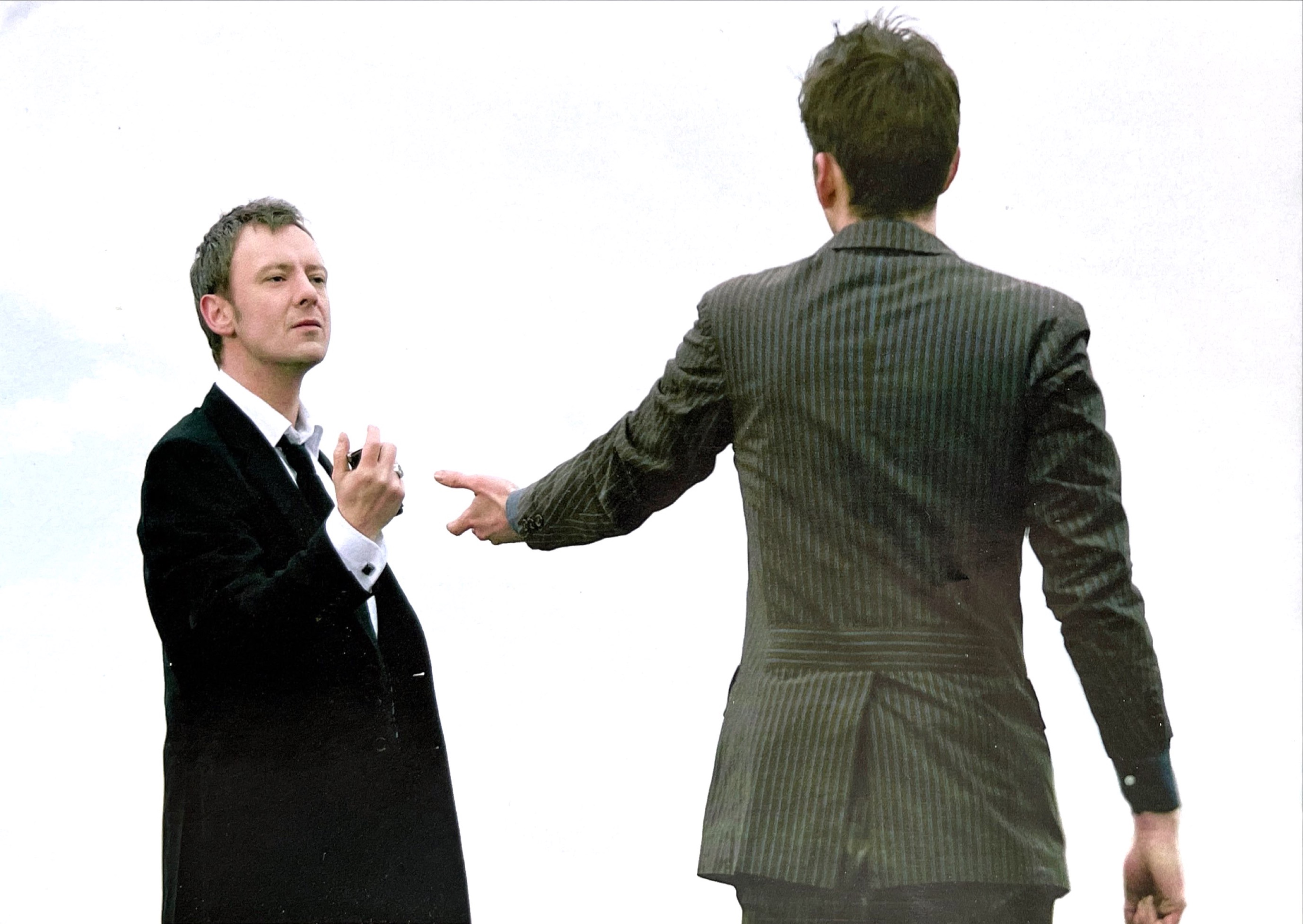
And yet, despite all of that intense drama, perhaps the most shocking revelation comes shortly afterwards, as we discover the true identity of the Face Of Boe. It’s a really cool twist that explains so much, and thus puts a very different spin on the series when you rewatch it. And that’s followed by the moving scene where Martha decides, quite sensibly, to stop travelling with the Doctor, partly because of the traumatic events her family have been through, and also due to her feelings for him, which she finally opens up about. But, as she promises him, we will indeed see her again in the future. She’s been another great companion though, especially as her character’s developed so much through the series. She does return later on of course, and also makes an appearance in spin-off Torchwood as well.
The music throughout this closing trilogy is incredible too. As well as incorporating elements of the score from earlier in the series, several new pieces were also composed especially for the finale, and I’m glad some of them are on the soundtrack album. The first two dramatic tracks – The Futurekind and YANA – are specific to Utopia. The next three are then used in various ways across all three episodes – The Master Vainglorious, Martha’s Quest and This Is Gallifrey: Our Childhood, Our Home. Then there’s Martha Triumphant from the last episode, followed (after 2 completely unrelated Christmas special tracks) by The Master Tape, used in the last 2 episodes. All of which are great to listen to, but This Is Gallifrey – most notably used when the Doctor is reminiscing about the planet and later cremating the Master – is spectacular and one of my all-time favourite themes of the whole show, with its ticking motif and sublime orchestration.
There are also occasional little nods to the Torchwood theme in the episodes, because of Captain Jack. And the Master plays a couple of catchy contemporary pop songs, firstly Voodoo Child by Rogue Traders when the Toclafane swarm on to the planet (featuring the pertinent line “here comes the drums”) and then I Can’t Decide by Scissor Sisters when taunting the Doctor (including the line “I can’t decide whether you should live or die”, and referred to by the Master as Track 3, its position on their album Ta-Dah). Plus the rock band of Doctor Who fans called Chameleon Circuit released a song called The Sound Of Drums in honour of this finale on their album Still Got Legs.
So it’s another superb finale – they were always particularly amazing during Russell T Davies’ tenure as showrunner – and the next Christmas special is set up nicely when a ship called the Titanic smashes through the walls of the Tardis, leading to another instance of the Doctor’s triple “What?!” catchphrase. But we’ll look at that special alongside Series 4.
Extras
Audio Commentaries
Once again there are audio commentaries for every episode on the Blu-ray, ported over from the original DVD. Unlike the previous series, however, none of them were in-vision on the DVD – that type of feature didn’t return until the Series 5 release, and it wasn’t used again after that.
A second set of commentaries were also released online as podcasts. Just like the last series, these are all still available on the pages for The Runaway Bride and the main episodes of Series 3, tucked away under the Clips section in each case (you’ll often have to click “See all clips” to find them).
Because there’s an unavoidable change in the frame rate – from 25 frames per second for the SD episodes on the DVD, to 24fps for the upscaled episodes on the Blu-ray, due to their different technical specifications – the Blu-ray episodes actually run 4% slower. This is an imperceptible change to most viewers, unless you watch them alongside the DVD or online clips, so it doesn’t affect the enjoyment of the programme, certainly for me at least. However, it does mean the podcasts don’t perfectly sync up with the Blu-ray like they used to with the DVD. So if I listen to them alongside the episodes, I have to pause them briefly every so often so the episode can catch up, or I’ll just listen to them without the episode in front of me, as it’s usually obvious what they’re talking about anyway.
[November 2023 Update: The new Series 1-4 & specials box set has fixed the slowdown issue, so the episodes run at the correct speed. But as I don’t notice the slowdown anyway, I haven’t bothered upgrading to that new set.]
In any case, all of the commentaries are interesting and light-hearted, with a decent spread of participants from different aspects of the show’s production. It’s great that David Tennant and Freema Agyeman appear in a lot of them (though only once together), as do Russell T Davies, Julie Gardner & Phil Collinson from the production team. They can all be relied upon to give honest and interesting behind the scenes trivia, as well as having good banter in general. Composer Murray Gold also appears in a couple of the Blu-ray commentaries for the first time, where he doesn’t necessarily contribute a huge amount, but it’s still nice to get some little insights from him, as his music in the show is so iconic.
So the commentaries are as follows, and you can click the podcast links to hear the online versions:
- The Runaway Bride:
- Blu-ray & Podcast – Actor David Tennant (The Doctor) & Executive Producer Julie Gardner.
- Smith And Jones:
- Blu-ray – Actor David Tennant (The Doctor) & Writer Russell T Davies.
- Podcast – Actor Freema Agyeman (Martha Jones) & Producer Phil Collinson. This is Freema’s first time watching any of her episodes, so you get to hear her excited reactions to her debut adventure as well as her recollections of filming it. Her unbridled glee when she first hears Martha’s theme music towards the end of the episode, for instance, is so sweet.
- The Shakespeare Code:
- Blu-ray – Actors David Tennant (The Doctor) & Christina Cole (Witch Lilith).
- Podcast – Writer Gareth Roberts, Director Charles Palmer & Executive Producer Julie Gardner.
- Gridlock:
- Blu-ray – Actor Travis Oliver (Milo), Visual Effects Producer Marie Jones (from The Mill) & Executive Producer Julie Gardner.
- Podcast – Actor David Tennant, Writer Russell T Davies & Visual Effects Supervisor Dave Houghton. A video of this was posted online as part of the 2007 Adventure Calendar.
- Daleks In Manhattan:
- Blu-ray – Actor Miranda Raison (Tallulah), Writer Helen Raynor & Costume Designer Louise Page.
- Podcast – Director James Strong & Producer Phil Collinson.
- Evolution Of The Daleks:
- Blu-ray – Actor David Tennant (The Doctor), Voice Artist Nicholas Briggs (Daleks) & Visual Effects On-Set Supervisor Barney Curnow.
- Podcast – Director James Strong & Editor Mike Jones.
- The Lazarus Experiment:
- Blu-ray – Actors David Tennant (The Doctor) & Mark Gatiss (Professor Lazarus).
- Podcast – Actor Reggie Yates (Leo Jones) & Visual Effects Producer Will Cohen.
- 42:
- Blu-ray – Writer Chris Chibnall & Executive Producer Russell T Davies.
- Podcast – Actors Michelle Collins (Kath McDonnell) & Anthony Flanagan (Orin Scannell) with Producer Phil Collinson.
- Human Nature:
- Blu-ray – Writer Paul Cornell, Director Charles Palmer & Composer Murray Gold.
- Podcast – Actors Freema Agyeman (Martha Jones) & Thomas Brodie-Sangster (Tim Latimer) with Choreographer Ailsa Berk. They get a bit absorbed in watching the episode now and again, so there are a few little gaps, but overall it’s still an interesting discussion about filming the episode.
- The Family Of Blood:
- Blu-ray – Producer Susie Liggat, Production Manager Tracie Simpson & Supervising Art Director Arwel Wyn-Jones.
- Podcast – Writer Paul Cornell, Special Effects Technician Danny Hargreaves & Actor Ruari Mears (Scarecrow & Villager).
- Blink:
- Blu-ray – Writer Steven Moffat & Composer Murray Gold.
- Podcast – Actor Finlay Robertson (Larry Nightingale), Casting Director Andy Pryor & Executive Producer Julie Gardner.
- Utopia:
- Blu-ray – Actor David Tennant (The Doctor) & Writer Russell T Davies.
- Podcast – Producer Phil Collinson, Costume Designer Louise Page & Supervising Art Director Arwel Wyn-Jones.
- The Sound Of Drums:
- Blu-ray – Executive Producer Julie Gardner & Producer Phil Collinson.
- Podcast – Actors Freema Agyeman, Trevor Laird & Gugu Mbatha-Raw (Martha, Clive & Tish Jones). A video of this was posted online as part of the 2007 Adventure Calendar. It’s not hugely insightful, but they clearly get on well, as they have a good chat and a laugh together while reacting to the episode and reminiscing about filming it.
- Last Of The Time Lords:
- Blu-ray – Actors David Tennant (The Doctor), Freema Agyeman (Martha Jones) & John Barrowman (Captain Jack). Bringing the three leads together is the perfect way to finish the box set commentaries, especially as it’s the only time we get David and Freema together, and the only time we hear from John at all this series. They have lots of great reflections on filming, and they clearly get on really well, falling about with laughter as they recall moments that gave them the giggles and imagine Martha travelling the world as a folk singer.
- Podcast – Writer Russell T Davies, Executive Producer Julie Gardner & Producer Phil Collinson. Likewise, it makes perfect sense to finish the podcasts with these three, whose passion for the show is always abundantly clear.
Other Blu-ray Extras
[November 2023 Update – This section has been updated to mention the relevant content on BBC iPlayer that forms part of the new Whoniverse collection.]
Series 3 offers a whopping 6 hours of bonus material (in addition to the audio commentaries), compared to the already generous 4½ hours provided by both Series 1 and 2.
- Music & Monsters – This hour-long Christmas special was the first edition of Doctor Who Confidential to be released on DVD & Blu-ray in its entirety, unlike the usual cut-down versions, and is also available on iPlayer. It takes us behind the scenes of the first ever concert of music from the show, called Doctor Who: A Celebration. Hosted by David Tennant, it’s a great concert of Murray Gold’s music, played by the BBC National Orchestra of Wales, at the Wales Millennium Centre in 2006 in aid of Children In Need. A 90-minute film of the concert was shown on the BBC’s red button service, but has sadly never been released, though naturally there are clips people have posted online (which are on my Series 2 playlist). So this documentary is the closest we can get officially. And it is very interesting to hear Murray talk about his compositions, plus interviews with conductor Ben Foster, showrunner Russell T Davies, the people behind the monsters that appear, and more. You do hear some of the music too, although most of it has clips from the show and interviews overlaid here and there. So you hear and learn about several tracks, and get a special preview and a glimpse behind the scenes of The Runaway Bride. So it’s well worth watching, but I really hope the full concert gets released one day. It was certainly successful, as it led to a few Doctor Who Proms in later years as well (which are also on iPlayer).
- Doctor Who Confidential – Just like the previous two box sets, these 13 regular editions of the brilliant behind-the-scenes series are short cut-down edits, and it’s a shame we haven’t got the full episodes (which are thankfully now on iPlayer at least). Nevertheless, what we do get here is still very interesting and covers all the main points over the course of 2½ hours. They’re all narrated by Anthony Head, except for the episode that accompanies Blink, where David Tennant interviews some of the writers and members of the production team about their love of Doctor Who and how it’s influenced their careers. And there are plenty of clips from the series included as well of course – some of which don’t have the backing music, which highlights the dialogue and effects more, while in other cases the clips are in montages accompanied by contemporary music to pad out the episodes a bit.
- David Tennant’s Video Diaries – If having shortened Confidential episodes feels a bit disappointing, this rather helps to make up for it, with a very fulfilling 1 hour 45 minutes of behind the scenes vlogs from every episode (except Blink, which he wasn’t heavily involved with). David shares his personal thoughts, takes us on various location shoots, has his first experiences of wearing prosthetics, shows us how some other special effects were achieved, and has a lot of interesting and amusing banter with various members of the cast and crew. There’s even a backstage vlog from a Doctor Who themed edition of the Weakest Link that was broadcast that year (more on that below – it’s a shame the special wasn’t included as an extra). So once again, just like he did for Series 2, these vlogs give us a very cool backstage pass to the show.
- Freema Agyeman’s Studio Tour – The actress who plays Martha Jones presents this enjoyable 18-minute tour of the studios where they film Doctor Who and its spin-offs Torchwood and The Sarah Jane Adventures. In particular we get to see the production and editing offices, a set being constructed, prop makers, the props warehouse, the Tardis and Freema’s costumes. Along the way she talks to producer Phil Collinson and Dalek voice artist Nicholas Briggs, as well as other people who work behind the scenes that we don’t hear from in the Confidential series.
- Deleted Scenes – An 18-minute collection of scenes from some of the episodes that were either trimmed down slightly in the final edit or cut out completely. They’re all presented without music or effects, which gives them an unusual feel. They’re fun to look at, though it’s easy to see why they were cut, as they don’t usually add much. The most enjoyable ones are the Doctor finding the United States Declaration of Independence in his suit pocket on his way to meet Professor Lazarus, and the full version of the instructions he gives to Martha in Human Nature, as already mentioned above.
- Outtakes – 5 minutes of amusing bloopers.
- Blink Easter Egg – The complete 5-minute video of the Doctor saying his half of the conversation, as explained for the episode above.
- BBC Trailers – Almost 6 minutes of trailers, spread across the 3 discs with the relevant episodes. The key visual motif shows half of the Doctor’s face and half of Martha’s face spliced together, while early launch trailers show them talking in comparable quotes on each half of the screen, and in both those cases they appear to be in differently lit environments until the camera zooms out to show that they’re both standing in the same room by the Tardis. The trailers on Disc 3 also include the celebrity endorsements for Harold Saxon, featuring people like Sharon Osbourne and Ann Widdecombe, in slightly different footage to that used in episode 12.
TV & Online Content
This is just a small selection of other bits and pieces available online, that I haven’t already mentioned somewhere above, with relevant videos included on my Series 3 playlist. It’s not necessarily everything that’s out there by any means, just the things that I feel are of most interest.
- BBC Pages – These have a few little odds and ends for each episode, including behind the scenes clips, photos and artwork.
- On Show: Designs On Doctor Who – A 2006 Christmas episode of the BBC Wales documentary series On Show, narrated by Tom Baker, looking at the work of Doctor Who’s production designer Edward Thomas and his team. It includes a behind-the-scenes look at the making of The Runaway Bride, which makes up for the fact that there wasn’t a full Confidential episode dedicated to it.
- Totally Doctor Who – This was a children’s TV programme that ran alongside the second and third series of the show. The full episodes and some clips accompanying the series are on the Totally Doctor Who channel on Youtube (and since this post was published, all episodes were added to BBC iPlayer in November 2023).
- Awards – There were more victories for the series and David Tennant at the National Television Awards and BAFTA Wales, among various other accolades earned for the third series.
- Dead Ringers: Tony Blair Regenerates – In this clip from the last episode of the TV series on 29 March 2007 (2 days before Series 3 of Doctor Who started), impressionist Jon Culshaw plays Prime Minister Tony Blair, who regenerates into the real David Tennant at the end. David begins by saying “New Labour, that’s weird”, mimicking the 10th Doctor’s line about his teeth when he first appeared in the actual show. It’s one of many occasions that the show parodied Doctor Who, with spoof versions of David Tennant’s Doctor also complaining about the show’s loud music and having past incarnations round for Christmas Day.
- The Weakest Link – This special Doctor Who themed edition of the quiz show was broadcast on 30 March 2007 to mark the launch of Series 3 the next day. Presented by Anne Robinson (taking over from her Anne Droid that had originally appeared in the Series 1 finale), the contestants were David Tennant (The Doctor), John Barrowman (Captain Jack), Noel Clarke (Mickey Smith), Nicholas Briggs (Daleks & Cybermen voice artist), K9 (the robot dog voiced by John Leeson & operated by Mat Irvine), Tracy-Ann Oberman (Yvonne Hartman), Andrew Hayden-Smith (Jake Simmonds), Claire Rushbrook (Ida Scott), and eventual winner Camille Coduri (Jackie Tyler), who donated her £16,550 prize to charities supporting multiple sclerosis and child carers. A backstage vlog from this special is included as part of David’s video diaries on the Blu-ray, so it’s a shame that the finished episode itself isn’t on there.
- Mock The Week – In this sadly-missed comedy panel show, The Scenes We’d Like To See round in Series 5 Episode 3, broadcast on 26 July 2007, saw the comedians suggesting unlikely lines to hear in an episode of Doctor Who. They later did a similar round in the opening episode of Series 12 on 13 June 2013, with unlikely things to hear on Doctor Who.
- Interviews – From 2007 you can see clips of David Tennant on The Graham Norton Show and The Friday Night Project (where on the latter he also pranked an estate agent), as well as hear him talking to Steve Wright on Radio 2 and playing a joke on Freema Agyeman on Virgin Radio. Plus John Barrowman also hosted an episode of The Friday Night Project as well as appearing on Friday Night With Jonathan Ross. A selection of other interviews can be found on my Series 3 playlist as well.
- Conventions – Freema Agyeman felt uncertain about going to conventions for a while, as discussed in a 2019 interview, given that she had been out of the show for a long time and assumed she wouldn’t be so relevant any more. But once she dipped her toes in and felt the warm family atmosphere at such events, she was happy to take part more. Examples of her panel appearances can be seen at the end of my Series 3 playlist.
Conclusion
And that’s it, I hope you enjoyed that. I certainly did, it’s been another cracking series. Martha Jones was a wonderful companion who developed really well throughout her various adventures, so it’s great that she reappears later on. You can check out my Series 3 playlist for lots of the clips and music tracks I’ve mentioned above, and plenty more besides, and I’ll see you soon for my Series 4 review!
Share this:


 Well Eye Never
13 thoughts on “Doctor Who Review – Series 3”