
What a year this has been. It was always going to be the case that Mum’s health would decline in some way at some point, given her age and disability, but neither she nor I had bargained on the spiral that took hold during the past 12 months, especially during the spring and summer. That’s why I started writing my carer’s journal posts – partly as a cry for help and a bit of therapy for myself early on, but mainly to raise awareness of what it’s been like for me as a carer, as it’s the sort of thing that goes unnoticed behind closed doors.
I’ve always been my mother’s carer to some extent, ever since I was old enough to help her out with things. But it’s only in this past year that it’s really felt like it, given how much more attention I’ve had to give to her, at the expense of my leisure time and wellbeing, because of the mental and physical consequences of her sight loss and all the falls she’s been having.
However, I’m pleased to say that we’ve actually ended the year in a much better position than when we started it. Things aren’t exactly the way they were before, and never will be, but given all the support we’ve received, Mum is in a much better frame of mind and we’re on a much more stable footing for the year ahead, and therefore we feel like we can get on with our lives in a similar way to how we used to.
So as a bumper post to finish the year, I want to reflect on the events of the past 12 months and bring things right up to date, and I hope you find it interesting.
Contents
Sleep
Disrupted Cycle
Losing her remaining light perception has naturally had a big impact on my mother’s mental health, and will forever do so.
Not all of the issues resulting from it are fixable, but the big change we have been able to make is correcting her sleep cycle.
She had developed an involuntary habit of falling asleep during the afternoons and evenings in her armchair, and not sleeping much when in bed at night. And she was becoming increasingly confused, sometimes even having panic attacks, when waking up in her chair, not knowing where she was because her brain had no visual cues and wasn’t used to waking up in that way. If she fell asleep while listening to a football commentary or some other programme, then the noise and voices would confuse and panic her even more when waking up to it. So it was all very difficult for both of us to deal with, and it stopped me going out much, because she would get into a really bad state if she had a panic attack while I wasn’t in the house.
What’s more, after a couple of falls made her even more nervous about being on her own, she went through a phase of coming downstairs and watching TV at night, thus disrupting her sleep pattern even further and preventing me from having any alone time. As much as I love her to bits, I also treasure the few hours I get to myself after she’s gone to bed, so I can do and watch what I like, knowing that she’s safe and won’t be calling out for me. It helps me to wind down and relax at the end of the day.
Melatonin
The key was therefore to get her sleeping properly at night, and the likely solution to that appeared to be melatonin, the hormone that regulates sleep. The body generates it naturally, using the presence or absence of daylight as its cue, but without light perception it’s unable to do that. So I know of a lot of blind people who take melatonin supplements to help them sleep. We asked our GP surgery for it, but the doctor we spoke to didn’t want to risk prescribing it given her age, so he got her to try other medication instead, which was worth a go but made no real difference.
However, we were also able to get Mum referred to a mental health specialist because of other issues she was having, and the lady she’s been assigned to is really nice. We’ve had a couple of home visits and a couple of telephone appointments with her, and she’s due to call again in January to see how we’re doing. But once she’d got to know Mum, and because she had awareness of the other medication she had tried, she was happy for her to try taking melatonin pills.
Initially Mum was prescribed the smallest possible dose of 2mg, but that didn’t have any effect. So it was then doubled to 4mg, and that did start to make a difference. It took a few weeks for her brain to readjust, but by taking the pills at roughly the same time every night, Mum’s sleep pattern gradually shifted bit by bit, eventually getting to a point where she was no longer nodding off during the day and was getting some sleep in bed.
Because it was clearly working, therefore, the mental health doctor arranged for a repeat prescription of the melatonin pills, and Mum’s continued to take them for the past couple of months. And they’re still working, without any side effects, so she’s going to keep taking them in the months ahead.
The pills have ensured that she now sleeps at night when she’s supposed to, and she’s therefore been staying awake all day every day, even if she’s been busy, or is very full from lots of Christmas food, or is generally tired. And that in turn means she’s no longer having panic attacks about where she is, and is able to function and focus better than she could.
That’s not to say she doesn’t get disorientated or find things difficult sometimes, as I’ll discuss next. But there’s no question that correcting her sleep has made a huge and positive difference to both our lives, enabling us to function a lot better.
Mental Health
Disorientation
Disorientation is another obvious outcome of not being able to see, and while Mum has got a lot better at finding her way around during the year, there are sticking points that continue to catch her out sometimes, especially in the lounge. She normally has issues when she’s a bit tired or unwell, or if she’s feeling cold or a bit too hot, as those scenarios affect her ability to think clearly now, while at other times she tends to be fine.
Mum’s vision was already down to just light perception when we moved in 9 years ago, so the last time she ever actually saw the lounge was many years before that (as we’re in my nan’s home that we inherited, so she used to live here and then continued to visit after moving out). And her brain seems to be clinging on to the old layout of the room that it has a visual memory of. It doesn’t always impact Mum’s navigation, as she knows it’s different now and often moves around just fine, as it’s laid out in such a way that she can feel her way from one thing to the next. But in the situations outlined above, where she isn’t thinking so clearly, her brain will revert back to what it used to know. Not quite as often as it used to, but it still happens.
For instance, in the old days when she used to live in or visit the house, the dining table used to be positioned so that the kitchen door was behind her dining chair. But as a result of having work done since we took over the place, the table is by another wall, without the option to move it back again, and that means the door to the hallway is behind her chair instead. So when Mum’s looking for the kitchen and feels her dining chair, she will often walk through the doorway behind it on autopilot, expecting to enter the kitchen. It’s only when she feels carpet instead of tiles under her feet that it dawns on her and she corrects herself. It just seems amazing to me that her brain hasn’t learnt from that by now, given how many times she’s had to correct herself, but I guess old habits are really hard to break, and her brain has limited info to go on.
Her armchair that she sits in, meanwhile, is in a corner of the room near the dining table, with a small table on her right hand side containing her Alexa machine, talking clock and an audiobook player. She’s sitting at the back wall of the room from her perspective, with the doors to the kitchen and hallway on the opposite side of the room ahead of her. And most of the time she’s fine with that. But now and again she will sometimes turn right when she gets up, expecting to find a door in the corner instead, and will get herself stuck in the space between the dining table and her small side table, unsure of how to get out. It’s not very frequent now, as it happened a lot earlier in the year when she often felt tired, but there are still sporadic instances of it.
There can also be occasions – thankfully infrequent now compared to earlier in the year – where she gets angry with me, being adamant that things in the room have moved around despite my attempts to reassure her that they haven’t. She gets in a right mood then because she thinks I’m lying.
On the whole though, she is finding her way around so much better, because she’s much more awake during the day. I can also tell when she’s getting tired or cold, as it’s when her attention starts to falter and she gets a bit lost. But at least I’m ready for that now, as I know when to expect it, and I know that such moments are only temporary until she’s got some rest. Earlier in the year it had been a shock and a worry to me, because she’d never been like that before, and while I still don’t like seeing her struggle and wish I could stop such problems altogether, it doesn’t bother me quite so much now.
Double Trouble
Apart from issues with sleep and disorientation, there has been a much more unexpected consequence of Mum’s sight loss, given the way that her brain has tried to compensate for it, especially in relation to me.
Since losing all of her light perception, her brain has been generating random visuals of its own to fill the gap, usually in the form of different colours, which does make sense. And sometimes these can be quite unnerving for her, with black, white or dark green making her particularly uncomfortable. But generally she copes with it alright, I think she is somewhat used to it now.
However, what I didn’t know it was doing at first was generating visions of me when I was talking to her, and she didn’t tell me initially because she thought she was going mad. This seemed to start when she was having her daytime sleep problems, and was hearing me before she had fully woken up, as if still in a bit of a dream state. Her brain would generate an image of me to match the voice it was hearing, as if because subconsciously she wanted to see me and it knew what I looked like.
As with the lounge, however, the only images her brain can recall of me are from many years ago. And it was choosing between a couple of images in particular it seems, one older than the other.
That’s all well and good in itself, but because those visions matched up with me talking to her for real, her mind then became convinced that both Glens it was seeing were real. And ever since then, even if she’s not having the visions so often, there is still part of her that thinks there are two versions of me in existence, and her brain will decide which one it’s hearing at any given time, without my knowledge. I have no way of speaking or acting that guarantees she’ll perceive me as one or the other.
So she will sometimes tell me what the other Glen has said when we’re having a conversation or ask me where he is, and I have to gently remind her that there’s only one of me, because of the way her brain’s interpreting my voice or my mood. Just recently for instance, she expressed her happiness to me one evening that I was the older Glen who had returned to her, as the younger Glen had been with her over Christmas. She loves both Glens, thankfully, so she enjoyed Christmas regardless, but she prefers the older one. She does also know that there’s only one of me really, and that it’s impossible for there to be two, and she is more accepting of that fact than she was. But when she’s in a slightly tired state, it’s easy for her mind to convince her otherwise for a while.
Shady Lady
It gets more complicated still though, because at one point during the year, her brain also decided to interpret my voice as a woman’s instead, again generating a vision of her, possibly based on me from what Mum tells me. I think it’s because I tried talking to Mum softly when putting her to bed one night, when she was in a particularly anxious state after some recent falls. All I was trying to do at the time was comfort and reassure her, and I thought being a bit more delicate would help, and it seemed to work. I had no idea what her brain had conjured up at the time, and so there was no way I could have envisaged what would later result from it.
This imaginary woman has also become lodged in Mum’s mind as a real person as a result. And while she doesn’t appear to Mum anywhere near as often as either of the two Glens – and she manifests even less now that Mum’s sleeping properly – her brain does still interpret me as the mystery lady occasionally. And that’s despite me talking in my normal voice and behaving in my normal way, as I’m careful not to do the softer voice now I’m aware of what it might do.
And if Mum thinks I’m that woman, then I’m in trouble, because Mum despises her, convinced that the woman is bossy and doesn’t care about her. It’s simply because Mum’s heard me when she herself has been tired and irritable, as far as I can tell, perhaps mistaking my encouragement or suggestions as orders. But her mind has pinned the blame on this other lady instead. So Mum will angrily push me away if I try to cuddle and comfort her, she’ll rant about how I don’t care about her, and she’ll tell me how much she hates me. It doesn’t matter how nice I am, she will stick to her guns on that.
When she first started behaving like that towards me earlier in the year, it naturally really frightened me and made me upset, because I had absolutely no idea what was going on and Mum had never spoken to me like that before. It was only when talking to her after she’d had a good sleep, and was thus correctly hearing me as Glen again, that she told me about the woman and it sort of started to make sense.
So on the thankfully rare occasion she starts talking to me like that again nowadays, it’s still hurtful, but I immediately know why she’s doing it, and can thus distance myself from it a bit, in the knowledge that it’s not actually me she hates, just this other person she’s mistaken me for. If she’s in a particularly angry state, then I just step away for a while and let her vent her frustrations, because my presence only makes things worse. Once she’s calmed down a bit I’ll then go back to her, and once she’s rested she realises it’s me again. It’s just impossible to know at first how long it will take for her to settle down.
Support
All of that, therefore, has been quite strange for us to come to terms with during the year. It’s possible that the visions have been some form of Charles Bonnet Syndrome perhaps, but we don’t know. Mum’s never had any formal diagnosis or been offered any help for it, quite possibly because there’s nothing anyone can really do.
The lovely mental health doctor we’re in contact with doesn’t see it as a cause for concern though. Indeed, she’s been able to reassure Mum that she’s not going mad and isn’t going to be locked up, because there are no signs that she has dementia or anything like that. So that has put her mind at ease quite a bit, as it was her increasing concern about it that led to the mental health referral in the first place. Instead, the doctor agrees with us that it’s just Mum’s mind struggling to interpret things since she lost her sight and making a mess of it in some ways.
In addition, since I started sharing all of this with my friends and on my blog, Mum’s had other support as well, in particular from the Aniridia Network’s Befriending service, who put her in touch with a lady with the same eye condition, who was really able to understand and empathise with a lot of what Mum has been going through. So that further comforted her by helping her realise that she’s not alone in all this.
So we’ve just had to learn to live with what Mum’s experiencing. It is unusual and strange to us, and we wish we could stop it happening, but we now also feel like we understand it a little bit, it’s not the end of the world and it doesn’t stop us living our life. So we are coping with it all much better than we were.
Physical Health
Falls
The other big issue for Mum this year has been falls, due to her age and frailty. She’s never been one to do lots of exercise, and being blind has meant she doesn’t go out much, as she can’t go out on her own, so it was inevitable they would happen. Indeed, she’d already had occasional falls in the previous few years, just very few and far between. But this year she had several falls in fairly quick succession, around 10 in the space of roughly 6 months.
For most of them she just recovered at home, with her anxiety increasing each time a new one happened, as she just seemed to be getting over one before experiencing another. It felt like it was becoming a cycle, which was scary for both of us. We were able to get a bit of help from social services, with telecare and a grab rail being installed for instance, which was great, but it didn’t stop her falling over.
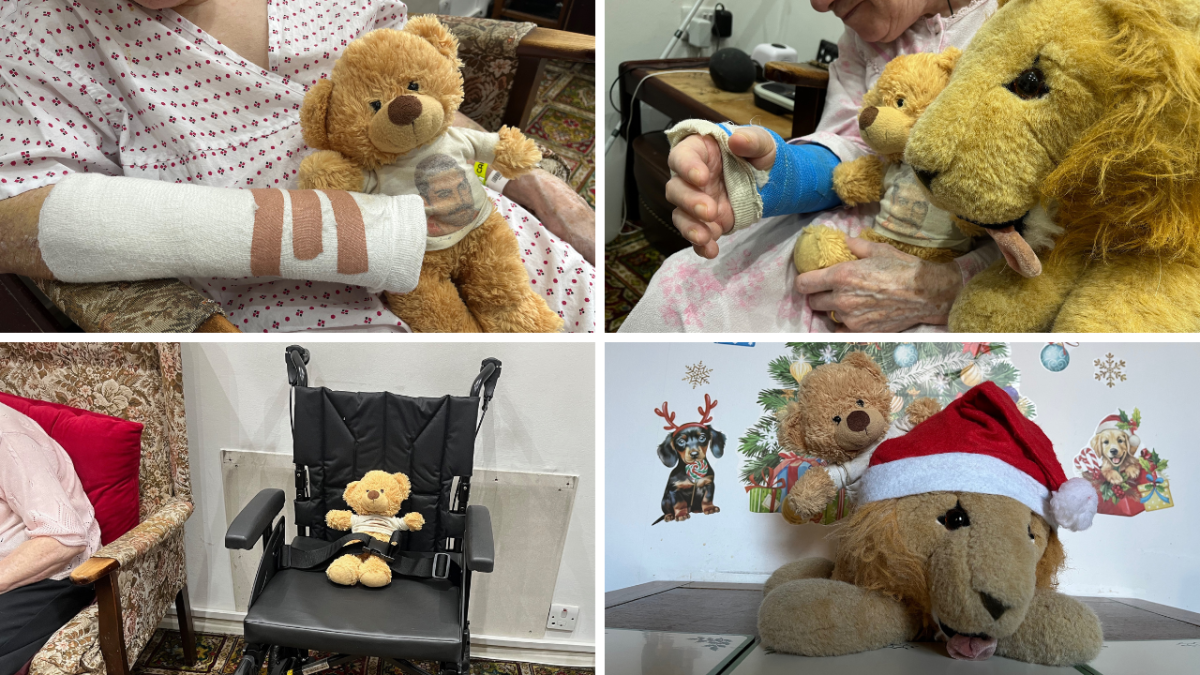
Once she ended up in hospital though – first with a fractured collarbone, and then with a broken wrist – it finally became apparent to the NHS and social services that Mum needed a lot more help. That triggered various support mechanisms, including visits from the frailty team and physiotherapists, along with carers to help her get dressed while recovering from her wrist fracture. It all helped her to physically recover and, just as importantly, increased her confidence a bit. The NHS and social services have very limited resources these days and take an unfair bashing from some quarters, but they’re a real godsend when you need them and we’re incredibly grateful to everyone involved in helping Mum.

Since then – touch wood – she’s had no more falls in the latter half of this year. There have been a few close calls, and one instance where she slid down a wall to the floor, which slowed her descent on to a soft carpet so she wasn’t injured, but that’s it. And physically she’s recovered well. Her wrist bones have solidified as best they can so she’s back to doing her chores again, although she needs my help with things that are heavy or require sight to do safely.
The main thing she still gets are twinges in her back, which are sometimes quite painful. They could be down to a number of factors, but it seems likely that her various falls and the lack of movement while recovering from them has had a big effect there. It seems to be easing off a bit though – e.g. it used to hurt when she was getting into bed, but that’s become gradually easier as the weeks have gone on.
So she’s doing alright at the moment. Given her age and frailty, she will have more falls as time goes on, we’re not so naive as to think that it’s over. But hopefully they won’t be as frequent or severe as they became this year.
Wheelchair
The most life-changing form of support, however, has been getting a wheelchair on loan for her, so I can take her out and about safely. Walking long distances and getting on and off public transport has been an issue for some time anyway, so with her falls becoming more serious, we were very relieved to be granted a wheelchair referral, and surprised at how quickly it was delivered.
It’s a basic manual wheelchair, but it’s comfortable and safe and does the job we need perfectly. I’ve already been able to take Mum to the park, the shops and hospital appointments in it, using the buses and the Tube sometimes, and it’s nice and easy.

Sure, we’ve already encountered a broken lift on the Tube and a ramp not working properly on a bus, but that’s to be expected, as much as those things shouldn’t happen. Again, it’s down to lack of funding and resources, as are so many issues these days. I will give credit to users of buggies and prams however – so far they’ve been very respectful and accommodating, moving out of the wheelchair space on buses as they are required to do. I’m sure we’ll encounter a few stubborn people as time goes on though.
But there’s more to it than that. It’s not just a big deal because it’s physically enabled Mum to get out of the house. It’s really perked her up mentally as well. For years she had been resigned to the fact that she wouldn’t be able to go out much ever again, because it had become physically difficult to use public transport and to walk a long way, and her blindness had really knocked her confidence further. We had tried going out a few times on foot here and there, such as to the theatre or some big shops, and it was increasingly becoming too much for her, and she’d even had a few falls that way, including one whilst getting off a bus.
But now it feels to her like the world has opened up and cares about her again. She’s been able to think about places she’d like to go to, such as parks, shops, theatres, etc in London, and even trips to the seaside, in the knowledge that it’s actually possible. We’ve also experimented with sweets and pills to ensure she doesn’t get travel sickness, and have found some ginger lozenges that seem to work nicely.
It’s given her hope and things to look forward to, and it’s made such a difference. The wheelchair’s worth its weight in gold for that alone, and I’m looking forward to taking her out in it during the year ahead, especially when the weather’s nice.
Being A Carer
My Wellbeing
Seeing Mum struggle and suffer so much earlier in the year was heartbreaking. I supported her as best I could, but as things deteriorated, the more it felt like I was losing control, and I was getting tired, frustrated and scared. I even cried a few times early in the summer, which is very rare for me, because there were moments where it became too overwhelming.
So many things just didn’t make sense (and in some cases still don’t) and were beyond my abilities to deal with. And I was frightened that it would just keep getting worse. Why can’t I stop her falling over? Why does she still keep getting lost and disorientated in the same places? How can I get her to sleep properly? Why can’t I make her brain realise there’s only one of me? How can I stop her thinking I’m some horrible woman sometimes? How can I increase her confidence and self-esteem? Why does this all have to be happening at once? Will I ever be able to do things by myself again like socialising, going to the theatre, etc? Would I be cut off from my friends as a result?
Thankfully, however, I have a great support network around me, which has proven invaluable. My aunt, while not heavily involved in helping Mum because she doesn’t live with us and has an eventful life of her own, has given us practical and financial support as she always does. And I have friends who have been absolute rocks of support, checking in on how I’m doing and enabling me to go out and socialise when my situation has given me the freedom to do so. To them I am eternally thankful and love them dearly.
I’ve also joined a local carer’s community, so I’m now getting useful information from their newsletters and attending occasional workshops online. I haven’t had a chance to go to any of their events in person and meet other carers yet, but there’s a still a fair chance that could happen at some point. Likewise, I have joined a couple of carers forums online, but haven’t got around to exploring and participating in them so far. I may well do at some point, but I think after long days of working and looking after Mum, the last thing I want to be doing is looking at even more stuff about being a carer when I’d rather take a break from it. It’s a lot to take in.
Getting Help
I haven’t received much direct help as a carer from social services, as even though I requested a carer’s assessment, there isn’t really anything they can do.
They did provide a ‘reablement’ service while Mum was recovering from her wrist injury though, to help her get dressed in the mornings and evenings, and that took the weight off me a little bit. But Mum didn’t like the carers much, they didn’t speak very good English, and they didn’t enable her to get back into doing things as we’d expected, so we were glad when it was over. One of the carers we got on better with, however, did send me a Merry Christmas text recently, which was very kind of them.
Otherwise, however, the local authority don’t provide a sitting service, so that someone can look after Mum while I’m out, and I was assessed for additional financial benefits but wasn’t eligible for any. Mum isn’t able to get any financial support with her care needs either, because our savings are too high.
So if we want to get carers in to help Mum with anything, we either need to pay the council to provide it, who would choose the agency and specify the type of support they’re prepared to pay for, or we need to go private, which would give us complete freedom to choose the agency and their services ourselves. Naturally the latter is our preferred option, as we’d want full control, and we’re fortunate that we can afford to do that.
And for a while it looked like that would be the route we would go down. But because her wellbeing has been improved so significantly by the use of melatonin and the provision of a wheelchair, along with some of the other support she received while her wrist recovered, we haven’t felt any urgency to get private carers involved, at least not yet. In particular, I’ve been able to start going out for longer again and she’s been safer and calmer in my absence.
But we’ll see how it goes. We’re still very open to the idea, and I do have a shortlist of agencies I’ve researched that we can approach. When I started looking into it, I was amazed to discover how many there are and the range of services on offer. But ultimately, the key thing for us is that we now know such agencies and services are available, as we’d been quite oblivious to it all before. It’s another important door that’s open to us if we want it.
Our Relationship
Mum and I have always loved each other and got on well, but we’ve definitely become closer as a result of all this. Occasionally a bit too much, as in her lowest moments she became very emotionally dependent on me, and to some degree vice-versa. But we’ve been finding a good balance as things have settled down and her demeanour has improved.
As well as talking more openly to each other about what we’re thinking and feeling, the biggest change is that we’re more affectionate with each other. We never used to have hugs and cuddles, but now we have them at some point every day, as I know she appreciates that close tactile contact, and I like it too.
I also gave her a teddy bear that I’d been given as a gift – named Freddie because his t-shirt has an image of Freddie Mercury on it – and I reunited her with the big cuddly lion called Leo that I used to have as a child and we’d never got rid of. So she’s found both of those a real comfort, not just because they’re soft and cuddly, but also because they’re loving gifts from me that have particular significance to them. Freddie sits with her in her armchair, sometimes held in her lap, and she takes him to bed with her too. And Leo watches over her, either from the dining table or the chair by her bed.


I also move them around sometimes to give them a bit of affectionate life, which Mum finds both amusing and calming. So when I bring Freddie to sit with her in the lounge, for example, he’ll often climb on to her shoulder and kiss her neck or cheek to say hello. And Leo will occasionally climb up her leg so he can give her face a lick or a stroke, which makes her laugh. Or if she’s walking past the dining table to get to her armchair and running her hand along it, Leo will sometimes lick or stroke her hand to assure her he’s there.
Then when she goes to bed, Freddie will take her hand and guide her to the railing for the stairs. Once she’s then used the bathroom, taken her melatonin pill and got into bed, and Freddie’s under the covers with her, Leo will then hop up on to the bottom of the bed and walk up her body to reach her face, which makes her laugh again. He’ll then give her face a little wash with his tongue, before laying on his side so he can stroke her cheek with his paw for a little while, which she likes as she finds it really calming. He’ll then sit on a chair nearby, while I stroke her hair and talk to her for a short while before kissing her goodnight. It’s a nice little bedtime routine we’ve got into, as it seems to help her relax quite well.
I like the fact that I can make her laugh easily using those toys, or by just doing and saying other things myself. A year ago, she wasn’t the sort of person to laugh much, but now it’s quite easy to get her going, and I love that. Even if I’m just cuddling her and our faces are touching, I only have to run my nose over her cheek or her ear to start her off again.
Being able to make her happy, either through laughter or by helping her in other ways, has by extension made me feel happier as well. And the fact that I’m able to go out again on my own sometimes, for a longer period than just a shopping trip, has made me very happy as well, as it will hopefully mean I can socialise, go to the theatre, have some nice walks, etc next year like I used to.
Christmas & New Year
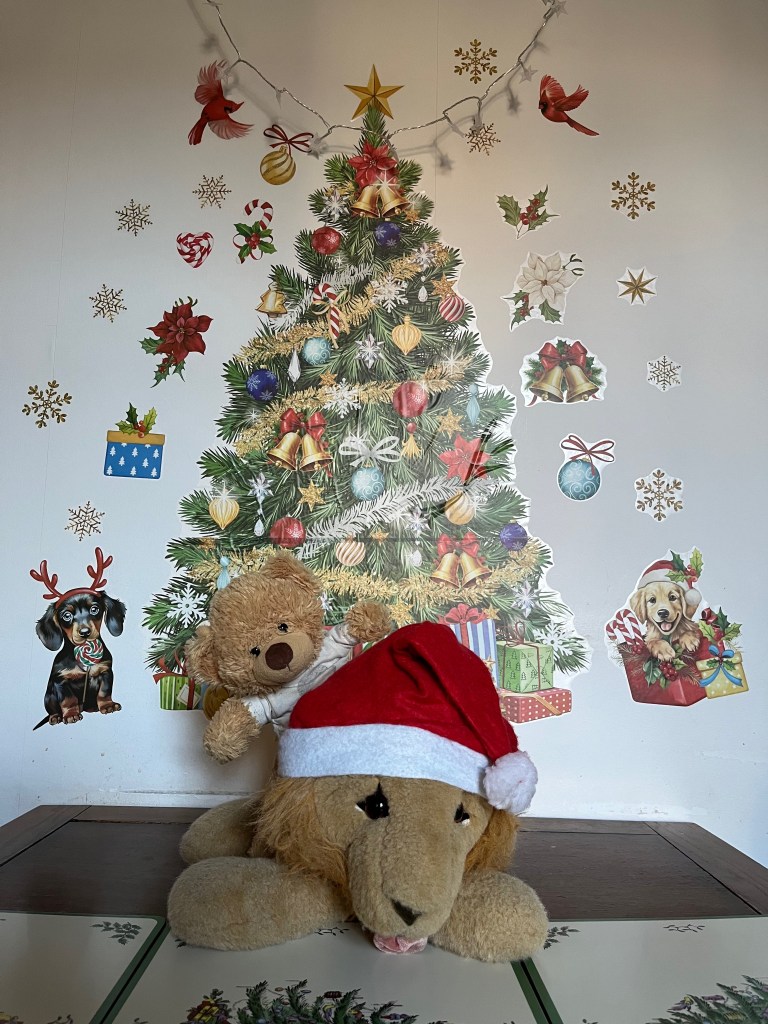
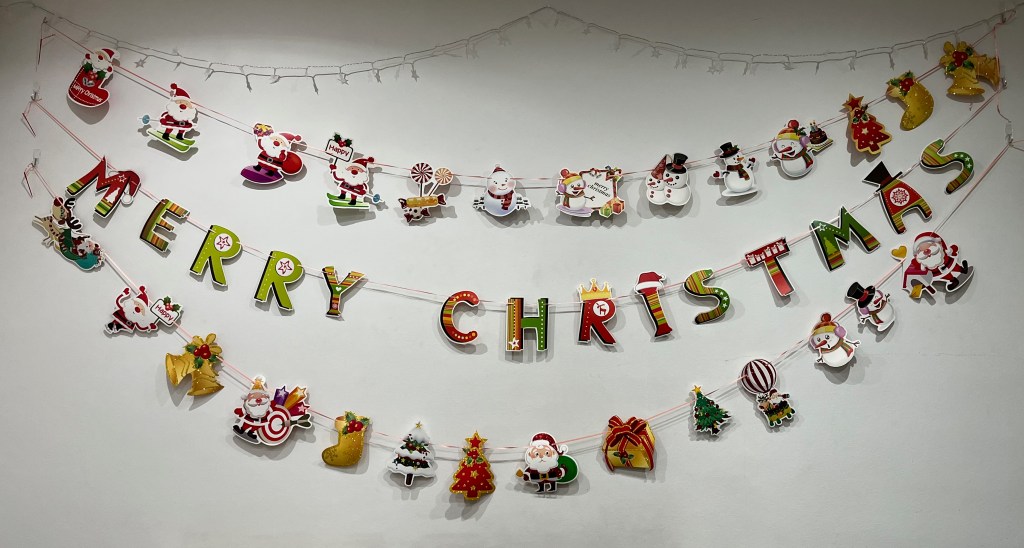
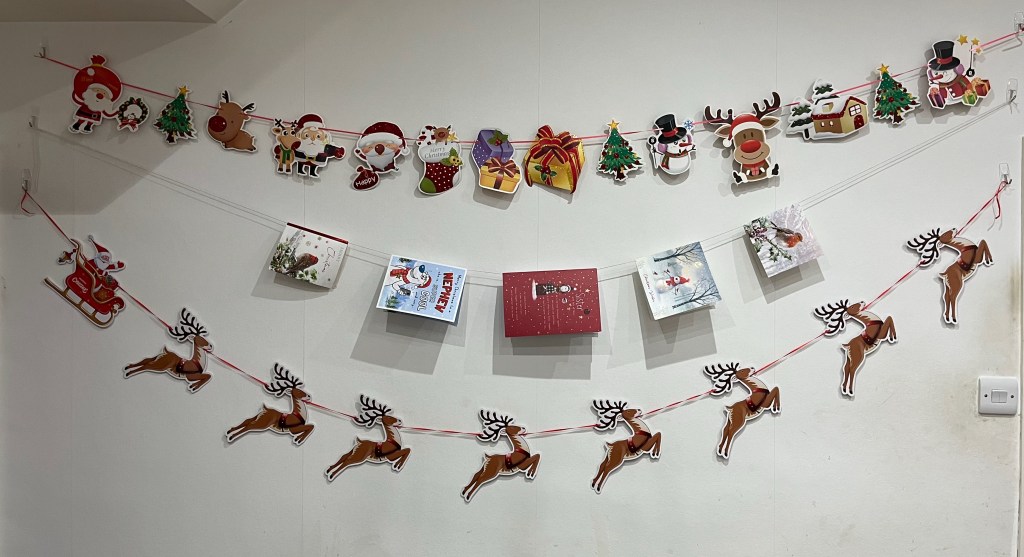
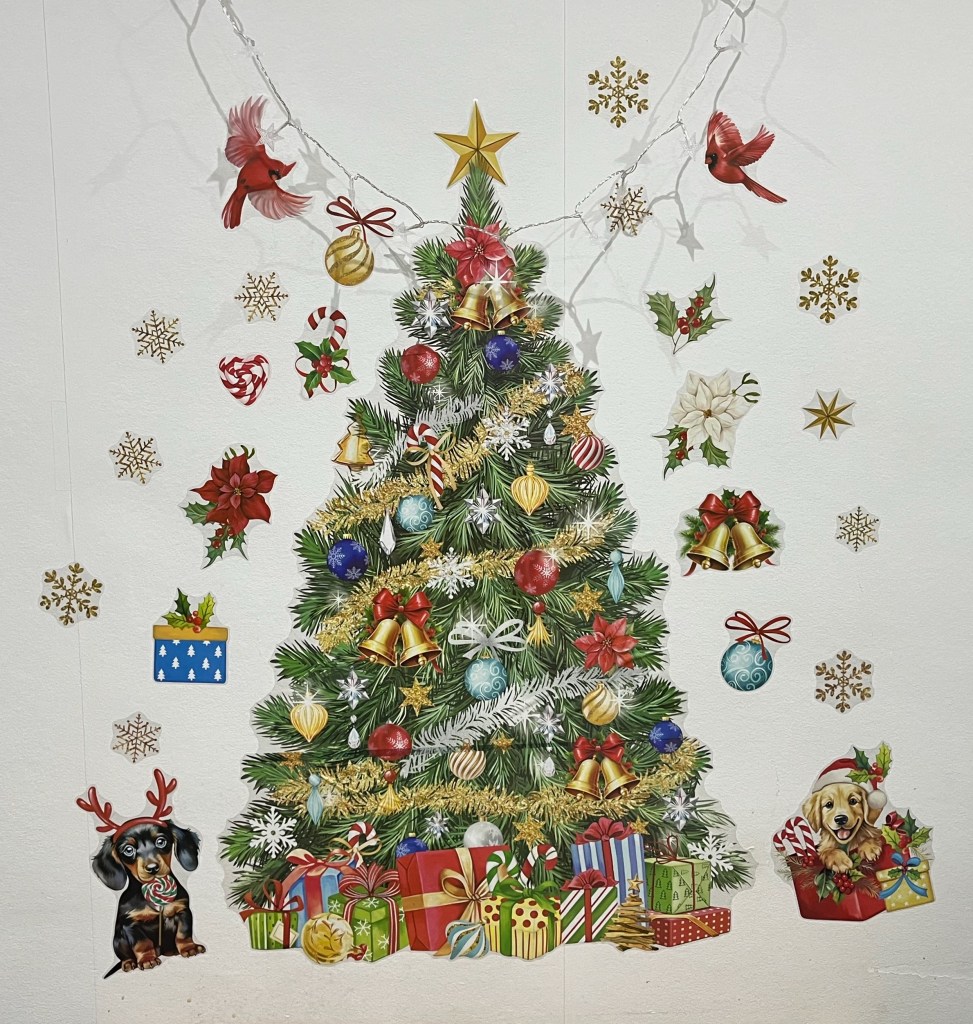
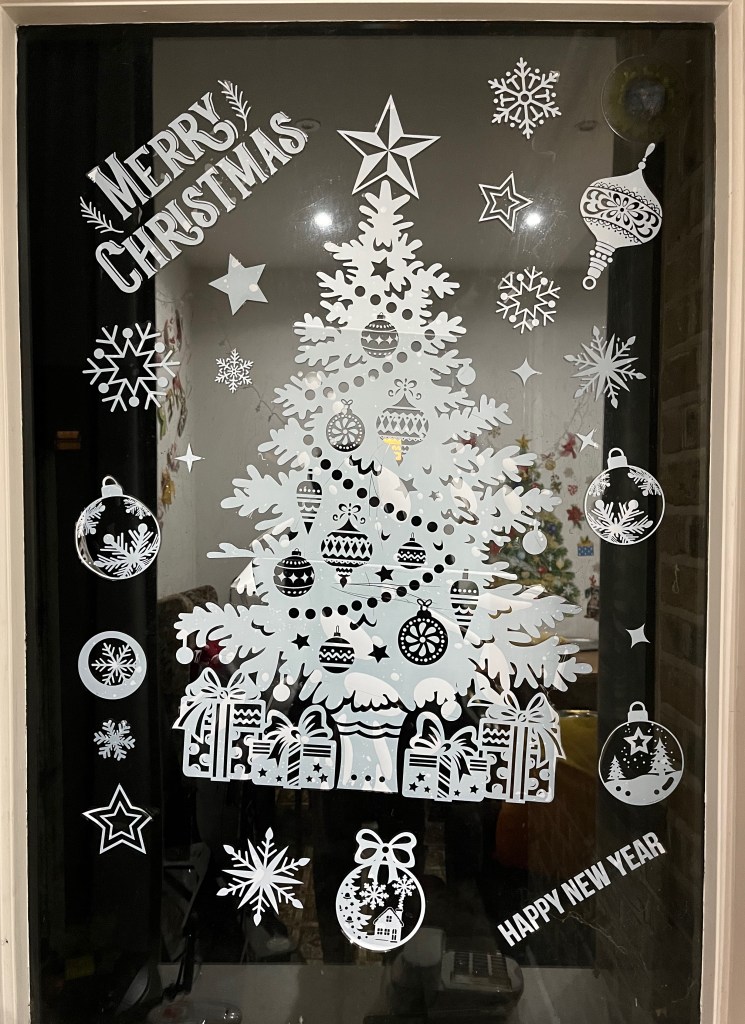
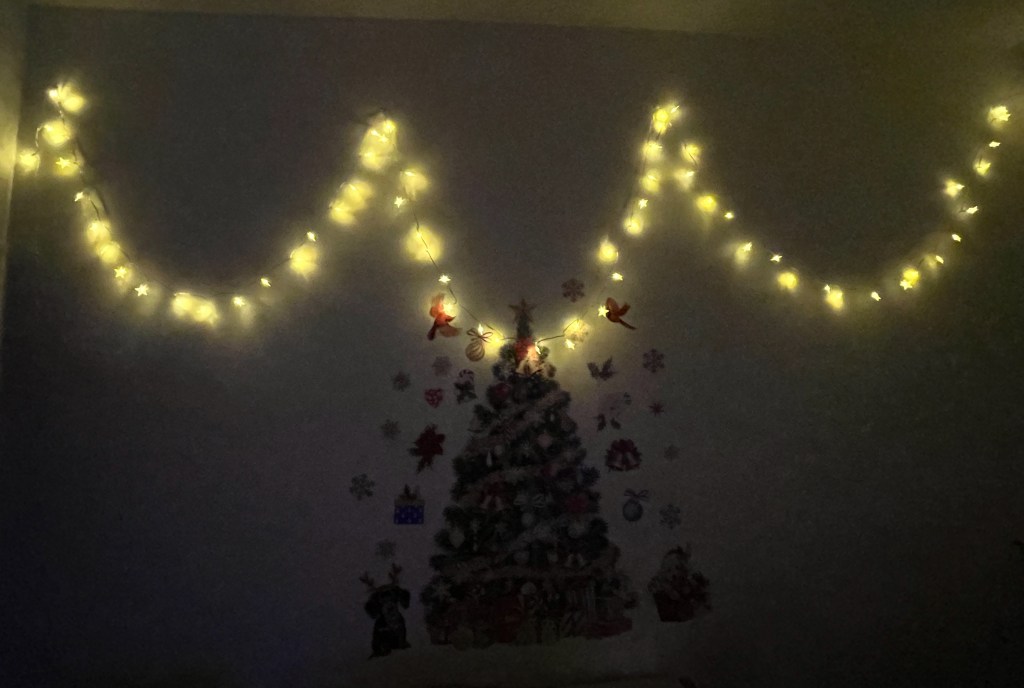
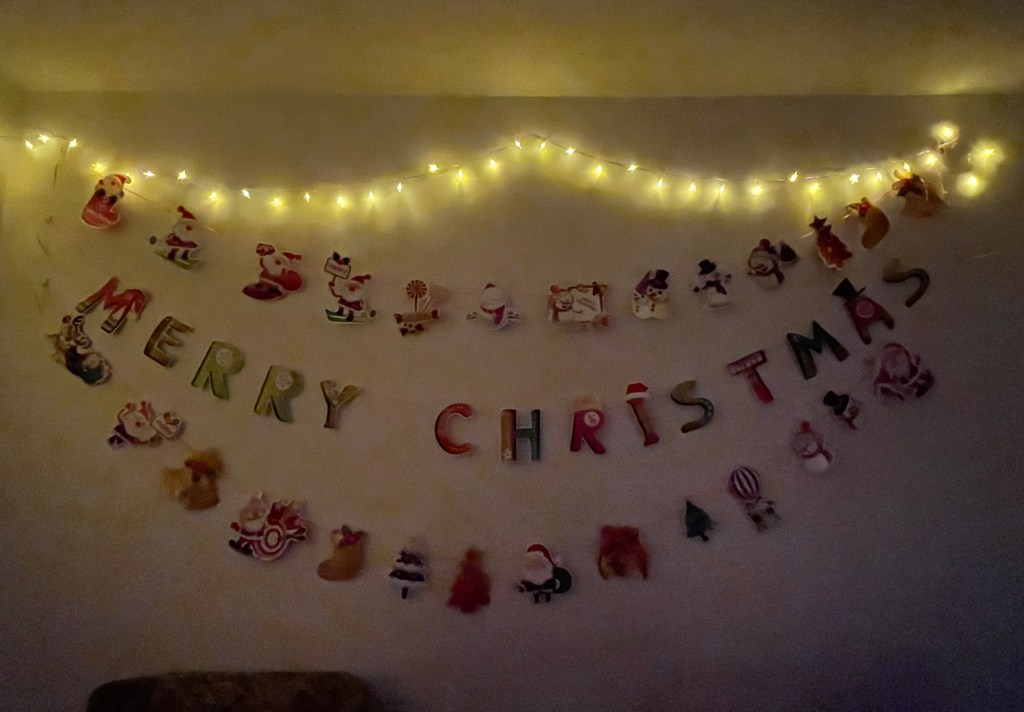
With everything’s that gone on, we were naturally very anxious for Christmas to go well. But despite one or two stressful moments leading up to it, I’m happy and relieved to say that we’ve had a lovely festive season, exactly as we’d hoped for. I put up plenty of decorations to make the lounge look festive, we’ve had absolutely delicious dinners every day, we’ve been gorging ourselves on far too many sweet treats, we’ve been watching and listening to the different types of entertainment we like, and overall we’ve been happily relaxing.
Mum has had a cold, but thankfully hasn’t been seriously unwell, and at one stage it looked like I might have caught it too, but it never properly took hold. And mentally she’s been in very good spirits throughout. The colder spells of weather most recently have occasionally caused her to lose focus and get disorientated or confused, but nowhere near as bad as she got last winter.
So now we just have to see what 2026 has in store. If the last year’s anything to go by, anything’s possible, but hopefully it will be better.
We’re getting off to a mixed start though. Yes, Mum is in a much better position than this time last year, because she’s sleeping properly, has a wheelchair, isn’t falling over, and has regained some confidence and independence, which is all wonderful if that continues, especially if we can get her out and about more too.
However, there is also the real possibility that I might have to quit my job. Not because of Mum specifically – although being able to free up my time to look after her better and give myself more leisure time would be helpful – but because the DWP’s Access To Work department have devalued support workers like me. My friend Emily has recently tried to renew her support worker claim for the help I provide for 37 hours a week, and the DWP have decided to increase my hourly rate yet slash my actual hours to just 8 per week, meaning I lose nearly £500 per week from January. That’s unsustainable and unacceptable for both of us.
I’m going to do those 8 hours per week with Emily until the end of the financial year in Apr out of goodwill, to give her a bit of time to appeal it. But I’ll have to stop if it’s not resolved by then. And even if it does get sorted out, I need to decide if I’m going to stay on or not given how things have changed in the past year overall. If I do have to quit, I’m fortunate to be in a position where I have a safety net of support both practically and financially, including the ability to claim Carer’s Allowance if I lose my other income, so I would be ok. It’s Emily I feel more sorry for.
But we’ll see how it goes. Ultimately, despite the career situation, there is reason to be hopeful for the year ahead, if things continue on their current path for Mum and I.
Conclusion
So that’s it for this epic post, and indeed for this year. It’s been quite the rollercoaster ride, and Mum and I are glad it’s over. But despite all the hardships, she is in the best position she’s been in for a while in some ways, and has a better outlook on life as a result. So maybe on balance it’s not been a terrible year overall, as much as we’d rather it hadn’t happened this way. Maybe it’s just been a way of transitioning from one state to the next, to get her out of the rut she was in. We’ve had good come out of bad before.
I’ll keep you posted in any case. I don’t yet know if I’ll continue to do detailed carer journals, or if I’ll scale it back to summary updates every so often. It really just depends on how things pan out and how busy things get. But one way or another I will let you know how we’re both doing, alongside all the other posts I normally do.
In the meantime, thank you so much for reading these posts, especially if you’ve got to the end of this one, and for all your support during the year. Having this outlet to share what’s been going on has been very therapeutic for me, and I hope it’s been interesting for you. If it’s helped to raise some awareness, or if anyone in a similar position to me has found it comforting because it’s relatable, then it’s certainly been worth it.
So I hope you’ve had a lovely Christmas, and I wish you all the very best for the year ahead. Here’s to 2026! 🙂
Share this:


 Well Eye Never
Hope 2026 is better for you.
LikeLiked by 1 person
Thank you Amanda, hope it’s a good year for you too. 🙂
LikeLike