

Content Warning: Domestic abuse. There is support information at the end.
Unseen is an important and powerful audio drama about the impact of domestic abuse on visually impaired people. The free 45-minute production has been created by Extant, the UK’s leading performing arts company of blind and visually impaired actors and practitioners, and is inspired by the findings in the Unseen Report from the Vision Foundation.
I recently reviewed the drama in advance of its online premiere on Monday 4th March. But in addition to that, I was also invited to send in some questions to members of the team to find out more about how it was made.
So I’m delighted to share some interesting insights from sound designer Ian Rattray, director Ben Wilson and actor Georgie Morrell. Many thanks to all of them for putting aside some of their valuable time to answer my questions!
Contents
Ian Rattray – Sound Designer
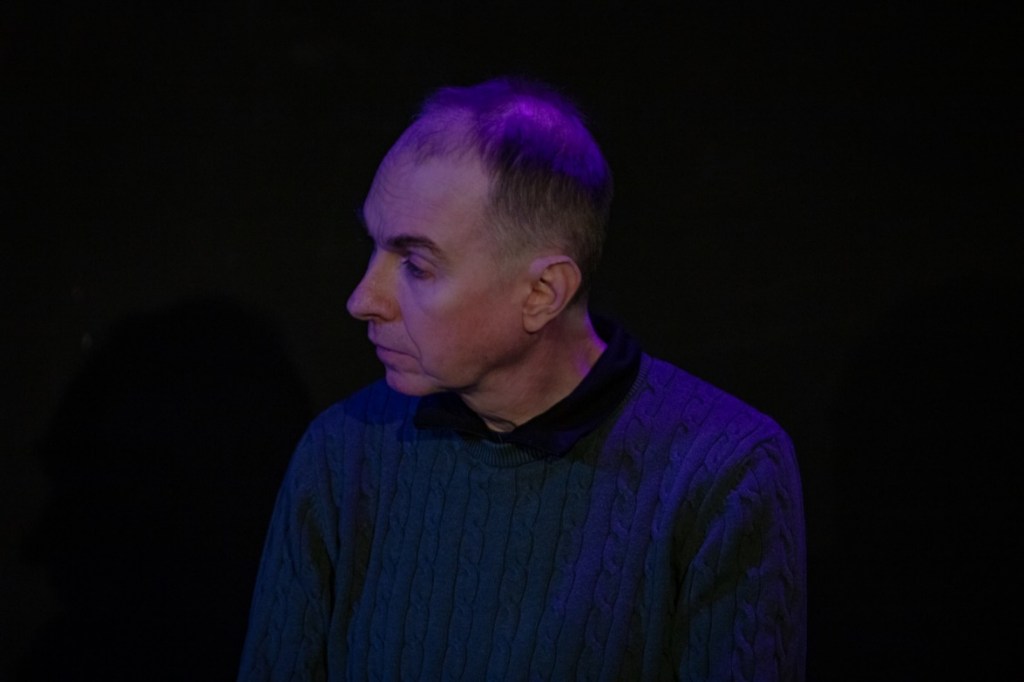
Why was it important for you to be part of this production?
Audio drama has been an important part of my life. I remember, even as a child, listening to audio dramas such as Earthsearch and the Hitchhikers Guide to the Galaxy on a transistor radio tucked under my pillow.
My desire to produce an audio drama was fired up during lockdown when I started creating my own short vignettes based on AI. This was reinforced by a conversation I had with Louisa Sanfey of Extant in early 2023, when she mentioned that the possibility of the Unseen project may be coming up towards the latter end of the year. I immediately expressed an interest in being involved.
The Unseen project has been massive for me both professionally and emotionally. On the professional end of things this is the largest project I’ve had to date, and, at times, it’s been a very steep learning curve. On the emotional side I have come to realise that I have been a victim of emotional abuse within a relationship, which was a real eye-opener.
How did you approach the sound design? Was there a particular tone, style, atmosphere, etc you were aiming for?
The script was devised by a team of 4 or 5 people. I think the difficulty I initially had was trying to respect the devising teams’ voices. They had preloaded the script with ideas for sound, some of which I used, and others got left out.
Another difficulty was finding the right tone of the piece. The problem was there are two stories that start polar to each other, cross over and end up opposite poles. This made it very difficult to find music or background drones etc to meet the required mood. It felt like treading a tightrope wire at times.
In the end I felt that a minimal approach was best. For example, there’s very little going on under the early monologues. This allowed for the use of the drone and breathing effects to impact later in the drama.
Were there any particular challenges or difficulties in designing the sound, given the subject matter?
I wouldn’t say there were so many challenges around the subject, it was more to do with how the drama was structured.
It would have been very easy to go for a full on, in your face kind of thing with screaming, thumping, etc. It was agreed by all that this would be a bad approach as we were trying to highlight the voice of the victims. The use of breath and breathing to create atmosphere and tension was keenly agreed on by both the devising team and director.
As mentioned, the polar nature of the stories made searching for music really challenging. I reckon I trawled through near on a thousand tracks, and I’m still not sure what I came up with was 100% what we needed.
Another interesting challenge was producing the live foley. Great use of my kitchen, lounge and front door were made. I even went out and about with an in-ear mic rig to record the white-stick sequences.
How important is drama for raising awareness of a sensitive subject like this, and why can it be more impactful than other mediums like news reporting?
I think drama has the edge over news in that the news is just often background, full of woe and hate and it is easy to ignore as we can normalise the awfulness of the world around us.
Whereas an audio drama is something you deliberately have chosen to listen to, so you’re more likely to give it your full attention and, therefore, more likely to be surprised or shocked by what you hear.
Ben Wilson – Director
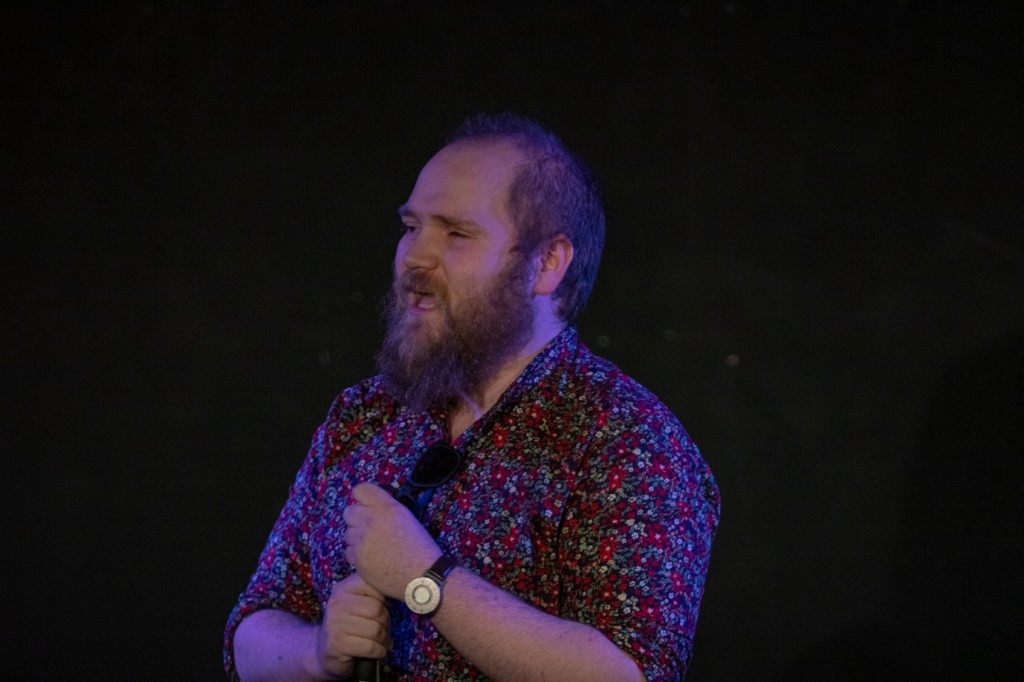
Why was it important for you to be part of this production?
The thing that excites me creatively and artistically more than anything else is collaborating with other VI artists. Particularly, when we get to tell nuanced and engaging VI stories with an important social message.
How did you approach directing the play? Was there a particular tone, style, atmosphere, etc you were aiming for?
I wanted everyone involved in the process to feel safe and empowered to contribute and share their skills and experience. The subject matter is a difficult and sensitive one and so I really wanted to look after everyone involved.
I wanted the finished product to be engaging, gripping, and to grab people emotionally so that they really hear and feel the truth of the subject matter.
Why was the decision taken to produce an audio play rather than a stage production?
I think audio is an effective medium. As a listener to lots of audio content, from radio plays to audiobooks to podcasts, I think there is a real intimacy to the format. You can have a personal relationship with the audience in a way that is impossible on stage.
We also wanted this story to be listened to by as wide a range of people as possible and an audio drama has a much wider reach as anyone in the world can listen to it.
However, we are also interested in exploring the possibility of a live theatrical version of the story in the future. We also recognise and celebrate the power of live theatre and live arts. That is at the heart of what we do as a company.
Were there any particular challenges or difficulties in directing and recording the play, given the subject matter?
The biggest challenge was representing the wide variety and diversity of stories there are within the subject matter. You could easily make a 20-part Netflix series exploring all the different facets and all the different stories there are out there. But we were limited to one 40-minute drama, and so could only touch upon the wide ocean of experience there is out there.
There are so many stories that need to be told. And we hope the ones we have chosen to tell will inspire people to go and find the Unseen Report and hear even more.
What feelings or messages do you hope that people will take away from the play?
I want domestic violence support services to be inspired to learn and educate themselves about how they can make their services more accessible to VI victims.
I want the eye support services to learn how better to support their clients who are suffering abuse.
I want the victims to listen and feel a little bit less alone. And to educate people and give them hope that if they ever end up in a situation like this that there are ways out.
How important is drama for raising awareness of a sensitive subject like this, and why can it be more impactful than other mediums like news reporting?
It is essential. We have seen recently with the ITV drama Mr Bates vs The Post Office that headlines and news reporting can give people the facts, but only drama can make people feel the weight and significance and the consequences for real people.
Sometimes reading a story in a newspaper can feel abstract, but when you see and hear characters going through that thing in a well written and well performed drama it can really inspire you to fight for change.
It’s easy to feel powerless, but what can people do to help raise awareness and drive change around this issue?
Share both our drama and the Unseen Report itself far and wide. The more people hear the stories and know the truth then the more change can be made.
Be aware and look out for red flags in the lives of people you know. And most importantly of all, do not ignore and patronise VI people and disabled people. Listen to them and believe them.
If anyone listening to the play or reading this interview is a victim of domestic violence, or is aware of or suspects that someone they know is a victim, what would your advice be?
Speak to the experts. Speak to Refuge, Women’s Aid, the National Domestic Abuse Helpline. They can help. There’s always a way out. It won’t be easy but there is always hope.
Georgie Morrell – Actor
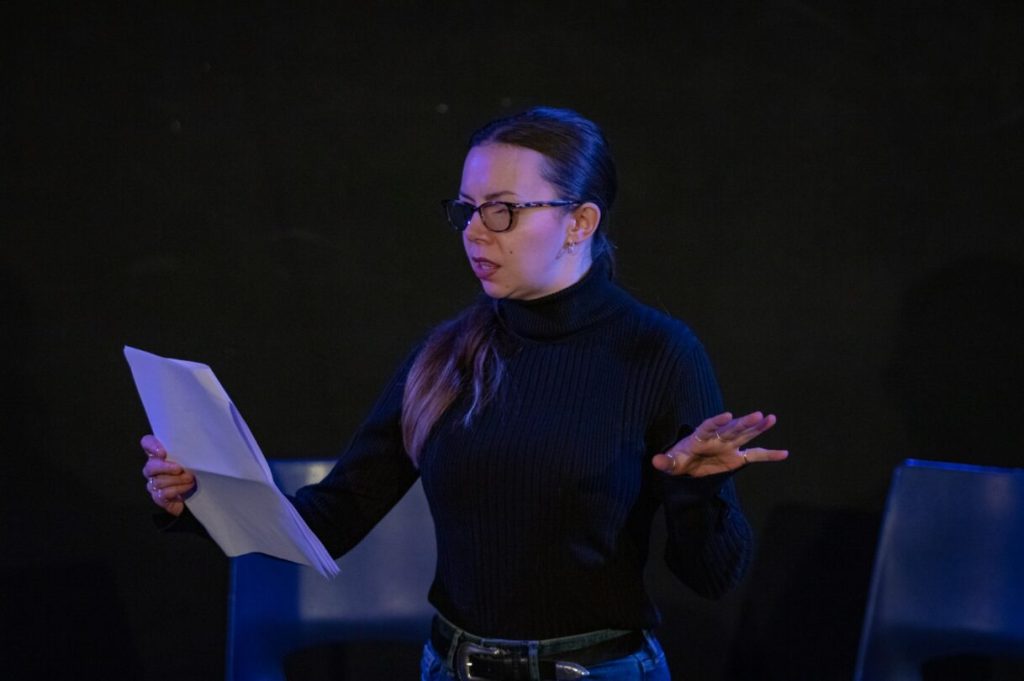
Why was it important for you to be part of this production?
I wanted the experience of a writer’s room on a project that I could really sink my teeth into. Unseen provided that opportunity whilst at the same time valued my lived experience as a visually impaired writer and actor.
It offered so much opportunity for innovative story telling, but more importantly highlighted an alarmingly worrying report that I got to be part of highlighting.
What is your role in the play?
I was one of the team who devised Unseen and I played the role of ‘Lucy’.
What can people expect from your character?
To see some of themselves in her.
How did you prepare for the role?
I was one of the team who devised Unseen therefore had total access to who Lucy is. It was ideal preparation for a role!
Was it difficult or distressing for you and your fellow performers to record the play given the subject matter? Was support available if necessary?
Support was available and Extant provided an incredible creative team too. It is of course a very sensitive matter, and I was aware it was reflecting a report based on real victims. I therefore approached it, as I do all my work, with professionalism, respect and empathy.
What feelings or messages do you hope that people will take away from your character’s story and the play as a whole?
I hope they come away more present and aware of those around them who might not have lives as simple as theirs.
Support Information
If you’ve been affected by the issues raised in this post, you can get information and support from the following organisations.
There is always help, there is always hope, and it’s never too late to reach out. You are not alone.
Mental Health:
- Samaritans – Telephone 116 123 (available 24 hours a day, 365 days a year, free of charge from landlines and mobile phones)
- Mind – Telephone 0300 123 3393 (from 9am to 6pm Monday to Friday, except bank holidays, with calls charged at standard rates)
- Shout – Text SHOUT to 85258 (Any time day or night, free from all major mobile networks)
Domestic Abuse:
- Refuge – Telephone 0808 2000 247 (Free and in confidence, 24 hours a day, plus you can chat to them live online on Monday-Friday from 3-10pm)
- Northern Ireland (Women’s Aid) – Telephone 0808 802 1414
- Scotland (Women’s Aid) – Telephone 0800 027 1234
- Wales (Live Fear Free) – Telephone 0808 8010 800
- Men’s Advice Line (Respect) – Telephone 0808 8010 327
- LGBT+ Support (Galop) – Telephone 0800 999 5428
- Males & Non-Binary Support (Survivors UK) – SMS chat by texting 020 3322 1860
- Women’s Aid Email – helpline@womensaid.org.uk
Share this:


 Well Eye Never
This sounds interesting. Thanks for sharing.
LikeLike