

The 60th anniversary of Doctor Who is finally upon us, with an exciting trilogy of specials about to air, and a wealth of goodies to watch in the Whoniverse and peruse in the archives on the BBC website. It’s a great time to be a Whovian, that’s for sure.
But before I delve into all of that, I just need to squeeze in one more of my extensive review posts for the modern era. In recent months I’ve written at far too much length about Series 1, 2, 3 & 4, so it’s only right to wrap up this first batch of reviews with the specials from 2008 to 2010 that concluded David Tennant’s run as the 10th Doctor and Russell T Davies’ role as showrunner. Like many people, I was very sad when David left, so it was great to see him return for the 50th anniversary later on, and I’m looking forward to seeing him again in the imminent new trilogy for the 60th.
So in these 5 episodes, David gets a big send-off, alongside some great guest stars and the return of some familiar faces. I have the Blu-ray steelbook edition of this mini-series, so that’s what I’ll be going through here, including all of the extra features. And I’ll be mentioning some related items I’ve picked out online as well, which can be seen on my Youtube playlist for these specials. So I hope you enjoy!
[Note: This post was edited on 30 November 2023 to mention the new Whoniverse collection on iPlayer and the Series 1-4 & Specials box set.]
Contents
Overview
It was a very sad time when David left the show, which he first announced at the National Television Awards, and he explained his decision further in a BBC interview afterwards, as well as in further interviews and conventions since then of course. But he did get an amazing exit, as he deserved.
His final specials consist of 3 single-episode stories, followed by an epic 2-part finale. Each episode is an hour long, apart from the final one which is extended by 15 minutes. The first couple of episodes are relatively light in tone, then things get steadily darker as we approach the Doctor’s final days. And they’re all written by showrunner Russell T Davies, with a co-writer for the second and third episodes. The reason only 5 episodes were made, and spread out from Christmas 2008 to New Year 2010, was to give ample time for Steven Moffat and the new production team to prepare for Series 5. After all, taking over a show of this stature is no mean feat!
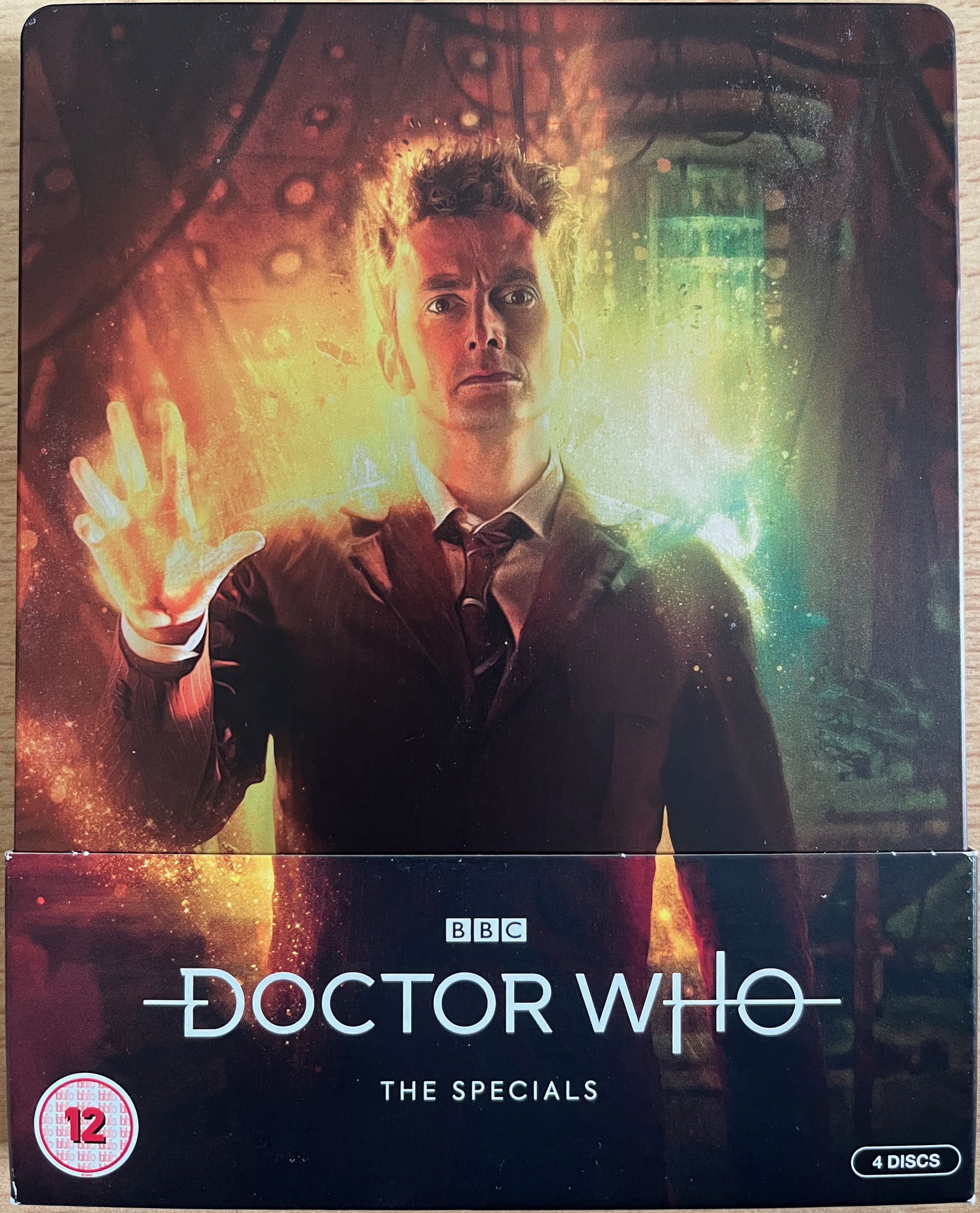
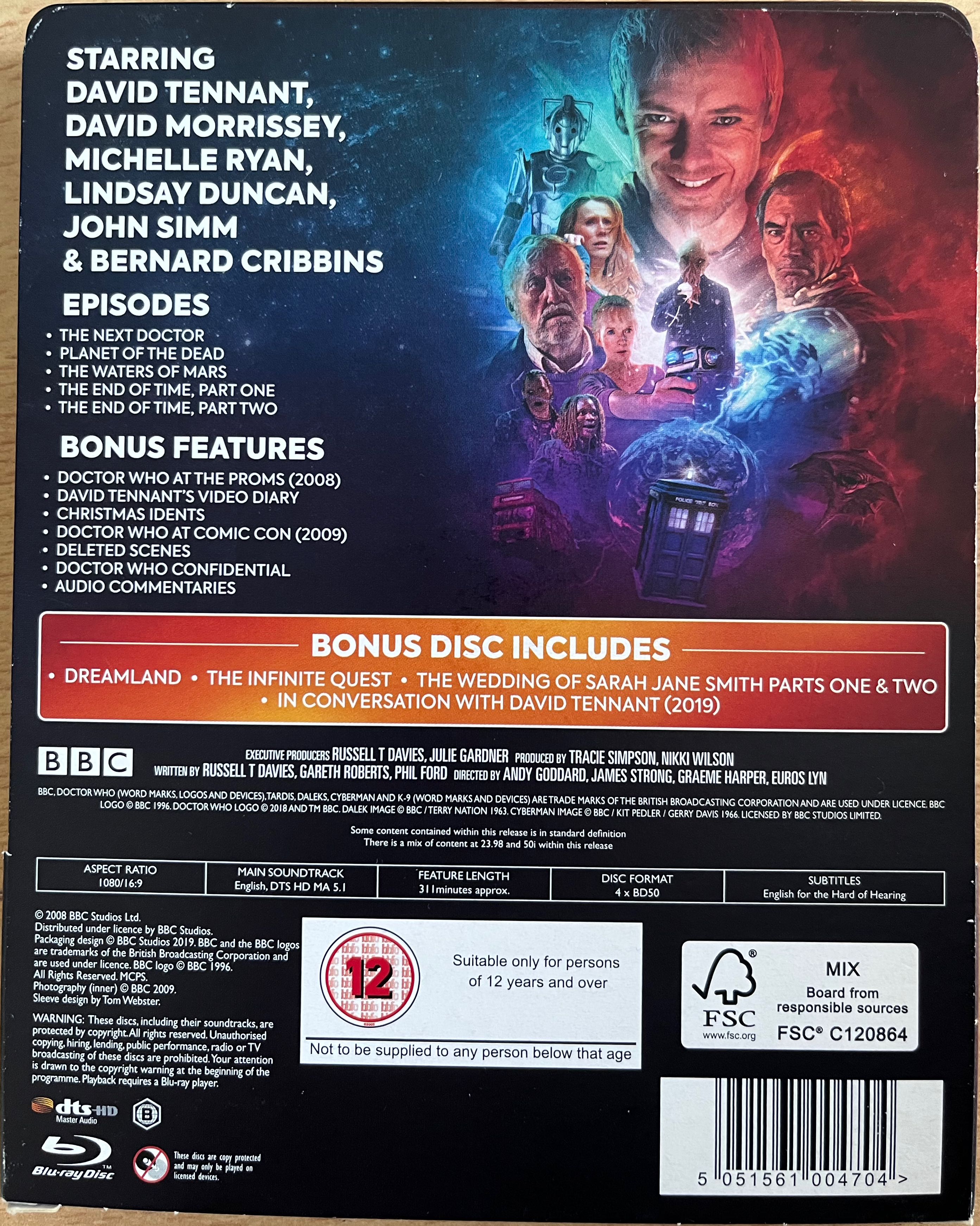
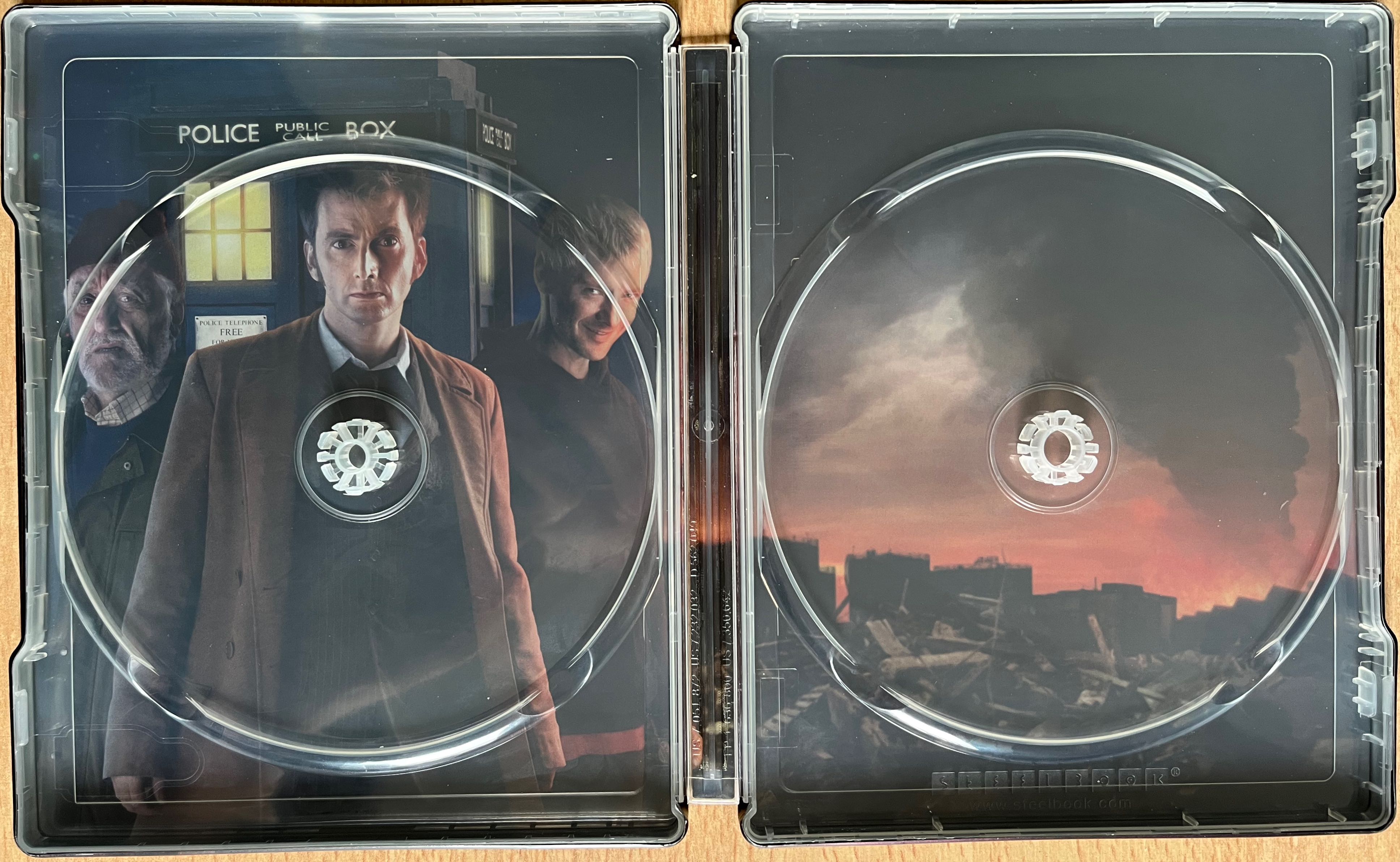
The Next Doctor was filmed in SD and has been upscaled for this set, but all subsequent episodes are in HD, and I do think the HD episodes appear a bit sharper and more detailed if I look closely. But I don’t have sufficiently good eyesight or knowledge to really judge it properly or do a deep technical dive into it, which other people will have done already anyway.
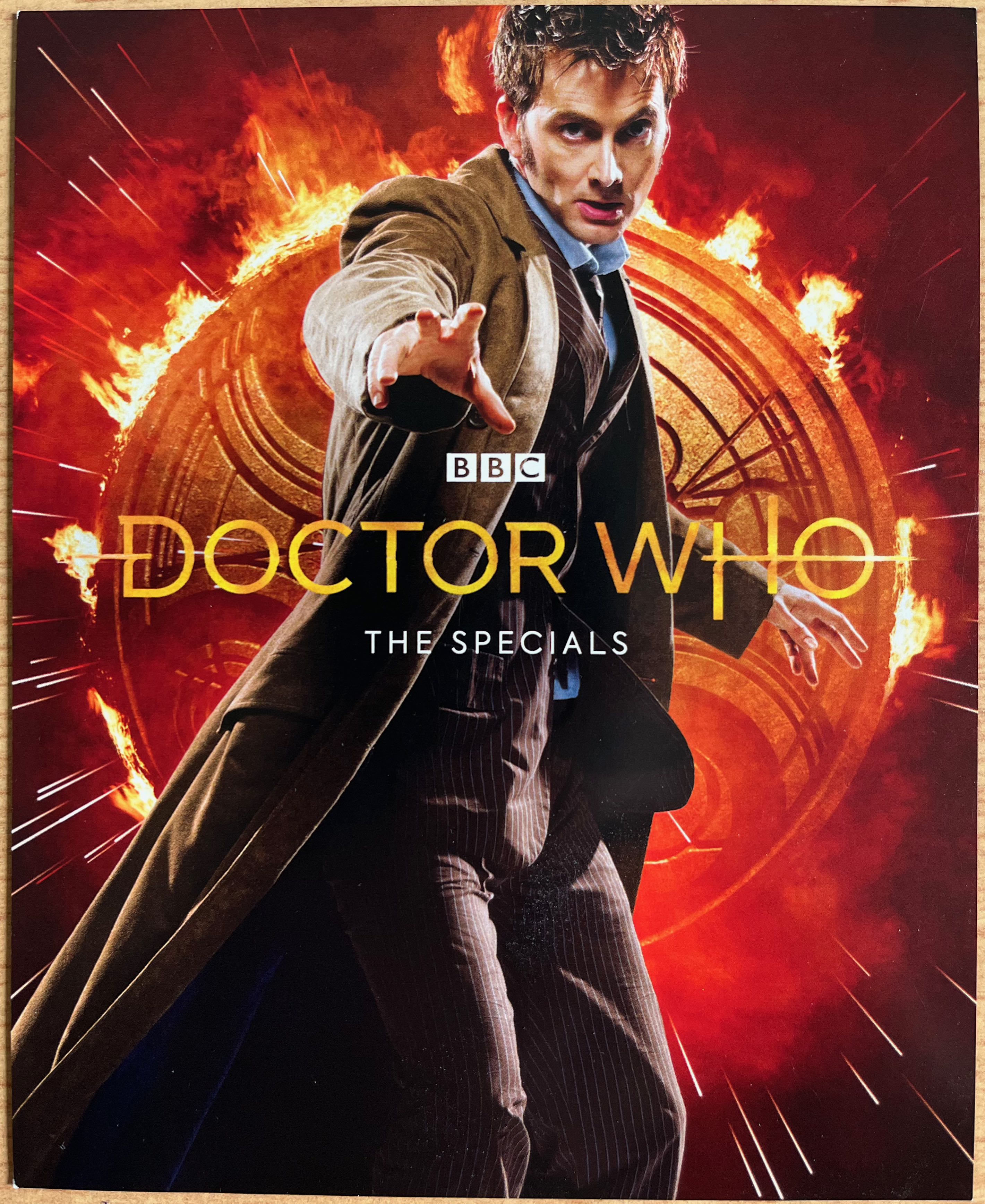
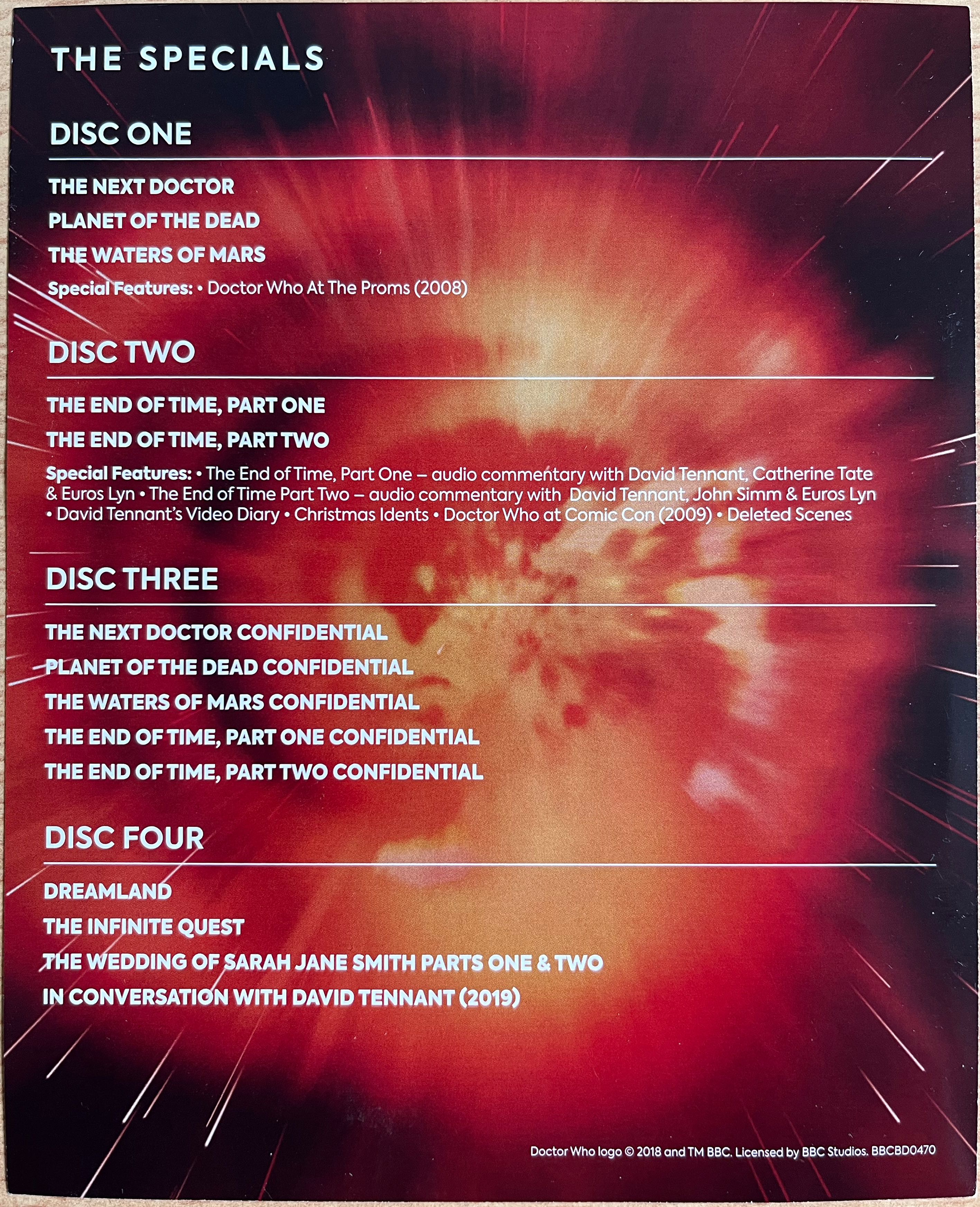
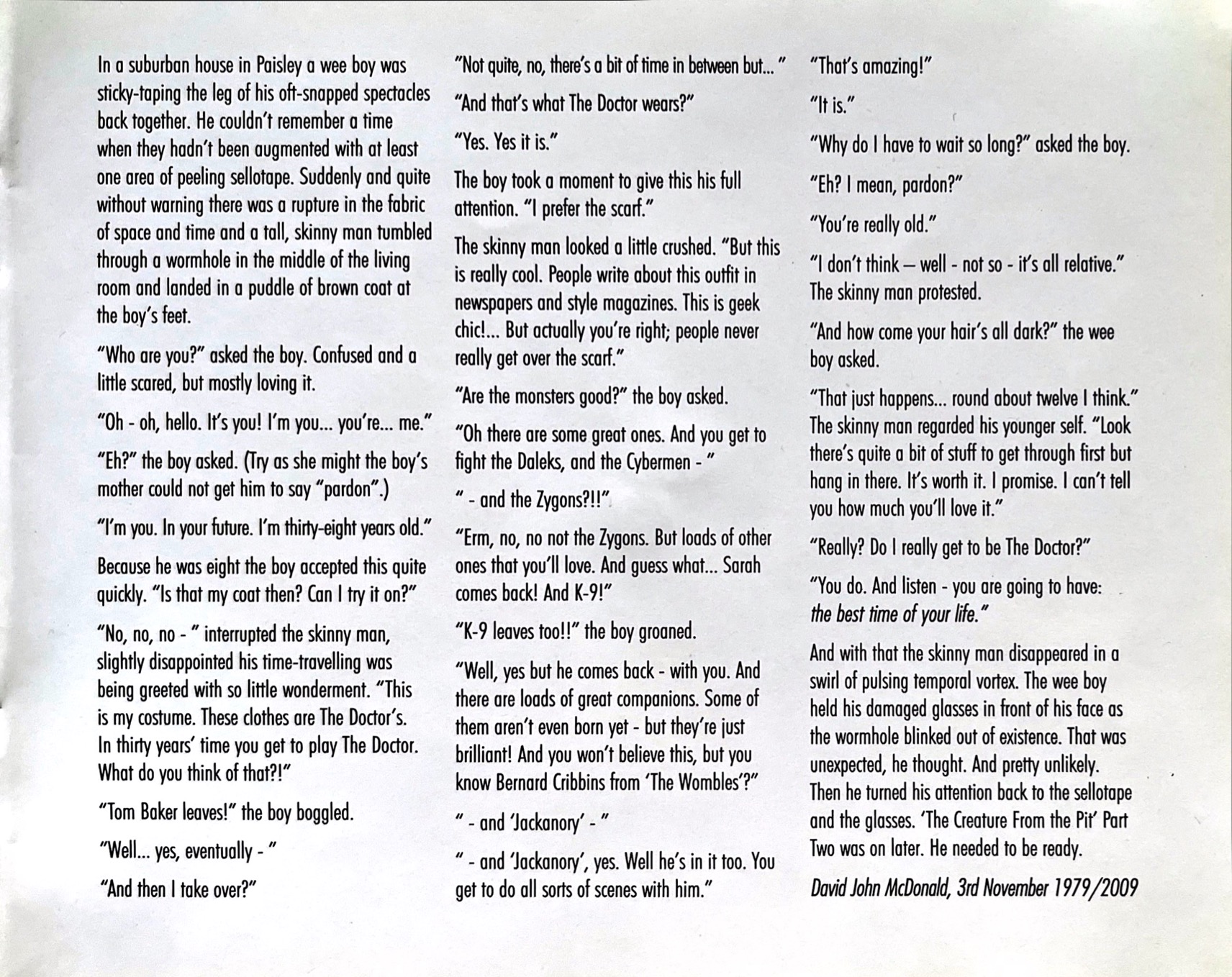
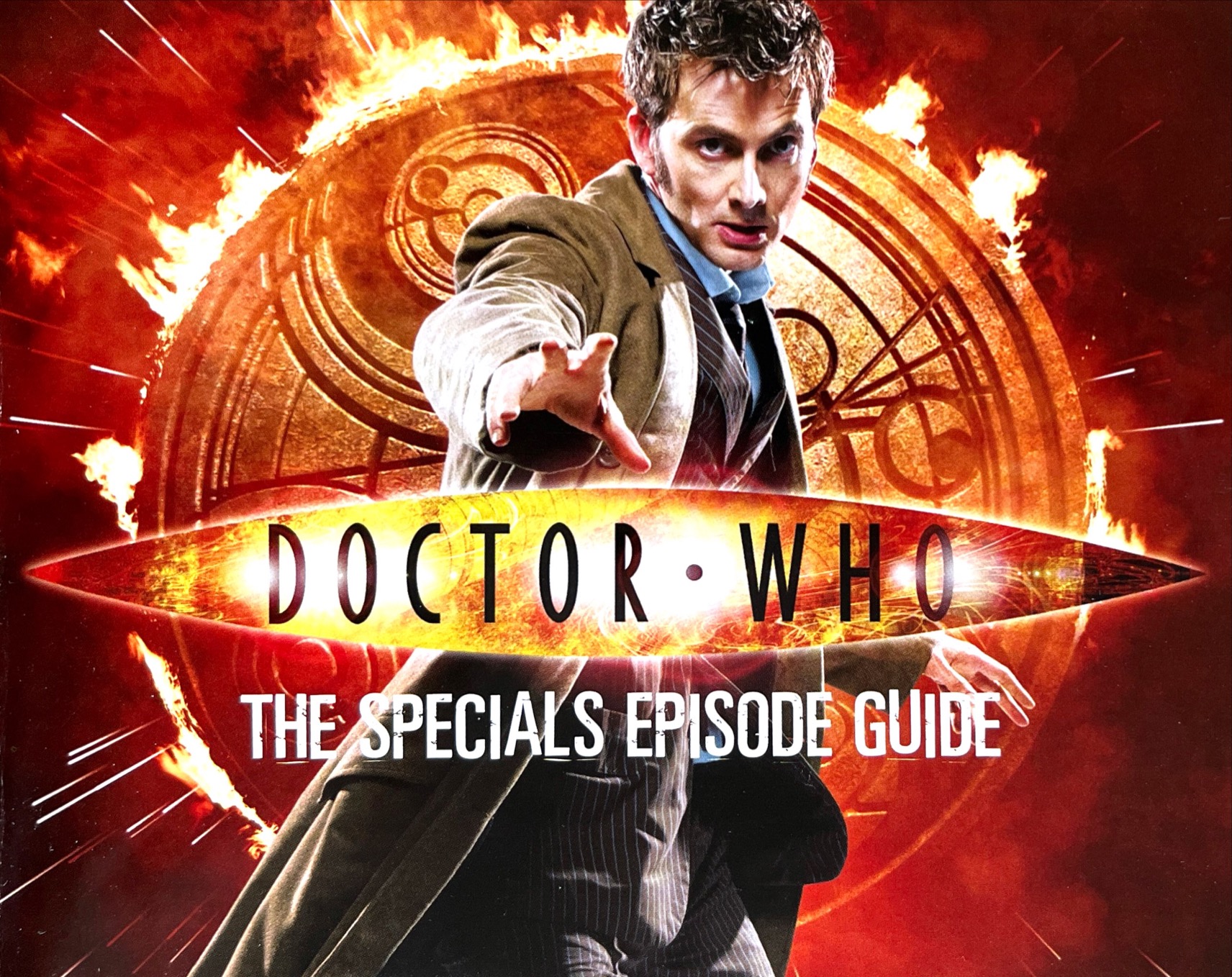
As well as better picture and sound quality, the Blu-ray also has more extra features than the old DVD set, as it includes a bonus disc with a few spin-off episodes and a new interview with David Tennant, as I’ll mention later. On the other hand, we don’t get the nice booklet that was part of the old DVD set, which had some photos and artwork, brief details about each episode, and an amusing foreword from David Tennant where he imagines revisiting his childhood self to tell him about the amazing future he’s going to have. All we get in the Blu-ray is a thin double-sided flyer with an image on one side and a list of disc contents on the other, in common with the steelbook for Series 1-4. I’ve still kept the old DVD booklet though, just as I have for the previous 4 series, so I’ve included some imagery from it in this post.

There isn’t any audio navigation and audio description on the Blu-ray sadly, which we have to wait until Series 6 for (whereas audio description was available from Series 1 on the DVDs, and audio navigation from Series 2). However, audio description is available for every episode on BBC iPlayer.
[30 November 2023 Update: The new Series 1-4 & specials box set includes audio description on every episode, but not audio navigation. It also corrects the conversion issue that causes the episodes to run 4% slower here, which I don’t notice anyway so I haven’t bought that new set.]
The other slightly frustrating thing about the discs is that they’re doubled up on each side in the steelbook, so you have to unclip the top disc to get to the other one beneath it. Not the end of the world, but it is a bit fiddly, and they didn’t do that for Series 1-4.
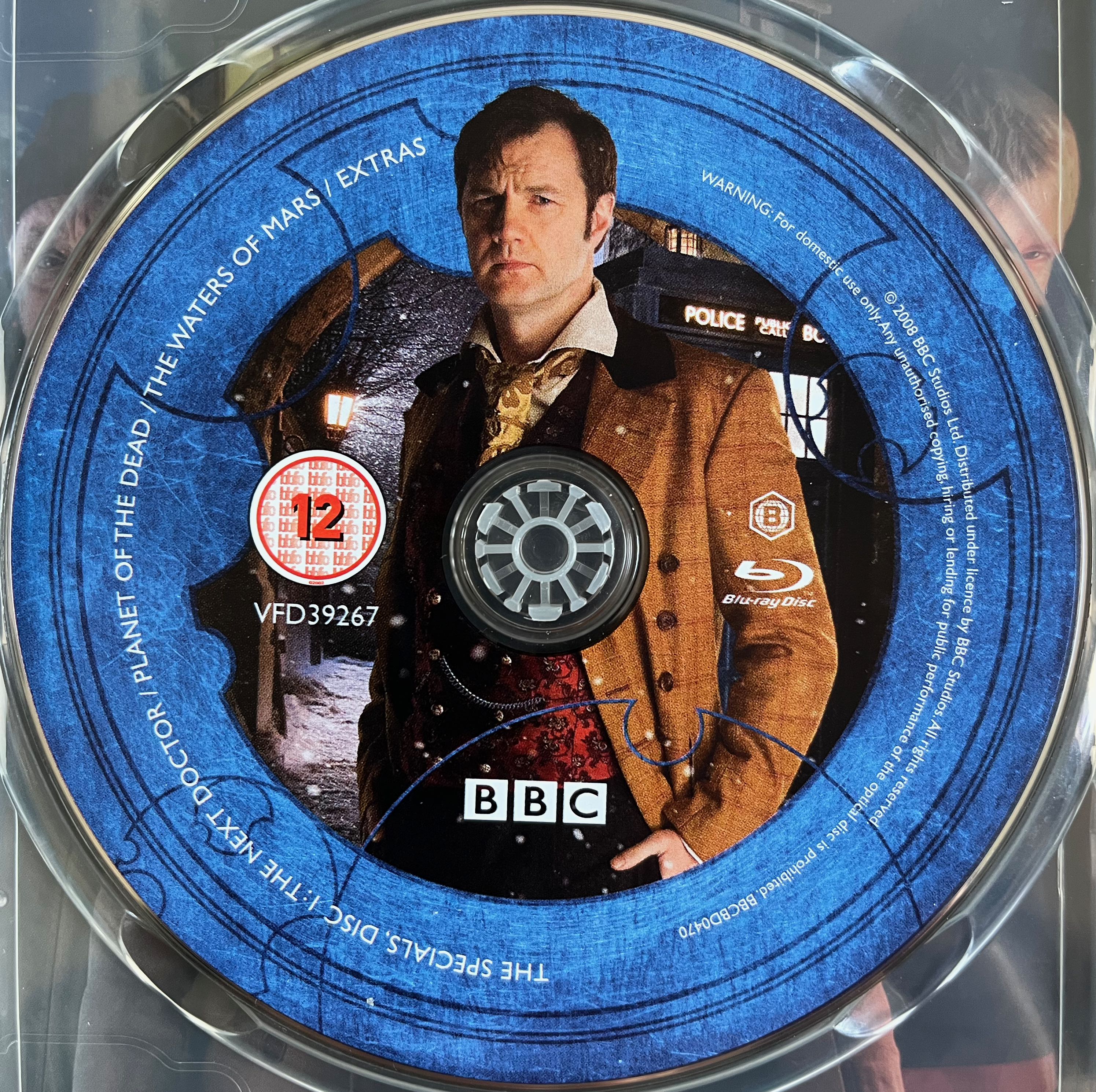
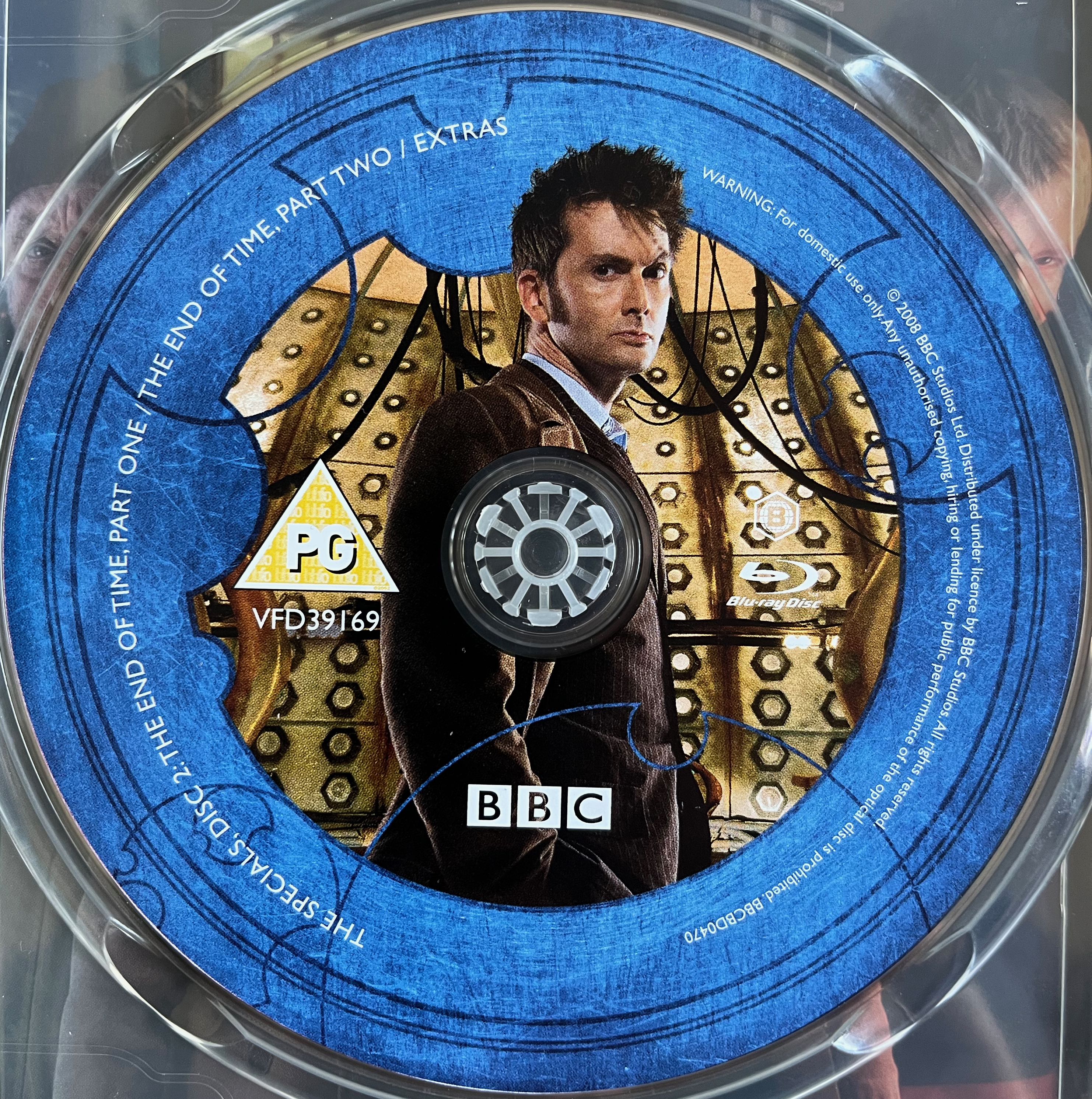
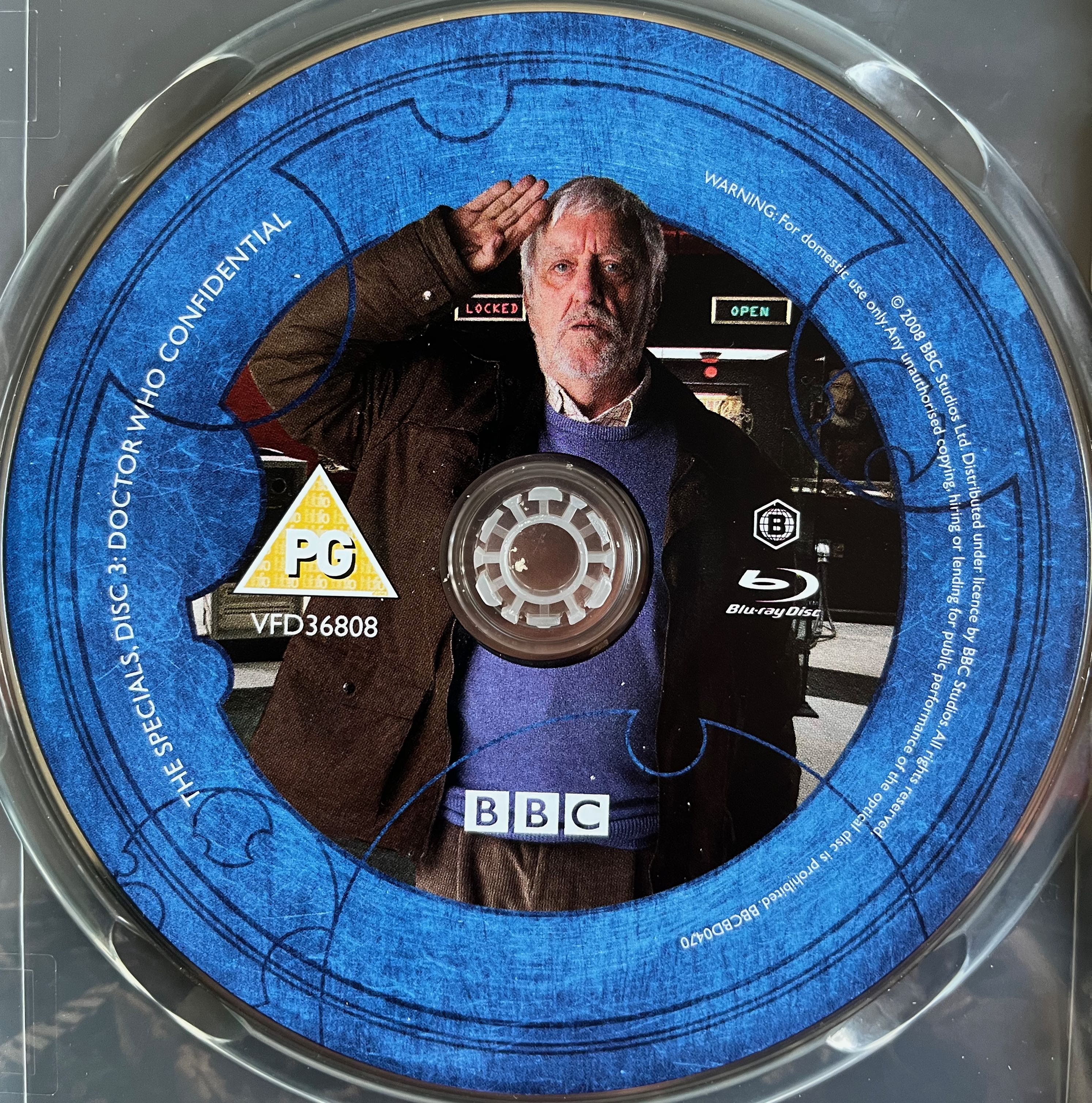
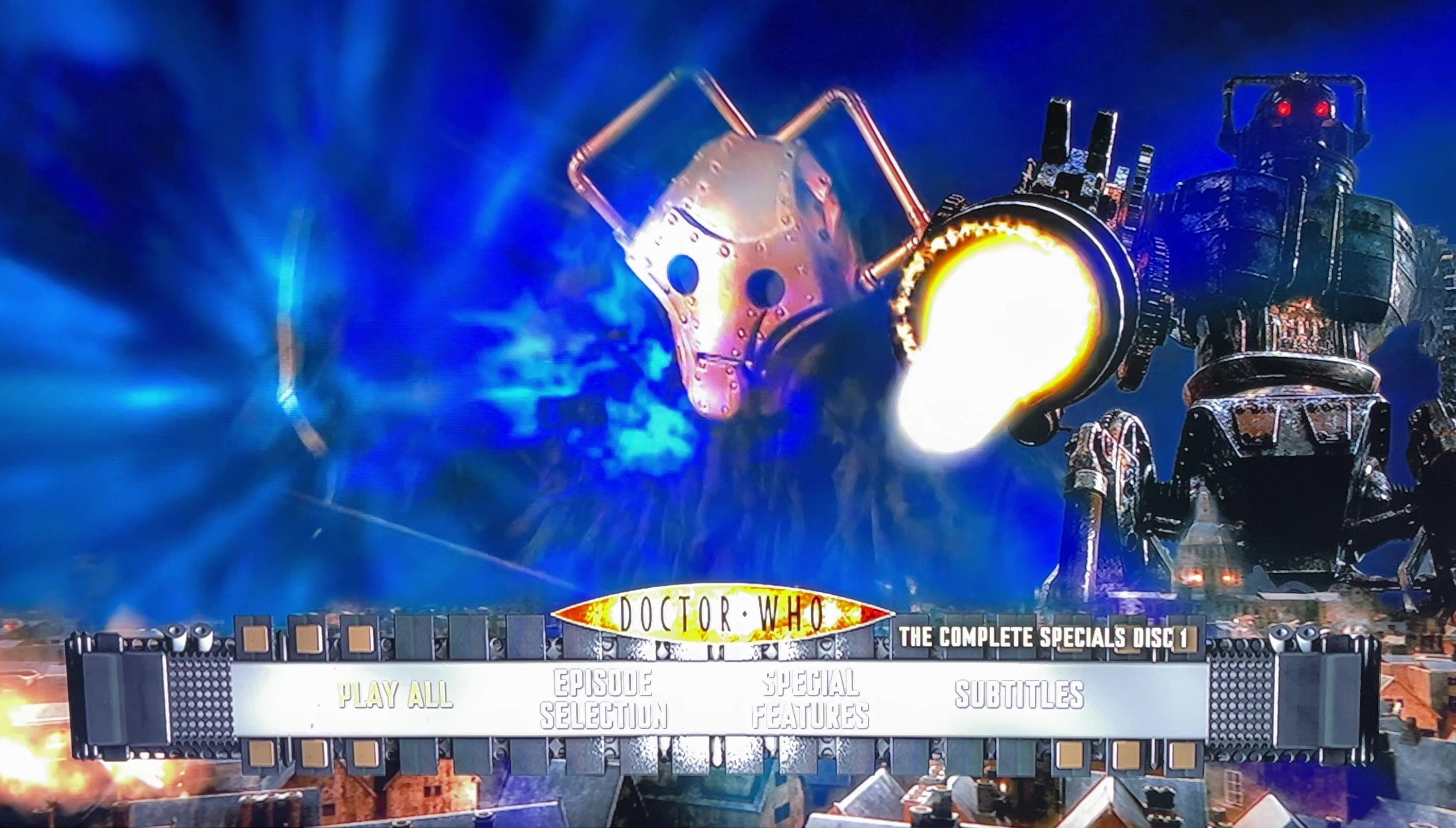
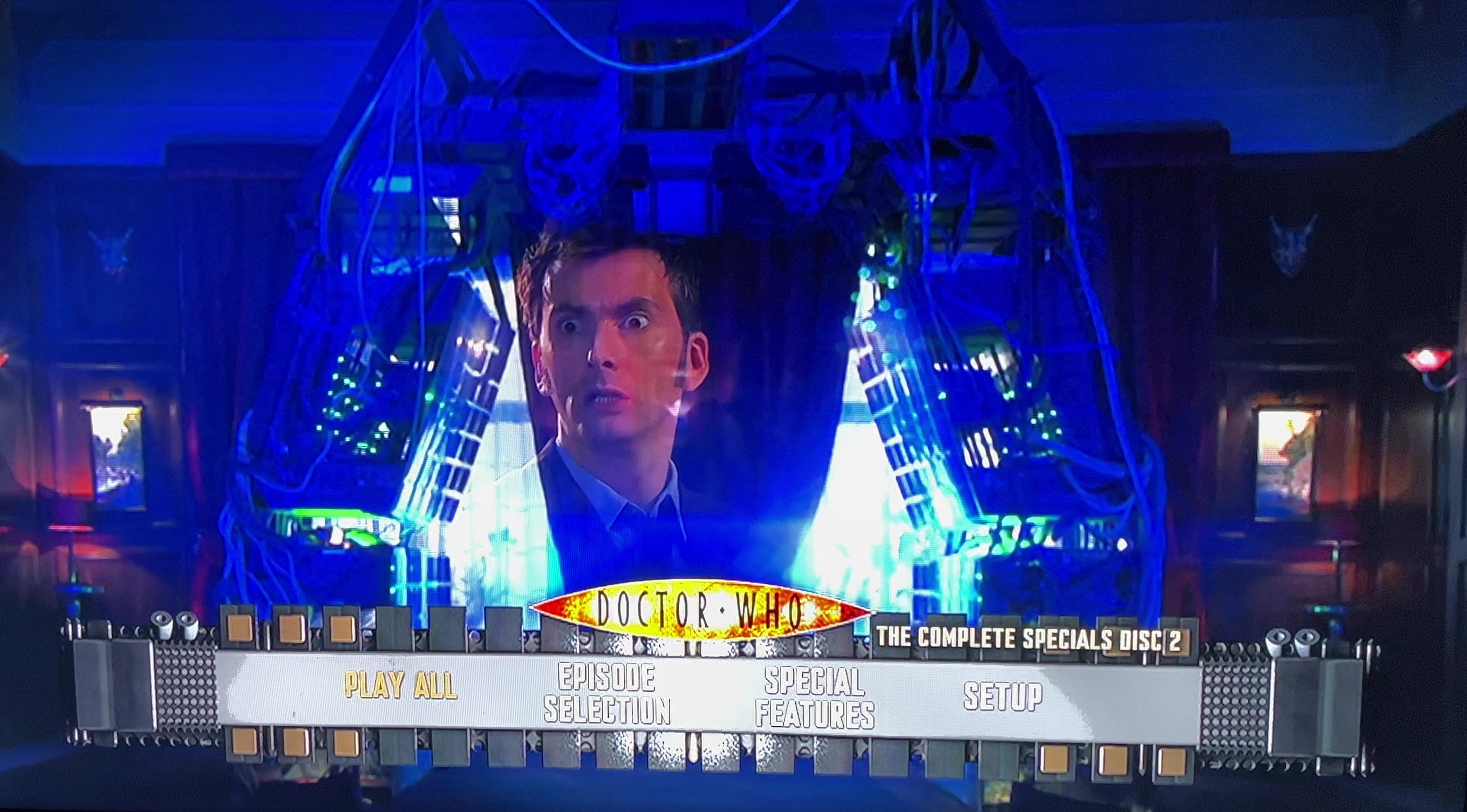
The menus play the excellent pounding theme music from the series, but are visually customised for each disc, instead of having an animation in the Tardis as they did for previous series. The menu on Disc 1 loops 3 times, to show clips from each of its episodes in turn, and the CyberKing also appears for the first episode to shoot fireballs across the screen. Disc 2 shows clips from the final 2-parter, with the opening theme tune extended by repeating parts of it. Disc 3 (for Confidential) simply shows the time vortex that you drift through during the closing credits of the main show.
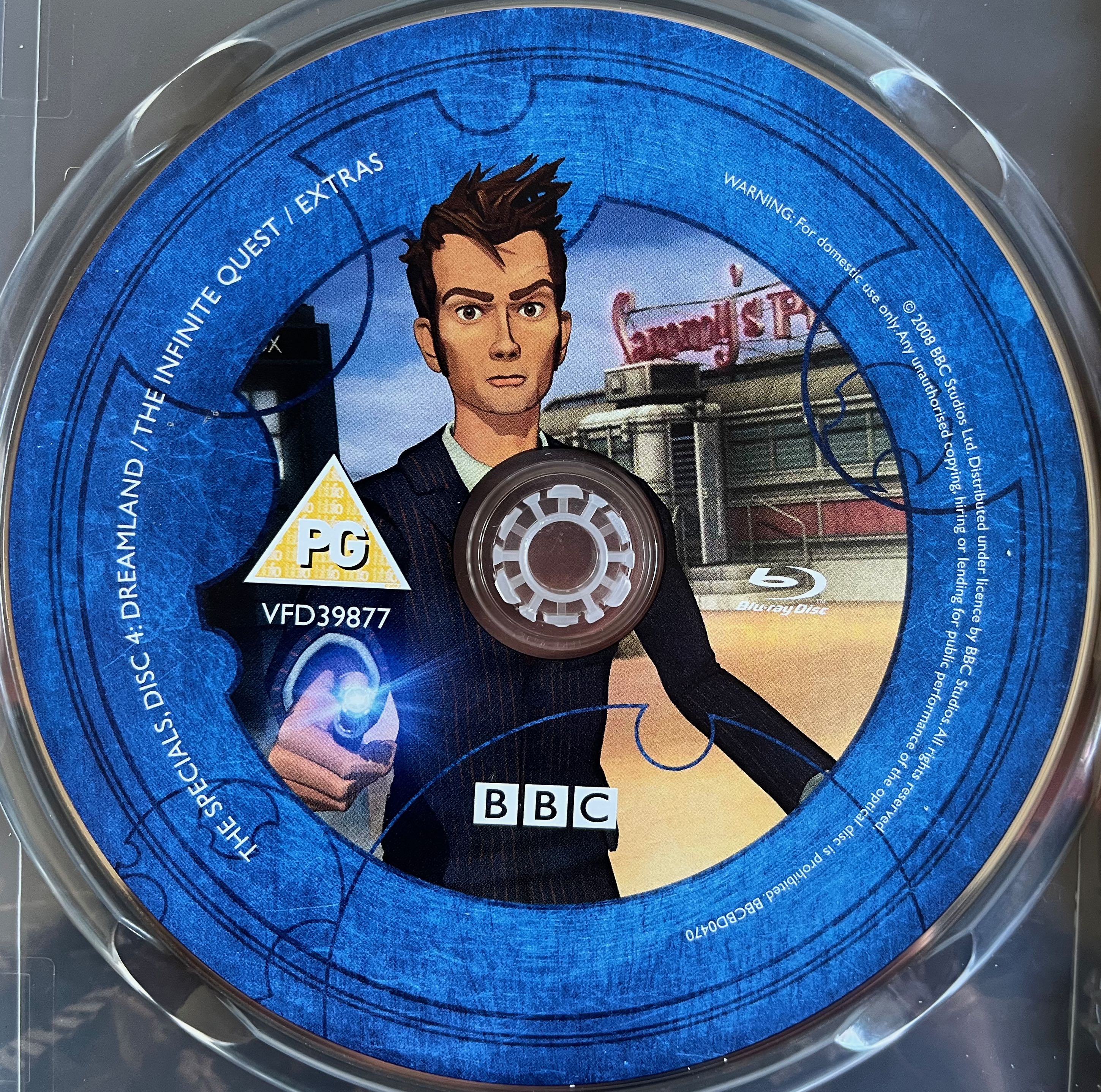
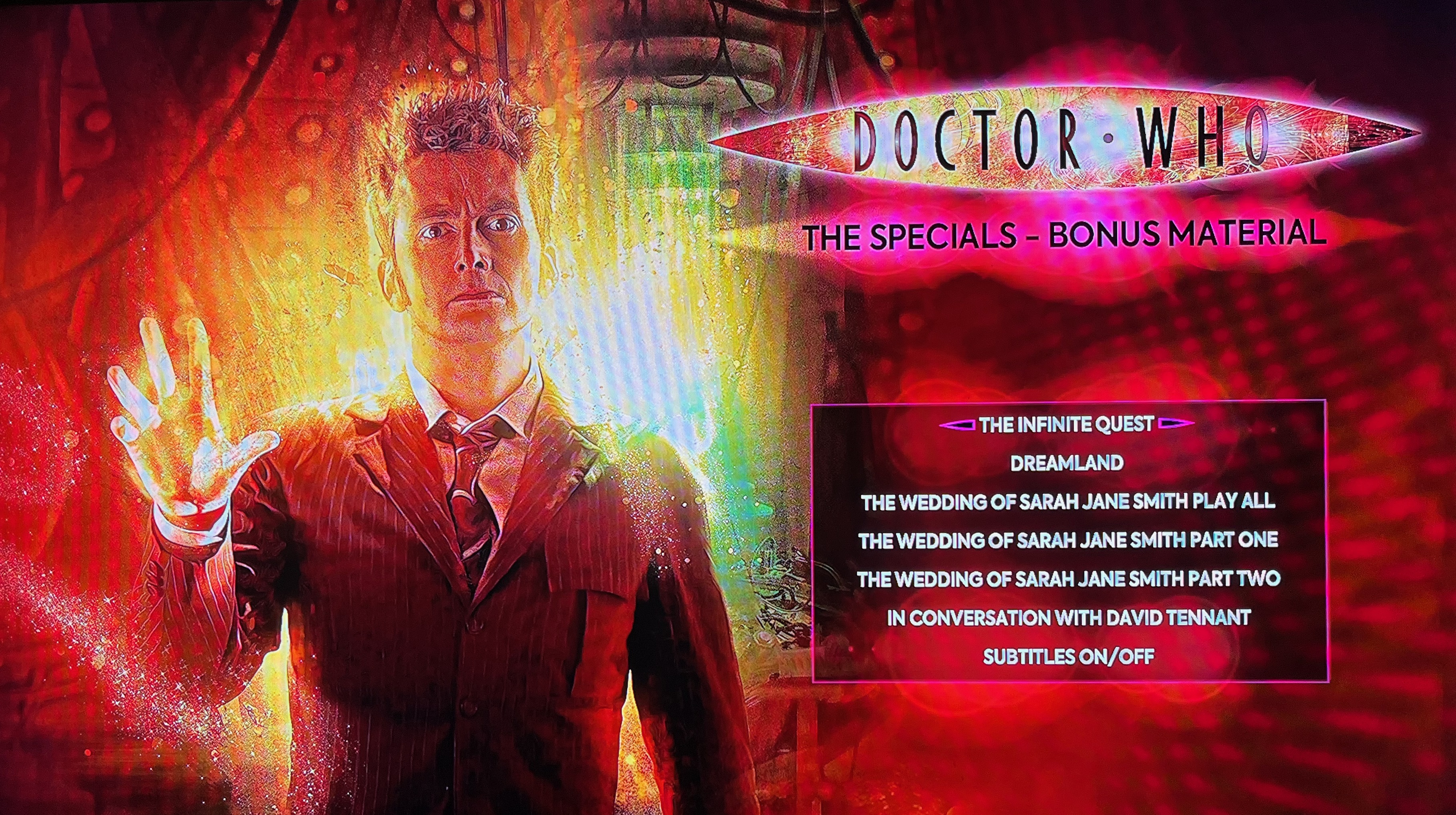
But Disc 4, being new and exclusive to the steelbook set, is completely different. Instead of loading with the time vortex and theme tune, it opens with the Doctor Who logo from Jodie’s era (which was in use when the steelbook was released), then plays a butchered edit of the Series 4 theme tune over a static menu that shows the options alongside an image of the Doctor regenerating. So it’s a shame they couldn’t make it consistent with the rest of the set, but it’s still great to have an extra disc nonetheless.
The music was of course composed by the genius that is Murray Gold as usual, and once again he released a soundtrack album to accompany this mini-series. For the first time this contained 2 discs instead of one, allowing him to include a much more extensive selection of beautiful compositions, so Disc 1 focused on the first 3 episodes, while Disc 2 was devoted to the 2-part finale. The iTunes version also had a couple of bonus tracks on the end as well.
A further new addition, for both the physical and digital editions of the album, was a booklet containing a nice introduction and track-by-track notes by Murray, as well as a few photos too. In his introduction Murray praises the BBC National Orchestra of Wales for their efforts, noting that most of the recordings are first or second takes, which is very impressive, and he thanks conductor and orchestrator Ben Foster as well.
So I’ll indicate my favourite tracks as I go along here, and you’ll find all of them on my playlist for these specials, along with a few other unreleased parts of the score that fans have extracted in variable quality from the episode soundtracks and posted online.
Episodes
1. The Next Doctor
- Writer – Russell T Davies
- First Broadcast – 25 December 2008
- Links – BBC / Wikipedia / Tardis Wiki
This is a mischievously misleading title by Russell, given that David Tennant had announced he was leaving at the National Television Awards just a couple of months earlier, leading to intense speculation about his replacement. But of course, being Russell, all was not as it seemed.
In this episode – the last to be filmed in Standard Definition before HD took over – the Doctor lands in Victorian London on Christmas Eve 1851, where he encounters another guy (played by David Morrissey) who also claims to be a Time Lord called the Doctor, with his own sonic screwdriver and Tardis, a companion called Rosita (Velile Tshabalala), and firm determination to save London from the Cybermen. And if his performance in this episode is any indication, I think David Morrissey could have made a good Doctor if he’d ever been given the actual role.
However, after an amusing scene where the two Doctors are dragged up a wall and across a room at speed by a creature-like Cybershade, it soon becomes apparent that this new stranger only thinks he’s the Doctor, as his ‘sonic screwdriver’ is just a regular tool, his ‘Tardis’ is a hot air balloon (with a clever acronym – Tethered Aerial Release Developed In Style), and he’s just an ordinary human being with one heart instead of two. So he’s lost the memory of who he really is.
It ultimately transpires that he’s really Jackson Lake, the man whose apparent death he’s been investigating. He had forgotten his identity due to an attack by some Cybermen, when a data storage device called an infostamp, containing information about the Doctor, had inadvertently backfired into his brain (and when the Doctor shows the infostamp’s contents on screen, we get a nice glimpse of all his previous incarnations). What’s more, Jackson’s mind hadn’t just been overwhelmed by that torrent of information, but it had effectively welcomed it as an alternative to reality, because the Cybermen had also killed his wife and kidnapped his child Frederic (played by Tom Langford, who had already played a role in a Torchwood episode earlier that year). So as the truth comes back to him, Jackson naturally becomes very distressed, and David Morrissey is great at riding the gamut of emotions with his character as the episode progresses.
Despite that, however, Jackson still works alongside the Doctor, showing bravery and ingenuity and a keen desire to help, and is overjoyed when the Doctor rescues his son Frederic and saves London. So he proudly urges people on the streets to applaud the Doctor, before inviting him home for Christmas dinner. The Doctor is reluctant at first, but is persuaded to change his mind after emotionally opening up briefly about the fact that his companions have broken his heart by leaving or (as in Donna’s case) forgetting him. As much as the Doctor loves travelling with people, no companion can ever be with him forever, meaning any close attachments can only ever end in some kind of heartbreak eventually. So it’s lovely that the Doctor allows himself to relax with his new friends before moving on, giving a happy ending to the story.
And as well as the great chemistry between the two Davids (who had previously appeared in the series Blackpool together), another important mention must go to the wonderful Dervla Kirwan. I also like her as Phoebe in the first 3 series of the sitcom Goodnight Sweetheart alongside Nicholas Lyndhurst, and she had also appeared in an episode of Casanova, another drama starring David Tennant. But here she’s a villain called Mercy Hartigan, who is working on behalf of the Cybermen, by recruiting further human agents who force children to do hard labour in the Cybermen’s headquarters.
She didn’t fully understand the terms she was agreeing to though because, when it’s time for the invasion to begin, she’s forced to become the controller at the heart of the CyberKing, a humongous walking machine (and a stunning piece of CGI by The Mill) that towers over London, serving as both a Cyber ship and a Cyber factory. Her mind is altered during this transformation, so she relishes the power and control. But the Doctor, using Jackson’s hot air balloon to face her high in the sky, finds a way to unlock her mind to understand what’s really happening, causing her to be so horrified that she destroys the CyberKing from within, and the Doctor sends the wreckage off into the time vortex to be disintegrated.

So on the whole it’s a nice episode, though actually it’s the weakest of all of these specials, and it’s not as amazing as some of the previous Christmas specials. In particular, the Cybermen don’t feel as much of a threat as they have been in other stories over the past few series, where they were already taking over the world, whereas here they’re just preparing for it in a small area of London, and the Doctor dispatches of the CyberKing pretty quickly. But it’s still good to have them back, and the friendship between the Doctor and Jackson, which is really the whole point of the episode, is interesting and stirs the emotions a bit. So it’s still fun altogether, and it’s ultimately uplifting as you’d hope a festive edition to be.
The first disc of the soundtrack album contains almost half an hour of music from this episode, in tracks 2-11 (because track 1 relates more to the third episode onwards). None of them are particularly memorable melodies, apart from recognisable snippets of a couple of tracks from previous series, but they suit the events of the episode perfectly as always, and are lovely to listen to in their own right. My favourites include:
- A Victorian Christmas – The cheerful and lively opening as the Doctor arrives, one of my favourites from this episode.
- A Forceful Intelligence – A lively and loud track, which Murray describes as scoring the Doctor’s thinking as action.
- The Greats Of Past Time – A beautiful track used when we see the former Doctors.
- The Cyberleader Runs Amok (iTunes bonus track) – A suitably ominous tune for the CyberKing as it wreaks havoc in London.
- Goodbyes – A nice track marking the friendship between the Doctor and Jackson.
2. Planet Of The Dead
- Writers – Russell T Davies & Gareth Roberts
- First Broadcast – 11 April 2009
- Links – BBC / Wikipedia / Tardis Wiki
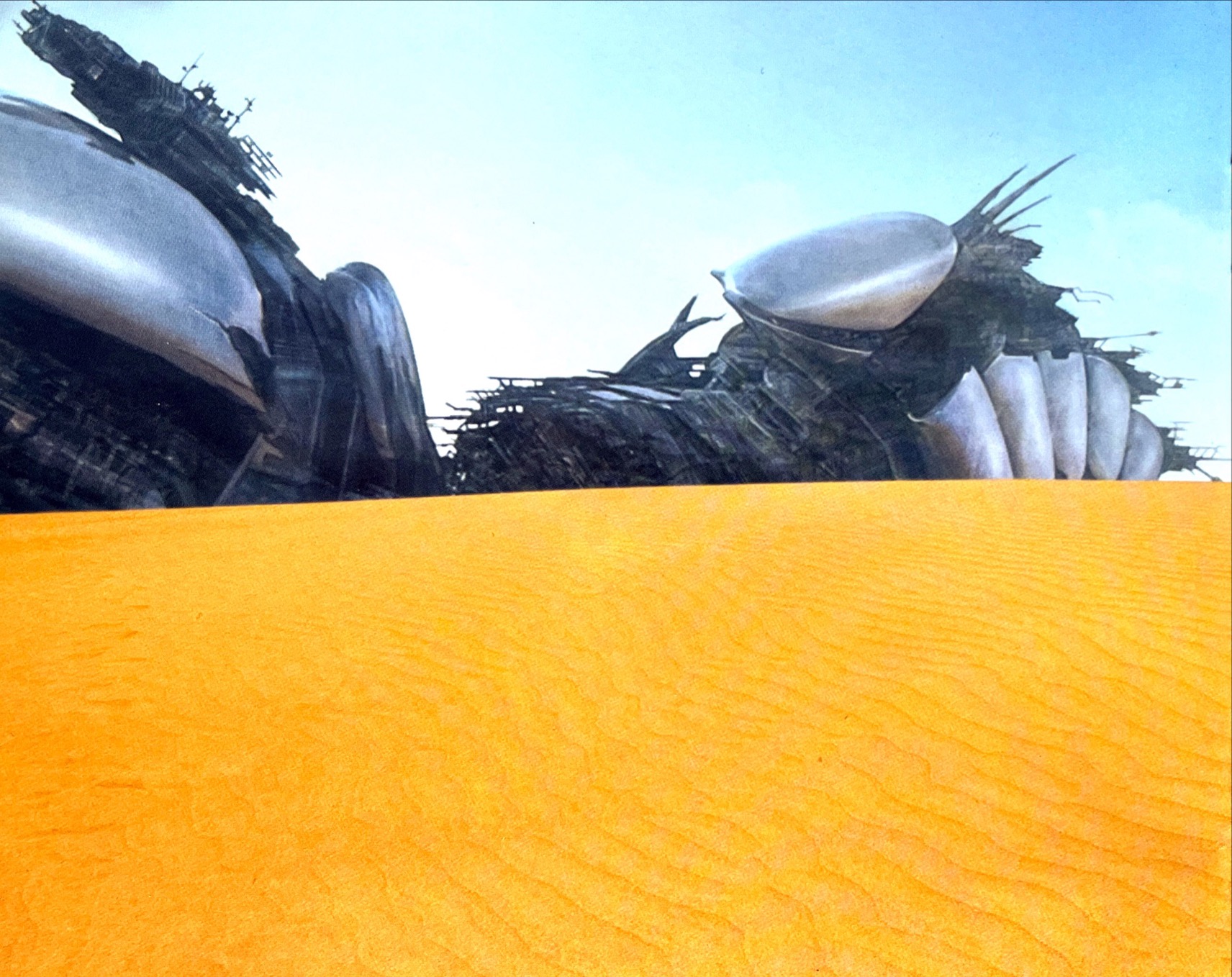
This is the point where the show switched to High Definition, and they showed off the format by filming in the desert in Dubai. It represents a planet on which the Doctor and his fellow passengers on a red double-decker London bus find themselves, after it suddenly passes through a wormhole in a tunnel. The bus was originally meant to have stayed in pristine condition after making that journey, and indeed it arrived in Dubai that way. But after a shipping container was dropped on it, the script was hastily rewritten to explain that the wormhole had caused the damage. A sandstorm also caused the first day of filming to be pretty much wiped out as well, so it was quite a difficult episode to make! But it was worth the effort, as it does look amazing and is a very enjoyable story, better than the previous one I think.
The Doctor naturally leaps into action so he can investigate where they are and figure out how to get them home. And this time his one-off companion is Lady Christina de Souza, played marvellously by Michelle Ryan, best known to many as Zoe Slater in EastEnders, as well as having major roles in Jekyll, Merlin, and the brief reboot of Bionic Woman in America – none of which I’ve ever watched, so this is the only big role I’ve seen her play, and she’s very good.
Christina is a thrill-seeking, feisty, clever and confident woman, and also a professional thief, as we first see her stealing from an art gallery when she lowers herself down from the ceiling. She too tries to take charge of the situation when they land on their strange new world, clearly relieved that her unexpected journey has got her away from the police. But of course she gets to know what the Doctor is capable of, and they form a good partnership, as they explore the desert and meet a race of fly-like creatures called the Tritovores who have also crashed. Christina doesn’t let the Doctor boss her around, and indeed takes the initiative later in the episode by using her talents to collect an item the Doctor needs, but she also has a great fascination and respect for him, there are moments of good humour between them, and she even kisses him at one point as well.
Nevertheless, he does refuse her keen request to join him in the Tardis at the end of the episode. As he admitted at the end of the previous story, the departures of his previous companions have broken his heart, and he doesn’t want to go through that again. It’s a shame really, because I think she could have made a great companion. But the Doctor’s feelings are understandable. And he does at least surreptitiously unlock her handcuffs using his sonic screwdriver after she’s arrested, enabling her to escape, so they do part on good terms. While he doesn’t approve of her life of crime, he clearly has a lot of admiration for her skills and intelligence, and maybe at another time he would have taken her on board. But he’s not in the right frame of mind for another passenger at the moment, sadly.
While they’re in the desert, however, the Doctor doesn’t have access to his Tardis, which is stuck back on Earth. So to get some analysis on the wormhole he calls UNIT, who have already been summoned to the tunnel by the police. They’re led by Captain Erisa Magambo (Noma Dumezweni), who we had previously seen playing the same role, but in the alternate reality Donna visited, in the Series 4 episode Turn Left. We don’t see her again after this, but she is mentioned in some written fiction as well.
She refers the Doctor to their expert, Malcolm Taylor, played in an inspired bit of casting by comedian Lee Evans, who I’m a big fan of, because I have all of his stand-up comedy DVDs. His unbridled glee at getting to speak to the Doctor is so adorable, and the scenes between the two of them are very amusing. But as well as the bumbling, comedic side to his character, which Lee has a lot of fun with, Malcolm is also clearly a genius, and he isn’t afraid to stand his ground to Captain Magambo later in the episode when she orders him to close the wormhole before the bus can return. That command is given because there are metal stingray-like beasts, who created the wormhole in the first place, who are starting to break through it. But thankfully Malcom’s stalling gives the Doctor enough time to bring everyone home, in a fun and impressive sequence that shows the bus flying out of the wormhole and over London.
So it’s a crazy episode in some respects, with a flying bus and the goofiness of expert Malcolm, but that’s why it’s so much fun. It’s a great bit of light relief, especially before the more intense stories to come. And there is some ominous foreshadowing to the Doctor’s finale when fellow bus passenger Carmen (Ellen Thomas), who has a degree of psychic ability, warns the doctor that “it is returning through the dark” and “he will knock 4 times”.
Finally, the related pieces of music for this episode on the soundtrack album are tracks 12-17 on Disc 1, lasting just over 11 minutes. My top 3 among them are:
- The Cat Burglar – Christina’s dastardly overhead theft from the museum, in a track that has a bit of a James Bond feel to it.
- A Special Sort Of Bus – This catchy, joyous track for the flying bus is my favourite from this episode and one of my favourites from the album.
- Lithuania – Another favourite of mine, this uplifting tune is from Christina’s final scene when she flies away in the bus. The name, explains Murray, is because “it sounds like the national anthem to an Eastern European state. Okay, it doesn’t really, but that’s how we referred to it. So it’s stuck.” Or maybe it’s where she flew the bus to, who knows? We never do see her again.
3. The Waters Of Mars
- Writer – Russell T Davies & Phil Ford
- First Broadcast – 15 November 2009
- Links – BBC / Wikipedia / Tardis Wiki
This story presents the Doctor with a difficult dilemma, and ends on a very dark note, when he lands on Mars and discovers the first human settlement in Bowie Base One, led by Captain Adelaide Brooke (played with great authority by Lindsay Duncan, and in 2011 she played the mother of a character played by Matt Smith’s in a TV film called Christopher and His Kind). He is initially overjoyed to meet such pioneers of space travel, until he discovers the date, because he knows it’s the day on which everybody on the planet dies. And, unlike many situations where he can save people, this is a fixed point in time that cannot be changed, with Adelaide’s death inspiring her daughter and further generations of her family to make even more huge achievements in space. Even the Daleks seem to know this, as a flashback to Adelaide’s childhood (during the time of Series 4’s Stolen Earth) shows one of them approaching her, looking at her, and then flying away.
So, after expressing his deep admiration for the work of Adelaide and the team, the Doctor knows he should leave, though he is very reluctant to go. It’s bad enough that the events are going to happen but, in thinking back to The Fires Of Pompeii, he fears that getting involved would mean he causes the catastrophe.
But, suspicious about his sudden appearance out of nowhere, the Captain forces him to stay. And that means he’s caught up in a zombie-style adventure, where people are having to run away from their once-normal human colleagues to avoid being infected by them. In this case, they’re having to avoid a water-based life form who can take over human bodies by touching them with just a single drop. So there’s plenty of action – including a fun scene of the Doctor and Adelaide riding at speed on a robot – but he knows he’s unable to stop whatever happens in the end. And Adelaide is able to force the Doctor to reveal the truth about her future, in a very moving scene, though she still has the determination and bravery to try and ensure it doesn’t happen.
However, when the Doctor walks slowly away from the base, hearing the distress of the crew through the communication unit in his helmet, and is then thrown to the ground when a shuttle is detonated, preventing the crew from escaping the planet, it triggers a change in him. It brings a deep-rooted anger to the surface, about everyone he’s lost and been unable to save. It’s clearly been bubbling away in the background for some time, as we’ve seen glimpses of his frustrations now and again, though his companions have always kept him grounded and given him some comfort. But now he’s on his own, he comes to the realisation that, because he’s the last of a race who oversaw the laws of Time, it means he is now the only person in charge of those laws. Why should he have to obey those laws, when he believes he has the power to break them and make Time obey him?
So he goes back to help, and is able to bring Adelaide and two of her crew members back to Earth, landing his Tardis right outside her house. He’s arrogantly chuffed with himself, expecting everybody to be grateful, and exhibiting a dark, unpleasant demeanour of self-righteousness that we haven’t seen of him before. To his mind, he’s not just a survivor of Gallifrey as he assumed, but he’s the winner – the Time Lord Victorious. That later became the title of a multi-platform story in 2020 with various different elements, including an animated Daleks series on the Doctor Who Youtube channel, but I haven’t looked closely into any of that stuff so I can’t give an opinion on it.
The Doctor basically sees himself as nothing less than a god, with the unhindered power to do as he pleases. But Adelaide is rightly having none of it, and doesn’t hold back from expressing her fury. She then goes inside her house and takes her own life, thereby ensuring history remains largely as it was supposed to – much to the Doctor’s absolute horror, as it awakens him to the fact that he’s taken things much too far. In Series 4 Donna had warned him that being on his own is a bad idea, because sometimes he needs somebody to stop him, and here we see exactly why. So with Adelaide dead, and an Ood appearing in the distance, he fears his own end has come. But not quite yet.
That final scene between him and Adelaide, including Murray Gold’s incredibly evocative score, is one of the most powerful and significant in these specials, and indeed of the 10th Doctor’s entire run. There’s been a slow and steady build-up to this across his episodes, meaning we fully understand why he’s developed such a mindset, and this story is entirely designed to push him to breaking point, teaching him an important lesson ahead of his final adventure.
And talking of Murray’s music, Disc 1 of the soundtrack album has 5 compositions relating to the episode on tracks 1 & 18-21, lasting just under 15 minutes altogether. For the most part these tracks align with very emotional moments in the episode, and my top 3 are:
- Vale – In the booklet Murray explains that this haunting track is given top billing because it’s “Why these episodes exist. To say goodbye to David Tennant’s tenth Doctor. This piece was first heard in The Waters of Mars but bookended the final proceedings.” Near the end of Disc 2 there’s a longer and much more powerful piece using the same name, a section of which appears at the end of this episode.
- The Fate Of Little Adelaide – A calm 5-minute piece used for the little girl’s encounter with a Dalek.
- Altering Lives – Sombre music representing the Doctor’s actions towards the end of the episode.
Lastly, just a few other little things worth noting. Firstly, the episode won the Hugo Award for Best Dramatic Presentation, Short Form. Secondly, it was adapted into a Target novel by Phil Ford, released in July 2023, so only a few months ago. And thirdly, the episode is dedicated at the end to Barry Letts, who was the producer of Doctor Who from 1969 to 1974, and then returned as executive producer for the 18th season in 1980, as well as being an actor, writer and director on other shows. He passed away on 9 October 2009, just over a month before this episode aired, so it was nice of them to pay tribute to him.
4 & 5. The End Of Time
- Writer – Russell T Davies
- First Broadcast – 25 December 2009 & 1 January 2010
- Links – BBC: Part 1 & Part 2 / Wikipedia / Tardis Wiki
It’s the end of Tennant as Ten, and Russell as writer, in episodes 59 & 60 of New Who. And this is the first occasion in the modern series where a 2-part story has been given a single title, a clear indication of its scale.
Taken as a whole, the story isn’t perhaps the absolute best of David’s series finales, though it’s still a belter that’s right up there. After all, it’s very hard to beat the Stolen Earth story from Series 4 in particular, with all the companions getting back together, the regeneration cliffhanger, the DoctorDonna, the Daleks and Davros, the various story strands that were tied up, and so on. In many ways that was the big celebratory finale for David Tennant and showrunner Russell T Davies, while these specials have been a fun, impressive and important coda to bring the Tenth Doctor’s story to an appropriate end. And the Master had an amazing return in the Utopia trilogy at the end of Series 3 which is also hard to beat, where he had even more control and his actions had an even more destructive impact on the world and the Doctor than they do here. Plus of course there was Doomsday the year before that, with the heartbreaking departure of Rose at the end. It’s an awful lot to live up to!
Nevertheless, this closing special still packs a heck of a punch, especially on the psychological and emotional side of things. For all the incredible action and visuals that we’re treated to as usual, it’s ultimately an exploration of the Doctor’s mindset, as he comes to terms with the mistakes he’s made and the fact that his life in his current form is drawing to a close, even if he doesn’t know how it will happen. And the closing scene of the second part is quite possibly the finest ever produced in the show, given everything that has led up to it.
The story involves the resurrection of the Master by his supporters, though it goes wrong and causes him to be even more insane than he already was, and the way he’s menacingly played by John Simm is excellent once again. The Doctor becomes aware of his return thanks to a meeting with the Ood (with no less than Brian Cox playing the Elder Ood), so he comes back to Earth and goes after him, and there are some brilliant and tense scenes whenever they confront one another, even when it’s just looking at each other across wasteland without uttering a word.
The Doctor in turn is also tracked down, but in a much nicer way, by Donna’s grandfather Wilf (played by the wonderful and legendary Bernard Cribbins, who always exudes such lovable warmth and has great chemistry with David). He naturally injects some great humour into the story here and there, including the elderly friends he recruits to search for the Doctor (with another legend, June Whitfield, most notable as Millie), and later when he finally gets to step inside the Tardis and is naturally overwhelmed by it.
But Wilf is primarily the companion to the Doctor during this adventure, giving vital support and friendship when things get tough. And he’s really the person who this whole story revolves around because, just like every companion, he isn’t just someone that the Doctor relies on and cares about, but he ends up having a bigger impact on the Doctor’s life than either of them could have possibly anticipated.
Two of the very best scenes in this finale involve the pair of them just sitting down and talking, either in a café or on a spaceship, as the Doctor opens up emotionally about his sadness, regrets and fears, and Wilf also tugs at the heartstrings too. They’re simple but beautifully performed scenes, bringing moments of calm for both the Doctor and the audience to take a breather and process what’s happening, while showing how important it is for the Doctor to be honest with himself as well as Wilf.
While in the café they also spot Donna outside, and she speaks to Wilf on the phone later on, but the Doctor sadly can’t have direct contact with her as she would burn up if she remembered him. Meanwhile Wilf has an additional problem, because a mysterious lady keeps appearing to him (played by veteran stage and screen actress Claire Bloom), warning him that the Doctor’s end is nigh and that he must take arms. More on her later.
Back to the Master though, and it’s thanks to a stroke of good fortune that he’s able to take over the world, when he’s kidnapped for his expertise by people working for Joshua Naismith (David Harewood). After the fall of Torchwood, Joshua had acquired a machine called an Immortality Gate, that can use a medical template to repair not just one or two people, but entire planets, potentially enabling people to live forever.
However, the Master hijacks the project in order to turn every member of the human race into a clone of himself, thereby creating a Master race. And these aren’t just CGI copies – actor John Simm actually had to keep changing clothes to perform as all the different versions of himself, and he reflects upon how time-consuming this was in the commentary, especially for scenes like the American press conference and the block of flats where there are lots of versions of him. Well worth the time and effort, but very tiring at the time!
Not everyone changes though. The Doctor isn’t human so it doesn’t affect him, and nor does Donna thanks to the meta-crisis that she has no memory of – although seeing her family turn into copies of the Master does start to trigger images from her past adventures, and she starts burning up. Wilf is thankfully protected as well, after hiding in one half of the engineer’s cubicle that controls the machine.
And two of the workers who were helping with the development of the machine are also unaffected, as they’re actually cactus-like Vinvocci aliens in disguise, who were trying to hijack the project. They add a good layer of humour throughout the story as well, which is balanced well amidst all the drama. So they rescue the Doctor and Wilf (in a very amusing way, with the Doctor still tied to a chair) and teleport them to their spaceship above Earth, despite the Doctor’s protests at being taken so far away. He therefore deactivates their ship to stop them all getting away, and to stop the Master from detecting them in orbit using radar.
But then comes a further twist, as we discover the reason for the repetitive rhythm in the Master’s head. It’s a long-ago link to Gallifrey (which looks stunning when we see it), implanted by the Time Lords who were imprisoned in the Time Lock after the Time War. And with a billion copies of himself around the world, the Master is able to triangulate the signal. When the Time Lords then send a physical diamond to Earth to solidify the connection, the Master is able to open up a route for them to return.
And, like a typical villain who enjoys announcing what he’s doing, the Master uses an open broadcast to tell the Doctor what’s happening, at which point the Doctor reactivates the spaceship and flies it down to Earth. This results in a fantastic dogfight a bit like in Star Wars, with missiles coming at them from all sides, the Doctor deftly steering to dodge many of them, and Wilf helping out with the laser guns! Rather than crash the ship, however, the Doctor decides to jump out and fall through the ceiling, smashing on to the floor in front of the Master and the Time Lords, and miraculously not breaking any bones or losing consciousness. Meanwhile Wilf forces the aliens to land so he too can return to the room and support the Doctor.
The Time Lords are led by President Rassilon (played by Timothy Dalton, yet another huge star in this finale, who of course is best known as the 4th James Bond). He had been providing narration with gravitas in the first episode, and then we see him in conference with his fellow Time Lords during the first half of the second episode, sometimes literally spitting with anger. They then make the journey to Earth, with Gallifrey materialising in the sky above. The woman who had been appearing to Wilf is also there and, while her identity is not explicitly revealed in the story or the credits, the consensus in the audio commentaries (and amongst many fans including myself) is that she’s the Doctor’s mother, and Russell T Davies later confirmed this in his book The Writer’s Tale: The Final Chapter.
So it’s fantastic to see the Time Lords return for the first time in the modern series like this, and they even reverse the actions of the Master, restoring the human race back to normal. Beyond that they don’t actually get to do much, which is a shame after their determination to get there, but that doesn’t stop them feeling like a very dangerous and imposing threat to mankind and the planet. After a tense stand-off against the Master and Rassilon though, it’s easy for the Doctor to fix things, by shooting away the diamond that enabled their return, thereby reversing the process, and the Master seems to disappear with them as he attacks Rassilon, angry that he didn’t get recognition as their saviour.
So with everything back to normal, the Doctor lays on the floor, surprised but relieved to still be alive – until he hears the dreaded 4 knocks. And it’s not the beat in the Master’s head after all, as he had assumed was the connection.
Instead, it’s Wilf, who is trapped inside one of the two compartments used to control the machine (having gone in there to stay safe earlier). It’s designed so that whichever engineer is in one compartment is locked in until another enters the second compartment to release them and thus take over their duties. So the Doctor now has to do the same to release Wilf – but because the machine has overloaded and gone critical, as soon he does this, the intense radiation will be released into the compartment he enters.
It’s quite the shocking twist, with a close friend being inadvertently responsible for the Doctor’s demise. So it’s a powerfully heart-wrenching scene as the Doctor comes to terms with this development, unleashing his rage at how unfair it is, before calming down and telling Wilf that it’s an honour to save his life before sacrificing himself.
It doesn’t cause the Doctor to regenerate straight away though, as he’s able to hold it off long enough to go and get what he calls his ‘reward’, by visiting his former companions in order to save or enhance their lives one more time. It’s a very moving and heartwarming sequence of events, as he:
- Knocks out a Sontaran to stop it killing the now-married Martha and Mickey (Freema Agyeman & Noel Clarke). They’ve never since reappeared in the show, although Freema has since recorded some Big Finish audiobooks.
- Waves farewell to Sarah Jane (Elisabeth Sladen) after saving her adopted son Luke (Thomas Knight) from being hit by a car. This was the last appearance of both actors in Doctor Who, but they continued to make The Sarah Jane Adventures until Elisabeth’s death in 2011.
- Helps Captain Jack (John Barrowman) hook up with Alonso (Russell Tovey) from Voyage Of The Damned in a bar, where there are lots of aliens from the series and the song My Angel Put The Devil In Me is playing. It would be 10 years before Captain Jack returned to the show, in Series 12’s Fugitive of the Judoon alongside Jodie Whittaker’s Doctor. But in the meantime he continued to part of Torchwood, in the 4th series on TV (Miracle Day) and in audio plays with Big Finish.
- Gains comfort from Verity Newman that her great-granddaughter Joan Redfern led a good life, as he’d fallen in love with her during the Human Nature story. It’s also lovely for Verity to finally meet the man she’s heard so much about. Verity and Joan are both played by Jessica Hynes, while Verity’s name is a tribute to Verity Lambert (the show’s first producer) and Sydney Newman (who created Doctor Who while Head of Drama at the BBC).
- Drops in on Donna’s wedding to say farewell to Wilf and Donna’s mother Sylvia (Jacqueline King). He also hands them a winning lottery ticket as a gift for the bride, and there’s a lovely nod to late actor Howard Attfield, as the Doctor says he went back in time to borrow a pound from Donna’s father, Geoffrey Noble. Catherine Tate has since reprised her role as Donna in some Big Finish audiobooks, and will be reappearing with her family in the 60th anniversary specials on TV.
- Meets Rose (Billie Piper) at the start of 2005 to tell her that she’s got an incredible year ahead, after she’s just been walking through her housing estate with her mother Jackie (Camille Coduri). The Doctor is somewhat hidden in the shadows so Rose can’t see him too clearly, otherwise there’s a slight chance she could have remembered seeing him after the 9th Doctor regenerated. Billie returns as a version of Rose in the 50th anniversary special.
So that sequence is really nicely done, and it’s wonderful that all of the Doctor’s closest companions appear one more time to say goodbye. It’s acknowledged in both the Blu-ray and podcast commentaries that if any one of them hadn’t been available to return, the whole thing would have had to be dropped, as it would have felt wrong if key people were absent. They might have got away with it if Jessica Hynes wasn’t free, as Joan wasn’t strictly a companion, and her scene was even left out of the initial edit – but given the impact that Joan had on the Doctor while he was his human alter-ego John Smith, it’s great that she’s represented here.
And then of course we get the stunning regeneration scene, which still moves me to this day, with the Ood’s parting words as they sing to him, before he enters the Tardis and utters the gut-punching words “I don’t wanna go”. Even just writing those words makes me well up a bit, because it’s such a genuinely powerful moment that sums up so much in such a concise way (and they definitely chose the right version of his final line out of all the different takes). You really do feel the Doctor’s pain, fear and grief, and after so many fantastic episodes you really don’t want him to go either. So this final scene, including the stunning music score that I’ll mention below really is the pinnacle of David’s reign, because it hits you incredibly hard after everything that’s gone before, and he gets the huge send-off he deserves, literally going out in a blaze of glory as the Tardis burns around him. You can also see a version without music that Youtuber Suphriez has cleverly created.
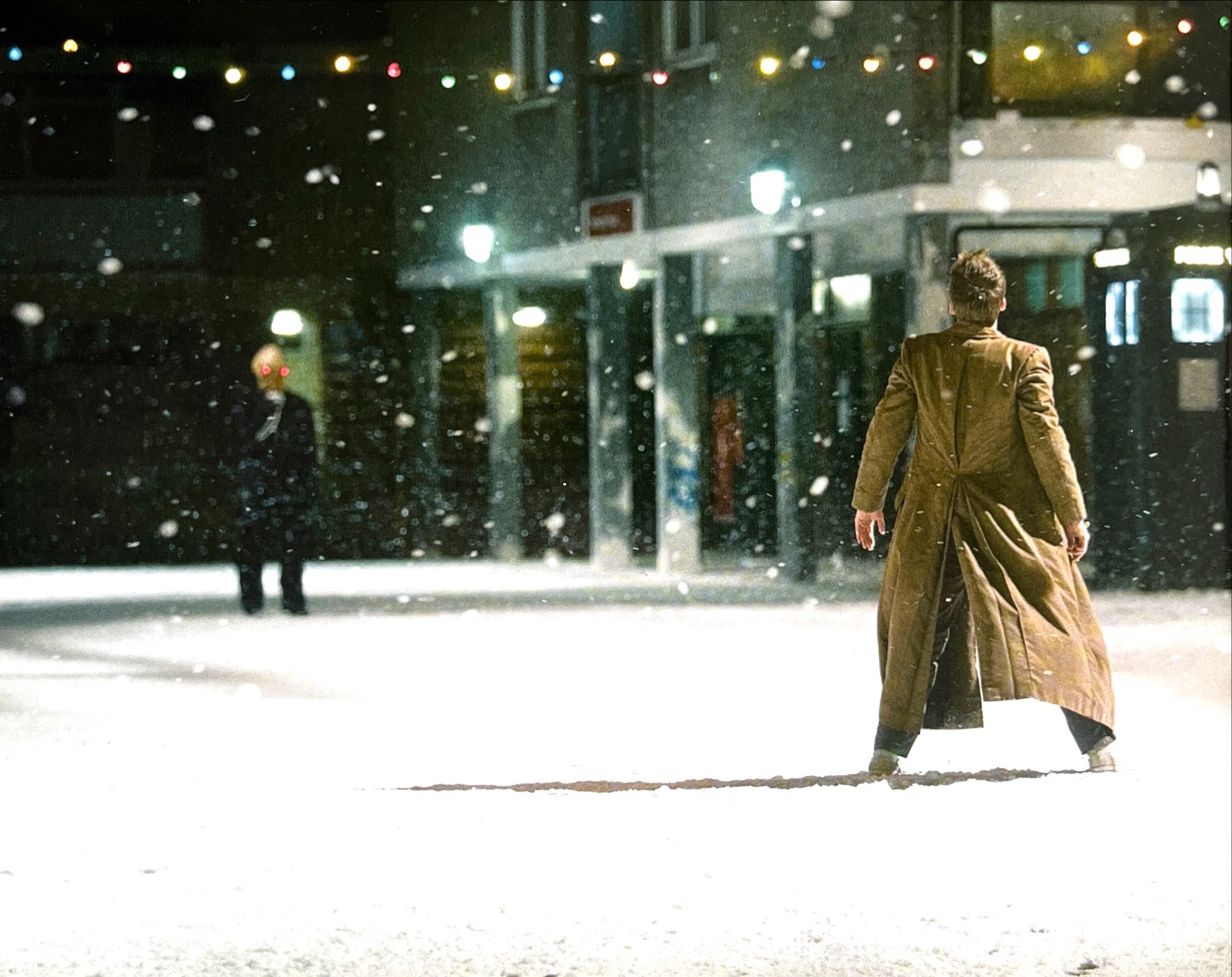
But then Matt Smith also deserves a lot of credit for following hot on the heels of that. We’re still grieving for the loss of an old friend when he appears, and yet he instantly embodies the character with energy and humour that puts us at ease, giving us something fresh and exciting to look forward to.
His observation that he’s still not ginger did result in some claims of discrimination from people who didn’t realise it was a callback to the 10th Doctor’s first episode, The Christmas Invasion, when the Doctor asked Rose if he was ginger and was upset to learn that he wasn’t (and thus the 11th Doctor still feels that way). The inflection in Matt’s voice doesn’t really make that clear, so it is open to interpretation if you don’t know the reference or have forgotten about it. The quote was even the title of a track by rock band Chameleon Circuit on their album Still Got Legs (which itself is a further quote from that scene), where you’ll also find songs called Knock Four Times and The Doctor Is Dying in relation to this finale.
Neither Matt nor any of the later Doctors (so far) have ever ascended to Christopher Eccleston’s or David Tennant’s heights of excellence in my mind – though as they were my first Doctors who hooked me into the show, I do undoubtedly have a lot of bias there. Nevertheless, Matt Smith does an amazing job here, and he goes on to be fabulous in the role, so I will review his episodes at a later date, and those of later Doctors too. They’re all great in their own way.
Finally, Murray Gold’s music is also amazing in this finale, and the entirety of Disc 2 on his soundtrack album is devoted to both episodes, lasting just over an hour and presented for the most part in chronological order. My top 10 tracks are:
- Wilf’s Wiggle – This is a delightfully jolly little tune from when Wilf dances his way on to the bus with his friends to try and find the Doctor. It’s one of my top tracks, and Murray sums the actor up perfectly in the booklet by saying: “One of the most beloved characters to appear in Doctor Who, Bernard Cribbins brought warmth, fun and realism to every scene he played.
- Final Days – Incorporating the theme from All The Strange, Strange Creatures, this is a suitably glorious and epic composition for the triple cliffhanger, where the Master has taken over the human race, Donna’s brain is burning up as the memories come back to her, and Timothy Dalton is revealed to be playing the President of the Time Lords.
- The Master Suite – A compilation of themes from both episodes for John Simm’s character, including his signature 4-beat rhythm, and echoing some of his music from the Series 3 finale.
- A Chaotic Escape – A lively piece from the amusing scene where the Doctor, still tied to a chair, is dragged away from the Master and down some stairs, as the cactus-headed Vinvocci aliens help him and Wilf to escape.
- The World Waits – The longest tune on the album, at 5:19, starting off calmly and eventually building to a crescendo with a powerful choir. Murray states that it’s one of his favourite pieces from the specials, and it is very good.
- Never Too Old To Shoot And Fly (iTunes bonus track) – The epic music from the dogfight sequence.
- Four Knocks – The beautifully moving tune for the heartbreaking scene where the Doctor has to sacrifice himself in order to free Wilf. This and the track before it are another two of my favourites from the specials.
- Vale Decem – This is one of my all-time favourite tracks of Murray’s from his entire time on the show, not just from these specials. He and all the performers really excel themselves with this phenomenal and majestic song that accompanies the Doctor’s regeneration scene. Vocalist Mark Chambers, the Crouch End Festival Chorus and the BBC National Orchestra Of Wales give it absolutely everything they’ve got, doubling down on the emotions and celebrating the Doctor’s life. The lyrics are in Latin, with the title translating as Goodbye Ten – and you can see them on screen in a tutorial video for a stunning lockdown rendition performed by over 300 fans during the Covid pandemic. It was organised by the Doctor Who Lockdown channel on Youtube, as the final part of a trilogy they did to bring people together, after The Long Song and Abigail’s Song, both from later series. The song has also been performed live, accompanied by imagery of all the Doctors, for example at the 2010 & 2013 Proms, and at symphonic concerts in Sydney & London. Plus there are a few other covers online, including rock, piano, 80s, 8-bit & ambient styles.
- Vale – This is also gorgeous, and is actually heard just before the regeneration scene, but as the album began with a shorter rendition of this tune, it makes sense to close the 10th Doctor’s story with a complete version. In the booklet Murray warns: “Watch your headphones at the end. The finale was never included in the show. It’s… loud… it belongs on here.” He actually means halfway through, as that’s when the choir kicks in for the second half, and they smash it out of the park yet again.
- The New Doctor – A brilliant entrance for Matt Smith, summing up the energy of the new youthful Doctor as he crashes to Earth in the burning Tardis.
Blu-ray Extras
The Blu-ray steelbook only contains 2 commentaries, but makes up for it with a whopping 10 hours of other bonus material! By comparison, the Series 1-4 sets had commentaries on every episode, alongside 4½ to 6 hours of extras, so it balances out quite well really.
Audio Commentaries
The Blu-ray only has audio commentaries for the final 2 episodes, which is a shame considering every episode in the previous 4 series had one. But every episode also has a podcast commentary available online, just like Series 2-4 (so I don’t know why they couldn’t duplicate the first three on the Blu-ray to fill the gap). They’re all still available on the BBC’s pages for Episodes 1, 2, 3, 4 & 5, if you look under Clips and go to “See all clips” in each case, but I’ve also linked to them below for convenience. Half hour edits were also aired on radio station BBC7, following each episode’s TV broadcast on BBC One, in a programme called Doctor Who: The Commentaries, which had also run alongside Series 4.
This was the last time that podcast commentaries were produced, while the audio commentaries (and other extras in general) on the DVDs & Blu-rays were gradually scaled back on later series. The episodes are also still running 4% slower on this Blu-ray release than originally broadcast, as occurred for the previous 4 series (but doesn’t happen again after this), because of the way they were converted from 25 frames per second down to 24. But it’s not something you really notice to be honest, unless you happen to play them alongside the old DVDs, or online clips perhaps, or if you try to play the podcast commentaries alongside them. So you can either pause each podcast commentary every so often for a few seconds to let the episode catch-up, or just listen to it independently, which I’m happy doing as it’s obvious what they’re referring to anyway.
[30 November 2023 Update: The new Series 1-4 & specials box set has fixed the slowdown issue, so the episodes run at the correct speed. But as I don’t notice the slowdown anyway, I haven’t bothered upgrading. That new set also adds the podcast commentaries to the first 3 specials as a bonus feature, to compensate for the lack of a dedicated Blu-ray commentary – but reviewers have indicated that they don’t sync up correctly with the visuals!]
The commentaries for these specials are therefore as follows, and they’re all worth a listen. The most common participants are David Tennant (the Doctor), Russell T Davies (showrunner and writer) & Julie Gardner (executive producer), who are always great value for their insights and banter. But there are also welcome contributions from actors Catherine Tate (Donna Noble) & John Simm (The Master), along with directors James Strong & Euros Lyn.
- The Next Doctor:
- Podcast – Russell T Davies & Julie Gardner. David Tennant was going to join them for this too but was unwell. In amongst their reflections on the episode, they discuss a lengthy scene of talking between the Doctor and Jackson that they’re not hugely keen on due to the way it was filmed and lit, they mention how unfair it is that The Mill don’t get major industry awards for their special effects because of the rules about how entries are submitted and judged, and Russell reveals an alternative way of dealing with the wreckage of the fallen CyberKing that could have been a better ending for the episode. They also talk teasingly about their preparations for the next special and David’s big finale.
- Planet Of The Dead:
- Podcast – David Tennant, Julie Gardner & James Strong. During their discussion they talk about the switch to HD, with some of the benefits and limitations that it brings, including the fact that it can’t do slo-mo so they had to film an explosion in the next episode on 35mm film in order to achieve such an effect. And they talk about the challenges of filming in the Dubai desert, including how the bus got damaged and how a sandstorm wiped out a day of filming. David is also recording some of this commentary for his video diary.
- The Waters Of Mars:
- Podcast – David Tennant, Julie Gardner & Russell T Davies. Among other things they talk about filming in the National Botanic Garden of Wales, the Gadget robot, the water creatures and ensuring they weren’t too scary, some trouble with birds, the unusual and darker nature of the story and the challenges of writing it,
- The End Of Time:
- Blu-ray – David Tennant & Euros Lyn, with either Catherine Tate for Part 1 or John Simm for Part 2. It’s lovely to hear David in particular reminisce about his final episodes, and the contributions from the others are also a lot of fun as well. They really illustrate just how much thought and effort went into making this epic finale.
- Podcast: Part 1 & Part 2 – Russell T Davies & Julie Gardner. These commentaries were recorded during December in 2009 while they were working in Los Angeles, with Julie also 5 months pregnant. David was again going to join them, but this time was busy elsewhere, so thankfully he’s on the Blu-ray commentary anyway. Russell and Julie have plenty to share as always, as they discuss various story ideas that were dropped, point out occasional little details they’re not quite happy with or disagreed on during production, recall how Julie had a few opportunities to have a producer role on set for a change, tease about the things they’ve seen from the new production team’s work on Series 5, and look back at how they ensured Doctor Who stayed as one of the biggest and most important shows in the BBC’s agenda.
Behind The Scenes
- Doctor Who Confidential – For Series 1-4, the main episodes of this brilliant behind-the-scenes programme had been cut down from 30 or 45 minutes to around 10-15 minutes in length. But for these specials, every episode lasts for an hour – and, remarkably, they’re included in full in this set, so that’s 5 hours of extensive extras straight off the bat! The episodes are also now available on BBC iPlayer as part of the Whoniverse collection – although the final episode, for the second part of The End Of Time, is just 40 minutes long there, so it’s the only case where the Blu-ray version of Confidential is longer than the iPlayer edition. On the other hand, the iPlayer has an extra episode that isn’t on the Blu-ray (and doesn’t need to be) called The Eleventh Doctor, that looks back at David Tennant’s reign along with all the previous Doctors, and reveals Matt Smith to be his successor.
- David Tennant’s Video Diary – Here we get 40 minutes of personal footage from David’s final year playing the Doctor in 2009, as he takes us along to his Cardiff flat, the read-through and filming for Planet Of The Dead (though there are a few clips from Dubai on the BBC website that aren’t included here), a BBC Breakfast interview, and the BBC Radio 2 show he hosted at Easter with Catherine Tate (where he sings with the Proclaimers and they chat to John Barrowman). He then reflects on filming his final scenes, including an encounter with a Sontaran, a lovely chat with Bernard Cribbins, and a very emotional farewell to the crew (which was naturally also featured in the Confidential episode). You can tell how much he’s going to miss playing the role, and thus why he was so happy to come back later for the 50th and 60th anniversaries.
- Deleted Scenes – 17 minutes of scenes that were trimmed down or cut out entirely, presented as originally filmed (so no re-recorded dialogue, music or CGI), and with interesting introductions by Russell T Davies. There are 3 scenes from The Next Doctor (with Jackson Lake thinking he’s the Time Lord), 2 from Planet Of The Dead (with Christina on the bus and Malcolm having a gun pointed at him), 5 from the Waters Of Mars (including a couple of crew members whose relationship is revealed and a bit more about the water-based enemy), and 2 from the first part of The End Of Time (there’s nothing from Part 2, but you see the alternative takes for the regeneration in the Confidential episode).
Special Events
- Doctor Who Prom 2008 – Following the success of the 2006 Celebration concert in Cardiff, the first ever Doctor Who Prom took place at the Royal Albert Hall on 27 July 2008. The BBC Philharmonic Orchestra and the London Philharmonic Choir, conducted by Ben Foster, give amazing performances of Murray Gold’s music relating to the Doctor, companions, enemies, Gallifrey, big story moments, and of course the main theme. It’s hosted by Freema Agyeman (who played Martha Jones), and has guest appearances by Murray on piano, Melanie Pappenheim on vocals, Catherine Tate to introduce a section about Donna, and several monsters who walk down the aisles. There’s also a fun scene filmed in the Tardis called Music Of The Spheres, where the Doctor meets a Graske, talks about the music generated by the gravity patterns in the universe, and then breaks the fourth wall to speak to the concert audience, even throwing down some music he’s composed for the orchestra to play. The full concert, as shown on the BBC’s Red Button service, lasted 1½ hours, but here we get an hour-long edit (also available on iPlayer), which cuts out all of the classical pieces that were played (Fanfare For The Common Man, Montagues & Capulets, Ride Of The Valkyries, The Torino Scale and Jupiter), plus Tim Phillips performing Song For Ten from the series (which isn’t his best rendition anyway to be honest). So while it’s a shame it’s not the full concert, we still get all of the best and most relevant stuff here, and it is fantastic. There was also a special episode of Confidential about the concert, shown on the BBC Red Button service, but sadly that’s not on the Blu-ray or iPlayer, so we can be grateful it’s still on Youtube at the moment.
- Comic Con 2009 – A 21-minute report about David Tennant and members of the production team going to San Diego in California for Comic-Con International, to celebrate the show’s success in the USA. For their stage appearance on the first day, Russell T Davies phones the production office in Cardiff for the crowd to scream down the phone, David Tennant introduces the premiere screening of Planet Of The Dead, and John Barrowman (after kissing David and Russell) lines up Episode 5 of Torchwood: Children Of Earth. Then on Day 2, David & Russell appear on San Diego 6 TV to promote Planet Of The Dead, before they’re joined by Julie Gardner and Euros Lyn for the big Comic-Con panel, where they answer questions from the moderator and the audience. They’re also presented with a Guinness World Records certificate for being the most successful sci-fi show on TV (based on sales and TV ratings), which Russell dedicates to Verity Lambert, the show’s first producer. It’s a shame we don’t get to see the full panel session here, but we get to experience about 10 minutes of highlights, which is better than nothing. You can also hear an interview about it for BBC Radio Wales on Youtube.
- Christmas Idents – Just under a minute of BBC One idents that David Tennant filmed for his final Christmas as the Doctor. The main ident sees him riding his Tardis like a sleigh with the aid of reindeer, which is quite fun, then there are a few short bumpers showing either the Doctor or a reindeer by the Tardis in the snow.
Spin-Offs
This final batch of extras, lasting around 2 hours 45 minutes, appear on a bonus disc that’s exclusive to the steelbook edition of the 2008-10 specials, having not appeared on the previous DVD & Blu-ray versions. However, the animated episodes and the Sarah Jane story have also appeared on other separate releases (from which any extra features are not replicated here), and they’re also on BBC iPlayer as part of the Whoniverse collection.
- The Infinite Quest – This is a 45-minute animated story from 2007, featuring the Doctor and Martha, originally shown in 13 parts on the children’s show Totally Doctor Who. The enemy here is called Baltazar (voiced by Anthony Head – previously Mr Finch in the School Reunion episode), who vows revenge on the Doctor after he defeats his plan to destroy Earth. So he tricks the Doctor and Martha into searching across the universe for 4 data chips that reveal the location of The Infinite, a relic from the ancient history of the universe that gives anyone their heart’s desire. So it’s effectively a series of mini-adventures as the Doctor and Martha meet oil pirates, visit a planet invaded by bugs, get locked in a prison, and then locate The Infinite. It’s OK to watch out of curiosity, but the animation, while not too bad for its time, is somewhat limited (each character only has a small number of facial expressions and ways of moving for instance), the story feels rushed because it was originally developed as 3-minute instalments, and it just isn’t a patch on the main live-action series, so it doesn’t excite me particularly. The Totally Doctor Who Youtube channel has a few extras, including short interviews with David Tennant, Freema Agyeman & Anthony Head, a look behind the scenes, and a clip of David Tennant doing a pirate voice that was an Easter egg on the DVD. The stand-alone DVD also includes other interviews, behind the scenes clips, animation tests, dialogue recording sessions, photos, animatics, deleted scenes and character profiles, but I’m not interesting in buying it.
- Dreamland – This is the other animated adventure that featured David Tennant as the 10th Doctor, again lasting nearly 45 minutes. It was made in 6 parts and broadcast in 2009, first on the BBC’s Red Button service, then BBC Two, BBC HD and CBBC. The Doctor is travelling alone this time, but when he lands at a Nevada diner in 1958, he meets Cassie (played by Georgia Moffett, who previously played Jenny in The Doctor’s Daughter and later married David Tennant) and Jimmy (Tim Howar). And together they investigate what’s happening at Area 51 (of which Dreamland is another of its nicknames), where they have to deal with an evil race called the Viperox, and rescue a different type of alien being held in the facility. The story’s not too bad, but it’s particularly let down by the dodgy 3D animation, with the characters looking rather strange whilst having even more rigidity to their expressions and movements than in the 2D Infinite Quest. So again, it doesn’t compare to the live-action series. It did also get its own DVD release, with the extras consisting of 3 special episodes of Doctor Who Confidential called Greatest Moments, celebrating the Doctor, his companions and his enemies, which have nothing to do with the animated story of course. But there is a Dreamland channel on Youtube with various extras, which were copied from the BBC website at the time it came out.
- The Wedding Of Sarah Jane Smith – A 2-part story from Series 3 of The Sarah Jane Adventures in 2009, lasting just under an hour, that features a guest appearance by David Tennant as the 10th Doctor (the first time that any Doctor has appeared in a spin-off show, and also the last story that David filmed in the role before leaving). He has to try and rescue Sarah Jane from the Trickster, who has gained influence over her through a man she has got engaged to, and it’s made rather difficult when the Doctor gets trapped in a fixed moment in time with the children. So it’s good fun, far more so than the animations above, and it’s great to see one more live-action story with David as the Doctor.
- In Conversation With David Tennant – This is an enjoyable 17-minute interview from 2019, originally shown as part of the special 10th anniversary cinema screenings of The End Of Time in America, where David reflects fondly on his time on the show. He talks about Elisabeth Sladen, the farewell to Rose in Bad Wolf Bay, his catchphrase “Allons-y!”, how the show continues to follow him around, Russell’s writing for his character, items he still owns, merchandise, his kids watching the show, writer Chris Chibnall, finding out Jodie Whittaker was getting the role, his return for the 50th anniversary (and how it would be fun to get back together with people for the 60th), his surprise at how much the show has spread internationally, and his feelings about leaving. So it’s a lovely way to round off the box set and David’s reign as the Doctor.
Other Content
Here’s a selection of other relevant items that aren’t already mentioned above that might be of interest. I haven’t included absolutely everything that’s out there by any means, but I have chosen a variety of things that I feel are most relevant or that I’ve enjoyed looking at the most. You can check out my Specials playlist for related videos and other random clips.
BBC Website
The BBC’s pages for each episode contain various little extras, including picture galleries, clips and trailers, glimpses behind-the-scenes, interviews, the podcast commentaries, and so on. For example:
- The New Doctor has Dervla Kirwan & David Morrissey answering The Big Questions, plus there’s a Monster Files clip with Captain Jack talking about the Cybermen.
- Planet Of The Dead has extracts from video diaries by David Tennant and David Ames, including footage from Dubai that isn’t on the Blu-ray, plus a nice little Q&A with Michelle Ryan.
- The Waters Of Mars has short videos about the costume design, special effects and filming of the episode.
- The End Of Time: Part 1 & Part 2 has a nice set of videos with David Tennant, Russell T Davies & Julie Gardner, as they reflect on when they started working on the show, reveal their favourite episodes, moments and guest stars, and answer some Big Questions. John Simm also does a Q&A, there are a couple of fun interviews with Bernard Cribbins, and you can see how the Vinvocci and Time Lords were designed.
More Adventures
- Audiobooks – David Tennant has recorded lots of audiobooks for Big Finish, including the Tenth Doctor Adventures. And he’s also narrated some BBC audiobooks, several of which can be downloaded from Audible. So there are many more adventures with the 10th Doctor out there, some with his TV companions as mentioned in earlier posts, some with older Doctors and companions, and some with other guest stars. But I haven’t heard any of them, apart from a few I got on CDs as special offers many years ago and have long since forgotten, so I can’t give any opinions. One day, however, I hope to explore that side of things when time allows.
- Scream Of The Shalka – Prior to Infinite Quest and Dreamland, this was the first ever animated series of Doctor Who, released as a 6-part webcast for the show’s 40th anniversary in 2003. And it actually featured David Tennant, in a fleeting and uncredited role as a caretaker, while Richard E. Grant played the Ninth Doctor. It was initially considered to be a continuation from the Classic Era and the 1996 movie, and there were plans for sequels to it. But the revival of the TV series put the kibosh on all that, and it was confirmed in 2004 that Christopher Eccleston would be designated number 9 instead, thus relegating Shalka to an out of canon obscurity (although it has since had a DVD release). Despite no longer being an official Doctor, however, Richard E. Grant has since appeared in the TV show in a few episodes as the Great Intelligence. In addition, Shalka also starred Derek Jacobi as the Master (a role he played again in Series 3’s Utopia), while companion Alison Cheney was played by Sophie Okonedo (who later played Liz Ten in the Series 5 episode The Beast Below). I’ve never watched Shalka, though I may do one day out of curiosity, so I can’t comment on whether it’s actually any good or not. It’s just interesting to note its existence given David’s brief role in it.
Interviews & Conventions
- Russell T Davies – These specials marked the last episodes for Russell T Davies as showrunner at the time, and naturally he’s talked about the series in many interviews since then. In particular, there’s a 3-hour compilation of discussions that he had on the Who’s Round podcast for Big Finish, where he talks about every single episode during his time on the show. Meanwhile a few other examples of lengthy interviews, where he mentions Doctor Who while talking about his career more widely, include conversations with the Edinburgh TV Festival in 2017 (where he received an Outstanding Achievement Award), Worcester College at Oxford University in 2019, Royal Television Society North West in 2020, Confetti Institute of Creative Technologies in 2021 and Sue Perkins in 2022. There are a few other clips on my Specials playlist as well, though of course it’s not every interview he’s ever done, because that would be crazy. And of course, while he was still working on the show in 2008, he had an interesting hour-long interview with Mark Lawson for BBC Four, which I mentioned in my Series 4 post.
- Awards – Among the many well-earned accolades he’s picked up over the years, David Tennant won Outstanding Drama Performance at the National Television Awards in 2010 after his final specials, and was later given a Special Recognition Award for his entire career in 2015 (for which you can see his bewildered yet thrilled reaction to the tribute film, along with his emotional acceptance speech). You can also see him being awarded an honorary degree as Doctor of Drama at The Royal Conservatoire of Scotland, where he gives some great advice to the graduates. And elsewhere, Catherine Tate presented Bernard Cribbins with a BAFTA Special Award in 2010.
- David Tennant Interviews – David of course gave a few interviews after he announced he was leaving the series, including with Lizo Mzimba and BBC Breakfast, and promo interviews before each of his final episodes. And he’s mentioned Doctor Who in plenty of interviews since his departure, naturally. I’m not going to list them all, because that would be overkill, but you can see a selection of clips towards the end of my Specials playlist – excluding any that are specific to the 50th and 60th anniversaries of course, as I’ll include those with later reviews. There are two particularly nice, lengthy interviews from 2016 looking back over his career, both in front of live audiences, with the SAG-AFTRA Foundation (lasting over 1½ hours) and BAFTA New York (just over 45 minutes). As proven by those, and the convention panels below, David is always so friendly, open and interesting, I could listen to him for hours.
- Conventions – Apart from the San Diego Comic Con 2009 mentioned earlier, you can see several of David Tennant’s panels from many other conventions online as well, at the end of my playlist for these specials. He’s continued to appear at conventions this year as well, but as they came after he was revealed as the new 14th Doctor, I’ll include the related videos for those in my playlist for the 60th anniversary specials. Meanwhile, as an extra little bonus, you can also see the late Bernard Cribbins taking part in Q&A sessions at the Doctor Who At 50 celebration in 2013 and Bernard Cribbins at MCM London 2017.
Comedy Sketches
- Red Nose Day – The Comic Relief telethon in 2009 included a special edition of Mastermind, with the specialist subjects being Doctor Who for David Tennant and Big Brother for Davina McCall, before the general knowledge round. Davina also made a lot of the nation jealous when she got to kiss David as well. In addition, there was a Sarah Jane Adventures sketch starring the legendary Ronnie Corbett (along with a brief behind the scenes look) and Catherine Tate took part in a Little Britain scene (again with a backstage clip).
- Tonight’s The Night – A 2009 edition of John Barrowman’s dream-fulfilling entertainment show on BBC One saw a guy called Tim get a unique opportunity to perform a scene, written by Russell T Davies, on the Tardis set, where he was an alien alongside John Barrowman and David Tennant. It’s very amusing, and there’s some nice behind the scenes footage afterwards as well.
- The Muppets – On Friday 13 & Saturday 14 July in 2018, the Muppets performed a live show called The Muppets Take The O2, at the O2 Arena in London. And part of the show was a sketch called Pigs In Space, where they were joined by David Tennant on Friday and Peter Davison on Saturday. So that’s a lot of fun. David and Peter clearly enjoyed performing with the Muppets, but then who wouldn’t?
Musical Parodies
- Hillywood Show Parody – In 2014, sisters Hilly & Hannah Hindi, along with a huge cast of their friends, posted this amazing recreation of the Time Warp, in the style of the 10th Doctor with his companions and enemies. A lot of work clearly went into it, as it’s crammed full of references to the series with great attention to detail, has very impressive visuals and choreography, and is really funny. It all paid off as well, as it became a viral hit and to date has over 9 million views on Youtube. They also shared a 50-minute behind the scenes video and a 22-minute video diary about how it was made, they were over the moon when David Tennant praised it at a convention, and they dressed up as the Doctor and Donna at FantasyCon. They were also briefly interviewed on Doctor Who: The Fan Show, with whom they also took part in a review of The Impossible Astronaut from Series 6, and they were interviewed for over an hour on Geeks Unleashed by Maude Garrett. So they’re very popular, and quite rightly so. It’s well worth checking out the other videos on their channel if you’ve never seen them before, including their Good Omens parody from earlier this year, as they’re very talented ladies.
- Farewells – Finally, going right back to David’s departure, a couple of special send-off videos were made in 2009 to mark the end of the series with the current production team. And it’s such a shame they’re not on the DVD & Blu-ray sets, because they’re really good fun and show what a close-knit family the team are. Firstly, David Tennant, Catherine Tate and John Barrowman recorded a song called The Ballad Of Russell & Julie, which was a very funny and cleverly written parody of Victoria Wood’s Ballad Of Barry & Freda (Let’s Do It), in tribute to Russell T Davies and Julie Gardner’s work on the series. And then a huge number of people from the cast and crew filmed themselves singing along to I’m Gonna Be (500 Miles) by The Proclaimers, with David Tennant leading the choruses, and it was shown at David’s wrap party for everyone to enjoy.
Conclusion
And that’s it, I’ve finally completed my reviews from the first Russell T Davies era of the show. I hope you enjoyed that, and you can check out my specials playlist for lots of the clips and music tracks I’ve mentioned above, and a few other bits and pieces too.
While later showrunners and Doctors have also been very good, and I’m very much looking forward to revisiting and reviewing them during next year as well, nothing has quite matched Russell’s high achievements in my opinion, since he rebooted the series in 2005. He planned out each series meticulously, joining everything together so well, and he clearly cared deeply about making it a success. The depth, scale and excitement in pretty much every episode, along with the unfolding story arcs that really pay off in every series finale, plus the variety of characters, special effects, music and so on, make them so much fun to watch. And at the heart of it all, Christopher Eccleston and David Tennant have both remained my favourite Doctors to this day, in part because they were the first incarnations who drew me into the franchise, but also because they’re both incredible in the role.
So I’m over the moon that both David and Russell have returned for the 60th anniversary specials, with Russell staying on to oversee the 15th Doctor as well. There are exciting times ahead with the series being refreshed yet again, and I can’t wait to see what’s in store!
Share this:


 Well Eye Never
Great Post, I can wait for the specials and the return of the DoctorDonna. If you’re looking for any new films to watch this Christmas, here’s some I’d recommend;
Love Actually
The Nightmare Before Christmas
The Holiday
Arthur Christmas
Edward Scissorhands
The Santa ClausE
The Polar Express
LikeLiked by 1 person
Thanks! 🙂
LikeLike