
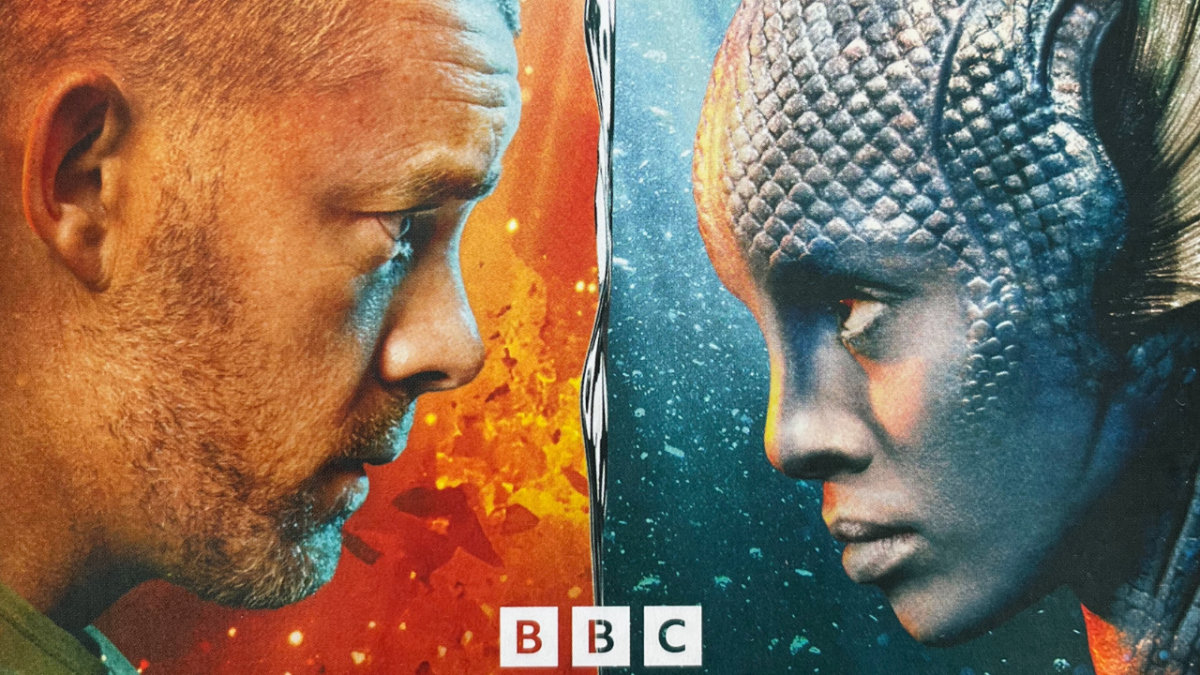
The latest spin-off from Doctor Who, The War Between The Land And The Sea, aired on BBC One here in the UK in December, marking the last part of the collaboration with Disney. Although, strangely, it still hasn’t dropped on Disney+ to my knowledge, which is extremely unfair on international audiences, given that they had posted new episodes of Doctor Who simultaneously with the BBC. I know Disney aren’t that bothered about the franchise any more, but still, it’s not very polite.
Anyway, I saw it on BBC iPlayer last year and gave a spoiler-free review in my Christmas Favourites. But now I’ve bought the Blu-ray that’s just been released, I wanted to rewatch the series to discuss each of the episodes in more depth, as well as looking through the extra features, just like I’ve been doing with my other modern era Doctor Who reviews.
In general, the series is a mixed bag. It is entertaining in many ways, with some great acting performances, cool special effects, big twists, evocative music, and a strong environmental message that isn’t preachy, asking what might happen if the creatures of the sea could really communicate with us. One particular character from Doctor Who gets a fantastic sub-story here as well. But in other respects the show doesn’t fully live up to the title or the hype, as it descends into a predictable love story more than a war drama, meaning it tails off towards the end rather than reaching an epic conclusion.
So on the whole I do think it’s worth a watch, whether you’re a Doctor Who fan or not, just as long as you manage your expectations a little bit. And with that in mind, I hope you enjoy my episode reviews here.
Contents
Overview
The War Between The Land And The Sea is a clunky title, but it’s a line that’s used in the original Sea Devils story from the classic era of Doctor Who, and to some extent it’s an apt description for this drama.
Created by Doctor Who showrunner Russell T Davies and co-written with Pete McTighe, the series consists of 4 episodes of 45 minutes each that were broadcast as 2 double-bills, followed by a finale that’s 10 minutes longer. So it’s relatively short, but it’s epic in scale, with the visuals, music, action and effects making it feel very cinematic sometimes. And there are big twists, cliffhangers and deaths along the way.
Also, while it is a spin-off, you don’t need to be a Doctor Who fan to watch it, as it’s designed to work as a stand-alone series and doesn’t require any prior knowledge. There are a few mentions of the Doctor of course, but only sporadically and very briefly, and they have no bearing on the story. The style of this show is different as well, being more adult in tone, akin to Torchwood in that regard, particularly its Children Of Earth special that also spread a single adventure over multiple episodes.
The story focuses on the UNIT organisation (the Unified Intelligence Taskforce) as they make contact with the Sea Devils – or Homo Aqua as they become referred to – and attempt to make peace with them, in the hope that they can reach a compromise to enable aquakind and humanity to co-exist harmoniously. But as the title implies, that’s far from easy.
Their best hope lies in Barclay Pierre-Dupont, played well by Russell Tovey, who had previously starred in the 2007 Doctor Who Christmas special Voyage Of The Damned as Midshipman Alonso Frame. An administrative mixup results in Barclay becoming the ambassador for the human race, and he gets pulled in very deep, in multiple senses of the word, through the connection he forms with Salt, the ambassador for all aquatic creatures, played by Gugu Mbatha-Raw. Gugu has also been in Doctor Who before, playing Martha Jones’ sister Tish in Series 3 in 2007, but here she gets a much more meaty… well, fishy… role, and is excellent. Granted, you can easily guess where things are going to go between them, but it’s still interesting to see their interactions sometimes.
The team around Barclay is led by UNIT commander-in-chief Kate Lethbridge-Stewart, played by the magnificent Jemma Redgrave, who really should have her name alongside Russell & Gugu in the opening titles. I love her character in Doctor Who, so it’s wonderful to see her here, along with wheelchair-using scientific advisor Shirley Anne Bingham (Ruth Madeley), American General Austin Pierce (Colin McFarlane) and Colonel Christofer Ibrahim (Alexander Devrient). They all get much more to do in this mini-series than their parent show, which is great.
Kate in particular is very much in charge and is excellent at her job, earning admiration and respect from everyone on her team. But she’s also vulnerable, like any human being, and she’s pushed to her operational and emotional limits here, far beyond anything she’s experienced in Doctor Who. And the ending of the series places her in a precarious position after all she’s been through, which has definite scope to be explored further. So I find her story much more engaging than Barclay’s to be honest.
Apart from that, we also meet political, military and business personnel, whose self-preserving interests are at odds with UNIT’s goals, resulting in conflicts and conspiracies as the series progresses. So that adds another layer of intrigue.
Episodes
1. Homo Aqua
Naturally this episode lays the foundations for the rest of the series, by introducing us to Barclay and showing how the situation unfolds from his perspective. And it’s done very well, as it really draws you in nicely with a lot of intrigue and tension.
Much like the companion in Doctor Who is someone we can relate to, enabling us to learn about the famous Time Lord along with them, Barclay here is our gateway into UNIT, as he’s little more than a civilian. We soon learn that he amicably separated from his wife Barbara (Ann Akinjirin), but is able to have his child Kirby (played by non-binary actor Cat Gannon) at his home sometimes.
In UNIT he’s at the bottom of the pecking order, doing menial jobs in the transport department with minimal security clearance. But because he happened to cover for a colleague once, he ended up on a list of stand-ins, and with nobody checking his status, he finds himself flown out to a Mediterranean island with a group of soldiers on a highly classified mission. So by the time he comes to understand what it’s really about, he’s seen too much. But fortunately, because it’s a big historical event, General Pierce explains that a civilian needs to be present alongside the military to bear witness to it, so he got lucky by being there.
They’ve come to examine a member of the Homo Aqua race that had been inadvertently captured and killed by a fishing crew. The UNIT team are keeping it in a remote barn so they can scan it, and are particularly curious about a pearl that all members of the species have embedded in their necks. While they prepare for the scanning, however, Barclay is left alone with the creature briefly, and while staring at it in wonder he makes the sign of the cross, not realising that simple act is going to change his entire life forever.
That night, after Barclay reveals to a colleague that he once had a fleeting encounter with the Doctor, the two soldiers guarding the creature are killed when the floor turns into quicksand, and the creature is taken by its own kind back to the sea. That in turn leads to a confrontation on the beach, as General Pierce communicates with a member of Homo Aqua to try and ensure peace, with software translating the creature’s response for UNIT to understand. The representative agrees to communicate, but they want all of humanity to hear it. So Homo Aqua makes its presence felt by raising islands from the sea and waterways all over the world, which is a stunning visual effects sequence.
An official meeting is then set up in central London, overseen by UNIT. And this is where we first meet Kate, who gets a suitably important entrance with some triumphant music, and immediately puts her stamp on proceedings.
It’s a tense affair as you’d expect, with Salt, the ambassador for Homo Aqua, explaining how angry they are that humans have been polluting their home. But she then catches everyone by surprise when she rejects UNIT’s choice of ambassador, and insists on talking to Barclay instead, because he was the only person to have shown any respect for the dead when he made the sign of the cross. It totally bewilders him and everyone else, but caught up in the moment and with officials watching from all over the world, he nervously agrees…
2. Plastic Apocalypse
With everything set up, we get into the nitty gritty of the situation as negotiations start between humanity and Homo Aqua – once Barclay has been approved as ambassador, that is. An angry Kate interrogates him at first and brings his family under UNIT’s protection, but she warms to him once they’ve trawled through his entire life and are satisfied he poses no danger. And with Salt stubbornly refusing to budge on her demand, Kate is forced to let him step up to the podium anyway, despite other officials disagreeing. His wife Barbara doesn’t understand it either, but his child Kirby does take more of an interest, and both of them do want him to be safe.
During these early meetings, Barclay is prompted to read from an autocue and given instructions via an earpiece to ensure that everything proceeds correctly. But not only does he fear the potential consequences to the human race if he gets things wrong, he also feels some sympathy for the plight of Homo Aqua and doesn’t always agree that the words on screen are the best to use. Salt can sense all this in him too, and is wise to the politics involved, so pressures him into speaking for himself. The prosthetics certainly don’t prevent actress Gugu from expressing herself, as she’s brilliant at showing how powerful Salt is, even with just a look.
So as Barclay’s confidence slowly grows, there are moments where he goes off-script, leading Kate to remark at one point that it’s like working with the Doctor, which is an amusing line. He doesn’t always say the right thing of course, and anxiously apologises when necessary, but just having the nerve to speak up is a big step forward for him. And after one of the meetings he’s fuelled with adrenaline, as he realises he’s formed a connection with Salt and will forever be seen as a key figure in history.
But there’s still a lot of pressure on him, and he knows it, even more so when his identity as ambassador is leaked to the press. So it’s really interesting to see how he matures and develops during the episode with everything going on. It’s a shame this kind of falls by the wayside later in the series, because the character clearly has so much potential here.
Kate also has a lot on her mind, as she confides in Colonel Ibrahim – her lover as well as her colleague – about her fears regarding the safety of Barclay and the possibility of war. It’s great to have this extra layer of emotional depth to her character, and there are further glimpses of her anxiety during the meetings between Barclay and Salt, though she remains professional of course. Everyone’s a bit on edge, inevitably, but Kate is leading the operation, and if she’s worried, it’s with good reason.
She’s also furious when Bradley’s name and photo is given to the press and is keen to give someone a “bollocking” for it. It’s unusual to hear her swearing in this series, given that she can’t do it in Doctor Who, but it only happens occasionally and it always feels right for the character in the circumstances. It’s quite fun, in fact, to see how she takes no nonsense from anybody. She’s exactly the sort of person you want defending your corner and safeguarding our world.
Meanwhile some other UNIT boffins are analysing tissue samples to find out more about Homo Aqua, in particular how they seem to be able to connect and communicate with each other in ways that humans cannot. However, one of the scientists steals a sample and trades it for a citizenship document with Sir Keith Spears (Patrick Baladi)), a man who is keen to protect his own business interests, with the aid of a couple of generals he’s friendly with.
But back at UNIT, Salt has the upper hand towards the end of the episode. After challenging Barclay to drink a glass of bacteria-infested river water (which he obviously doesn’t do) to illustrate how polluted their environment is, she lays out their terms.
The first is for humanity to immediately stop polluting the water. And when it’s put to her that it will take decades for that to be fully achieved, she accelerates the process by having all of the waste ejected from the sea and dumped back on the land. It results in torrents of plastic raining down around the world, which is another impressive effects sequence that really drives home how much there is. Even the Titanic turns up amongst it all. Barclay’s wife and child are among those caught up in the downpour, and they have to run to safety.
Secondly, humans must remain on the land, while Homo Aqua have the waters and the skies above them entirely to themselves, meaning people would no longer be able to sail or fly to any countries that involve crossing the seas. This understandably causes a lot of anger in the hall, but Salt reveals a disturbing masculine side to herself as she orders everyone to stop. It is certainly a very harsh demand, one that you’d hope could be negotiable in today’s heavily interconnected world.
And finally, having conversed with us in our own environment, they now want the next meeting to take place in their realm, in the Mariana Trench, the deepest part of the oceans. And despite being instructed not to agree to anything, Barclay again finds himself doing just that, without considering the potential consequences.
So it’s quite the cliffhanger on which to end the episode, with plastic flooding the streets and orders from Homo Aqua that seem impossible to go along with. The stakes couldn’t be higher, but now Barclay must somehow dive to the lowest depths.
3. The Deep
There are two aspects to this middle episode – Barclay’s journey to the bottom of the sea and Kate’s fight to stay in control of the situation back on land, and both have shocking conclusions.
For Barclay, he and a few of his colleagues have to undergo training and preparations for their journey first. And while he tries to put a brave face on it, which initially causes tensions with his wife and child, he breaks down in their arms as he’s forced to admit how scared he is. It’s only a short moment, but it would have felt unnatural if he hadn’t opened up like that at some point.
He then joins General Pierce and a few other people in the claustrophobic submersible that takes them down into the ocean, after Pierce has quoted David Bowie’s song Heroes when they first get on board. Their descent isn’t rushed, taking nearly 20 minutes on screen, mixed with scenes from London, so we get a good sense of their nerves and fears on the way down. It gives the episode a very different feel and pace to the previous one, which isn’t a bad thing. Granted, there isn’t time for us (or Barclay) to get to know the new characters in detail, but as they talk to distract and reassure each other, you do get a feel for their personalities and experience. One in particular, an ambassador from South Africa called Ted Campbell (William Gaminara), gets a bit panicky, but he’s also brought a globe as a gift for Homo Aqua.
So it does get pretty tense sometimes, especially when the submersible seems to lose control, as Salt brings them into a specially constructed environment that allows them to move and breathe like they would on land. Salt then separates Barclay from the others, and there’s a tender moment as they feel each other’s skin, as it’s new for each of them to be touching another species in this way.
It’s a pivotal moment that strengthens the bond between them, and there’s a hint that it might have been some kind of destiny for them to meet, which even Russell T Davies seems to have slight misgivings about in the audio commentary. But what is clear is that Barclay is no longer suitable to be the human ambassador, as it’s been very easy for Salt to exert a lot of influence over him in such a short space of time, and this hands-on encounter is effectively the catalyst for the love story that pervades the next couple of episodes.
Back in London, meanwhile, Kate forces herself into the government’s emergency COBRA meeting led by Prime Minister Harry Shaw (Vincent Franklin), at which businessman Keith is among those discussing the best way to respond to Homo Aqua. And Kate is horrified to hear that they’re intent on using weaponry to attack them, resulting in a big confrontation as she makes her feelings very clear.
Colonel Ibrahim then talks to Kate about how tired she clearly is, as these are extreme circumstances during which she’s had very little sleep. He is eventually able to persuade her to return to their beautifully furnished apartment, where she confides in him again about her worries and fears. We can see how close they are and they make a lovely couple.
Kate then gets a call from Shirley to inform her of the word “severance” being detected in coded messages, which refers to a new strategy the PM has been told about. But before she can respond, a laser sight appears on her forehead, and Ibrahim pushes her to the ground as a shot is fired through the window. For a moment it looks as if he was too late and she was hit, as she stares down at the blood on her hands in horror. But then we see the gruesome wound in her lover’s chest – something they could never show in Doctor Who – because he did take the bullet that was meant for her. Jemma Redgrave’s acting is heartbreaking here and in the next episode as the grief overcomes her character, you feel so sorry for her. It’s such a shock for her and the audience, because it comes out of nowhere.
Underwater, meanwhile, Barclay and the group are taken to an enormous cavern filled with members of Homo Aqua. But before they can begin any discussions, and in a brilliant piece of acting by William Gaminara, we learn that Ted has had an ulterior motive for coming on the trip, presenting his globe that turns out to be a bomb. Quite how UNIT’s security didn’t detect this before he took it on board is a mystery, but then they didn’t check Barclay’s credentials before he came on the mission in the first episode either. Clearly they need to beef up their procedures!
So it’s the best cliffhanger of the series, as the laser sight locks in on Kate once more (with a legion of anxious Doctor Who fans in the audience going “don’t you dare!”), and the bomb explodes deep in the ocean…
4. The Witch Of The Waterfall
The consequences of the previous episode are profound for our lead characters here.
Kate thankfully dodges the second attempt on her life and calls for help, and the suspect is soon killed and identified. This panics the government and Prime Minister, because even though they didn’t directly plan it, there are links back to them and the Severance plan via Ted and Keith. So with Ted killed by his own bomb, a hitman guns down Keith on his own doorstep to get him out of the way as well. So there’s a good conspiracy story going on.
Kate is also devastated by Ibrahim’s death of course, and those of her other colleagues underwater, so she understandably breaks down in tears a couple of times, and stares at a memorial to all of them in mournful disbelief. She has support around her though, particularly Shirley, who steps up to the plate brilliantly to take charge of UNIT’s operations until Kate feels she’s ready – even though she’s not ready – to step back into her role. It’s fantastic to see a disabled person in such a high position in a TV drama, and even if it’s only temporary in this story, Shirley’s work at all other times is exemplary too. The character is very well written and acted, rather than just being tokenistic.
Salt, meanwhile, saves Barclay’s life, and he informs UNIT and his family what has happened. But then a deepfake video of Salt is broadcast worldwide, giving the impression it was she and her species who set off the bomb to kill the human diplomats, with an order banning humanity from the waters with immediate effect. She’s therefore captured by UNIT as a prisoner of war. But, fearing for her survival, Barclay frees her and they disappear together, leading an angry Kate to exclaim the funny line “Barclay bloody Pierre stupid name Dupont!” That really tickles me, partly because of the way she says it, and also the self-awareness on the part of the writers who gave him that name!
Salt and Barclay therefore go into hiding and get close as they talk together, and it’s not very long until they’re kissing and embracing each other. It’s incredible how they’ve fallen head over heels in love so rapidly, considering they’re completely different species who have only just started to get to know each other, and also given what Salt’s race have already done to the planet and are demanding humanity to do next. It makes both of them, but especially Barclay, look very weak. And it also feels wrong that in this monumental and literally world-changing period of history they’ve completely abandoned any responsibility for their own races to focus on each other. Indeed, in the previous episode Salt had talked about working together with him to help end the war. So while the acting is still very good, it just feels uncomfortable, and also means the ending of the series can be guessed with some accuracy already, now that it’s more of a love story than a war story.
Still, Homo Aqua aren’t happy that Salt left the rest of her kind to die, and they send a new ambassador – a warrior called Tide (Samuel Oatley) – to face Kate, who has decided to take over the position for the human race in Barclay’s absence. Tide demands that they find Salt so they can serve justice on her, although Kate isn’t prepared to hand her over if she’s going to be harmed. But Tide threatens to use the water to make everything rust and turn to dust unless they hand her over, as well as insisting that humanity accelerates the plans to stop polluting the waters and that we change the name of Earth because it sounds “too dry”.
Meanwhile, Barclay suggests to Salt that they leave the city and go to North Wales, where she could live in the lakes and waterfalls, hence the episode’s title. But he contacts his wife to get her to bring his car, which is rather a stupid move when he must know his family are being watched closely, as indeed they are.
So it all ends with a big confrontation on a bridge, one that places UNIT and the army at tense loggerheads with each other, as they both want Salt, but the generals don’t need her alive. Salt stuns them all with a piercing screech though, and while Barclay is being restrained by officers, he urges her to dive into the water and swim away, which she does, and he promises that he’ll find her. And you know that he will given that there’s only one episode left to go, so while it’s fun to see UNIT and the army facing off against each other, it’s not as powerful or tense as the previous cliffhanger.
5. The End Of The War
At the beginning of this final episode, Homo Aqua show another of their powers, by issuing a call that sends everyone’s dogs running towards them, which they then eat – their justification being that we consume their fish, who are family to them. And later on it transpires that they’re melting the ice caps at an alarming rate, with Tide setting an ultimatum that all of the water will be set free to drown humanity unless we clean up our act within 5 years, which UNIT knows is impossible.
All seems lost, and even Kate is stuck for answers. But then she isn’t in a fit state of mind anyway, having been pushed to the brink. The only reason she’s still functioning as the commander of UNIT is because she’s blackmailed her therapist to give her an increased dose of medication, which shows how increasingly desperate she is, as she would never normally behave like that.
She’s also increasingly curious and anxious about the “severance” codeword that has cropped up in communications ever since humanity made contact with Homo Aqua. But despite pleading with the Prime Minister, he refuses to admit knowing anything about it, leading her to threaten him with a day of reckoning when he’s deposed from power.
As for Barclay, he’s being kept under close observation for his health and safety, and is allowed to talk to his wife and child. He explains to them how every night he’s able to leave his hotel to go down to the coast, where he calls Salt’s name underwater in the hope that she’ll hear it, to no avail, and he cries in the arms of his wife and child again.
Unbeknownst to him though, he’s also being watched by the General and his team. So when the Prime Minister activates the Severance protocol after his meeting with Kate, the plan swings into action. Barclay’s drink is spiked in his bedroom, and he’s injected with something while he’s asleep. Some sonic disruption technology in the sea is then disabled so that Salt can hear his calls after all. And when she then emerges from the water, the two of them have a romantic reunion where they kiss, neither of them aware of the payload Barclay is carrying.
So when Salt persuades Barclay to go back to UNIT, with a special message that they can transmit to Homo Aqua to try and form a peace agreement, it’s already too late. Barclay had been injected with a man-made virus to pass on to Salt, who in turn unwittingly fed it into the algae network that binds aquakind together. 90% of her species quickly die, washing up on the beaches and floating in the waters.
Salt and Barclay then have a more difficult reunion in the big meeting hall, where she tells the human race that they surrender. And while aquakind accept an offer of a protected area of sea to call their home, Salt knows that it’s a hunting ground, so they’re well aware of what their fate will be.
It is a very powerful and emotional scene that’s acted really well. And yet, considering how tough and powerful Homo Aqua were shown to be previously, how understandably angry they are at what has happened, and given that there’s still 10% of their enormous population left, there’s barely any retaliation.
One thing they have done is bury their precious technology deep below the Earth’s mantle so that humans can’t get at it, so those hoping for the spoils of war in that regard have been thwarted. But one wonders why they didn’t use it for further revenge. After all, they had started to melt the ice caps and threatened to turn everything man-made into rust, both of which they could still do, because if humans won’t let their species survive, why should humanity be allowed to thrive? Thankfully they don’t do that of course, but it does feel like the threats they were making have just been swept aside and forgotten about. Granted, genocide against your own kind is unimaginably severe, so maybe they are just too sad and scared. But it just feels too easy, as there hasn’t really been much of a war after all.
Salt does also promise that those responsible for the virus will find that water catches up with them, and it does seem to kill a couple of people in flash forward scenes. Before that though, when Salt and her guards have left the huge tank, it bursts open, flooding the hall – but only after the glass has cracked really slowly, giving everyone a lot of time to escape. So again, there’s no jeopardy or payback there, which makes you wonder what the point of the tank bursting was, other than being an impressive visual effect. Maybe Homo Aqua fear the consequences of killing more people, but again, if they have nothing to lose anyway, would they be that concerned?
Kate and Shirley then talk briefly about the Doctor, before Kate gets an urgent call from Barclay’s doctor. And from there we go into a slow-motion, dialogue-free montage, set to a nice cover of Heroes, the classic David Bowie track, by Alison Goldfrapp. It transpires that Barclay is physically turning into a member of the aquakind race, so Kate drives him down to the coast, where he reunites with Salt and they swim off together. While it is sweet for them, and the song does make it a bit emotional, it feels like an anticlimax, as it had become the most predictable ending for Barclay’s story, and is a long way from what the series was originally about.
In the first few episodes we see him becoming a stronger, more confident man, and you want him to succeed in his unexpected new role, but then he weakens considerably under Salt’s influence, undoing all that good work and squandering his potential. And then there’s the fact that he completely abandons his poor wife and child for a fish creature he’s only recently met, the morality of which is never discussed. So you’re not really rooting for him by the end.
The better part of the conclusion is the mid-credits scene, where Kate confronts a jogger on the beach who discards a plastic water bottle. She asks him politely to pick it up, but when he keeps refusing, she gets increasingly angry, eventually pointing her gun at him. Given her mental state you can’t quite tell if she really would pull the trigger, but you don’t get to find out either, as it cuts away. So it’s quite a powerful moment – not as monumental as Russell T Davies overhyped it to be on social media, but still, it’s a big scene for Kate’s character. And Jemma plays her superbly, just as she has done throughout the entire series. Her journey has captivated me more than Barclay’s for sure.
So it’s a mixed ending. It does sadly feel plausible that a government would, if pushed to extremes like this, commit an act of genocide to save their own people. So in that sense it is supposed to make you feel uncomfortable and to challenge your expectations, and it does achieve that very effectively. There are no easy answers to the situation, and attempts to find resolutions are made all the more difficult because of its scale and the conflicts of interest at play.
On the other hand, such a quick ending to the conflict feels like an easy get-out clause in terms of writing, so attention can be shifted to the love story. And even though Kate has now learned what the Severance strategy means, she doesn’t get to confront anyone about its use, which would have been another great scene for Jemma to play I’m sure.
It also means there hasn’t really been much of a war after all, beyond angry exchanges of words and occasional acts of sabotage. The title of the show, the involvement of UNIT and the army, the power shown by Homo Aqua, the way the show was marketed, and the extra budget made available by Disney, all gave the impression or expectation that there would be at least one big battle set piece at some point. We even got to see what a huge gathering of Homo Aqua would look like when the UNIT crew went underwater. But in the end, the biggest effects sequence seemed to be the plastic rain, and UNIT aren’t responsible for ending the conflict.
So the series is good and thought-provoking in many ways, because there is a lot to enjoy, and therefore it is worth watching in many respects. But it feels incomplete too, as if it promised more than it delivers, with a strange love story and a sudden end to a war that never fully got going in the way that people might have been hoping or expecting.
Music
The music for this series is by Lorne Balfe who, among many other things, was responsible for the score accompanying 2024’s Wallace & Gromit adventure Vengeance Most Fowl and the 2025 comedy series Man vs Baby. Lorne also provided some musical updates for the re-edited Sea Devils story in the extras, alongside the original score by Malcolm Clarke.
The soundtrack album has been released digitally and on audio CD. The first track was dropped as a preview before the series launched, called Barclay’s Theme, which is beautiful.
Nearly all of the other tracks were then released in one go online, and they’re very atmospheric, working perfectly in the show while still sounding nice in isolation. There aren’t any big stand-out pieces necessarily, but my favourite tracks include Into The Unknown (which is quite calming for a while before getting very dramatic towards the end), All Over The World (which has a very epic feel befitting its name), Aqua Den (which invokes a feeling of floating and has an air of mystery and tension to it) and Survivor (which starts off calmly but then builds nicely).
The final track, as used in the closing moments of the series, was then unveiled on its own to complete the album – the cover of David Bowie’s Heroes by Alison Goldfrapp. It feels like the sort of adaptation that would be written for a Christmas advert, by turning it into a slow and powerful piano ballad, but it works very well. So it’s a good album altogether – not quite on the level of Murray Gold’s Doctor Who music in terms of memorable tracks, but the score does serve this series really well.
Extras
The DVD & Blu-ray of the series came out on 23 February, and I bought the standard Blu-ray release. I haven’t bought the limited edition steelbook, as the show isn’t as good as Doctor Who, and the price of £44.99 is a rip-off for what you get. Even the standard Blu-ray is rather expensive for what it is, at £32.99, but I’m happy with that version, I don’t need anything fancier than that.
The 2 discs also have audio navigation and audio description, which is thankfully standard for Doctor Who releases. And I was delighted to hear Jemma Redgrave doing the audio menus, which is a lovely touch. The standard menu shows the cover image of Barclay and Salt facing each other followed by clips from the series, while the theme music plays, so no surprises there.
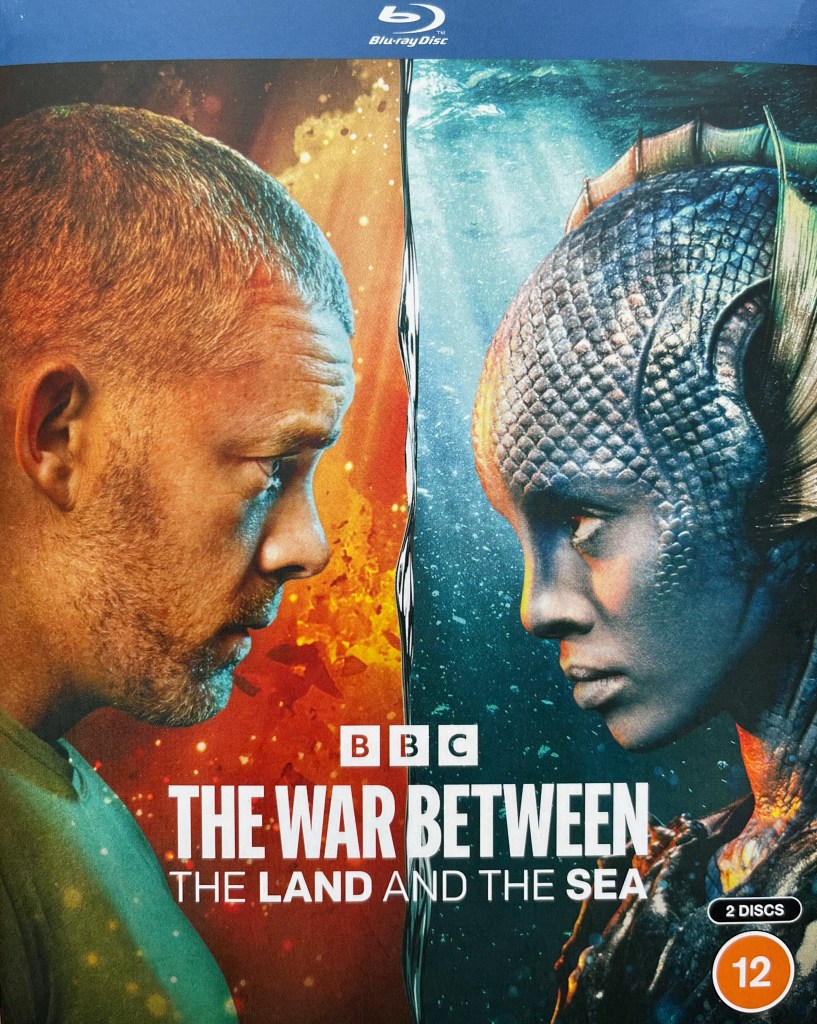
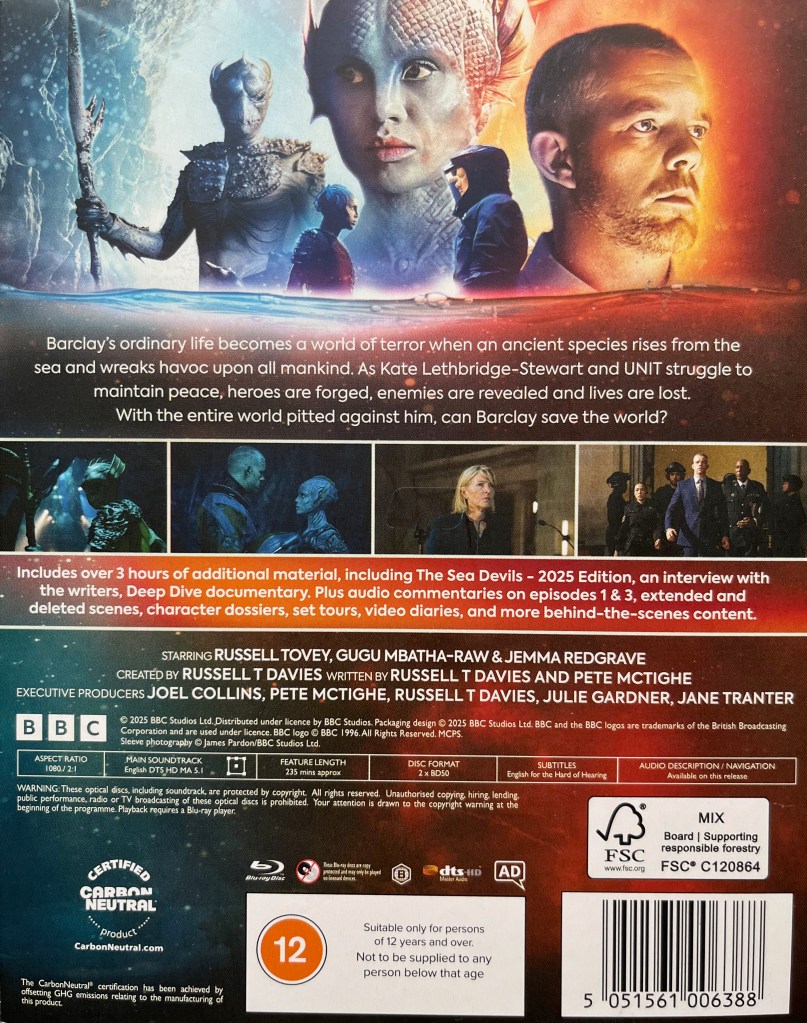
Anyway, there’s 4½ hours worth of extra material if you go through it all, the most significant features being:
- Audio Commentaries (Episodes 1 & 3) – These aren’t counted in the “3 hours of additional material” stated on the back cover, which is the total for all the other features noted below. But creator Russell T Davies, co-writer Pete McTighe and actress Jemma Redgrave have a great chat together in these commentaries. It’s a pity they don’t do them for all the episodes, especially the finale, although they do make occasional remarks about them, and it’s a real shame the other 2 lead actors aren’t involved. But still, these discussions flow well and are very interesting, including the sad story that led to Russell coming up with the initial idea for the series. For Jemma it’s her first time doing a commentary, but she contributes nicely and it’s great to hear her perspective from the acting side. It’s also wonderful to hear her enthusing about her love of Doctor Who, including her reaction to the 2005 reboot and what it was like getting the role of Kate.
- Deleted & Extended Scenes (20:05) – A selection of scenes from the first 4 episodes that were trimmed down or cut entirely, presented in their raw state without music, which gives even familiar moments a slightly different feel. So it’s quite interesting to look through them. They include Barclay chatting with UNIT colleagues on the flight and on the island in the first episode, a few moments with his family, his time alone with Salt when they meet in her underwater world, and Kate’s involvement in the COBRA meeting.
- Deep Dive (34:13) – This documentary has also been made available for free on the Doctor Who Youtube channel. It’s a great look behind the scenes, including interviews with the writers, actors and production team, as we get insights into the origins of the series, the design and prosthetics for Salt and Homo Aqua, the challenges they faced while filming abroad, how they made the plastic apocalypse, the character of Kate Lethbridge-Stewart, Ibrahim’s death, the huge set for the Empress Hall, filming the stunt of Barclay jumping into the river, the love story between Barclay and Salt, and more.
- Set Tours (7:12) – Actor Russell Tovey and producer Joel Collins take us around the sets for Empress Hall and the Homo Aqua Habitat, discussing how they were designed and reflecting on filming within those environments. So they’re quite interesting clips, both of which have been posted on Youtube as well.
- Writers Interview (15:39) – Russell T Davies and Pete McTighe have a self-congratulatory but interesting chat about the series. Along the way they discuss their love of the old Sea Devils story in Doctor Who, why they redesigned them for this series, casting the various members of Homo Aqua, involving Kate and UNIT from Doctor Who, incorporating the environmental issues that naturally arose from the story, the many deaths in the series, and making it a love story in the end.
- The Sea Devils: 2025 Version (90:03) – This is the new edit of the 1972 Doctor Who story featuring Jon Pertwee as the Third Doctor with companion Jo Grant (Katy Manning). I already gave this a little review in my Christmas Favourites after it was broadcast last year, so I don’t need to repeat myself here. Suffice to say I didn’t find it as good as the modern era of Doctor Who that I’m more familiar with, but it’s still entertaining and interesting to watch for additional context.
Then there’s a whole bunch of short promotional clips, most of which have been posted on the Doctor Who Youtube channel as well. But it’s always nice to have personal copies in case the videos are ever taken down:
- Introducing (2:22) – Russell T Davies and the main actors give a teasing overview of what the series is about, with a little bit of behind-the-scenes footage.
- Mission Briefing (1:10) – Kate issues a worldwide alert to all branches of UNIT about aquakind’s appearance to the human race, before the first diplomatic meeting with them. This is presented in landscape, rather than the portrait version on Youtube, and basically serves as another trailer for the series.
- Character Dossiers (2:43) – These 4 short clips, presented by General Pierce, introduce us to the human characters of Barclay, Kate and Colonel Ibrahim, along with Salt and the rest of Homo Aqua. Again they’re in proper landscape mode rather than the vertical clips online. If you’ve seen the show you don’t learn anything new from them, but there are nice little freeze-frame details you can pause to look at, especially for Barclay as they look at his history.
- Video Diaries (3:09) – These are very short montages of clips recorded by Alexander Devrient (Colonel Ibrahim) on set and a trio of actors playing members of Homo Aqua in a big water tank, as they each quickly take us through a day of filming. So don’t expect proper video diaries like we’ve had on Doctor Who releases in the past. There are a few interesting things to see here, but it’s all far too fleeting. And the clips are in portrait view, as they were filmed on phones, so if you have a big screen there’s a lot of black space either side.
- Russell & Gugu Clips (4:12) – Here we have two short features, also filmed in portrait, with actors Russell Tovey & Gugu Mbatha-Raw. The first is a drawing challenge, where they sketch pictures of each other’s characters while discussing their shared love of art. And then the other clip, called Becoming Salt, is an interview where Russell asks Gugu about what it was like for her to transform into her character, during which we see footage of her prosthetics being applied.
- Trailer (0:47) – The dramatic, cinematic trailer for the series.
Conclusion
All in all, despite its imperfections, I do still think this series is worth a watch. Yes, it’s been overhyped and raises expectations a bit too much in the early episodes, but it’s still very impressive, fun, interesting and thought-provoking. If you’re a fan of Doctor Who then it’s essential viewing for Kate’s character alone, as you’ve never seen her like this before. But even for non-Doctor Who fans who like a bit of sci-fi and action, it’s worth checking out. I also have a short playlist of related clips on Youtube as well, including those embedded above and more.
What happens next for Doctor Who itself is still unclear in many ways. We know there’s going to be a Christmas special to resolve the Billie Piper cliffhanger that had to be rapidly written in given Ncuti Gatwa’s departure. And beyond that, we have at least been reassured by the BBC that Doctor Who is a treasured brand that still has a future, possibly with a new streaming partner. But there are no firm details as to what will happen just yet. We’ll find out more in due course.
In the meantime, I’m going to keep doing my Doctor Who reviews for the modern era, for which Series 7 will be next, so that’ll keep me busy for a while!
Share this:


 Well Eye Never
One thought on “Doctor Who Review – The War Between The Land And The Sea”