

Recently I began revisiting Matt Smith’s reign on Doctor Who, by taking a deep dive into Series 5 as part of my ongoing posts about the modern era of the show.
So now it’s time to move on to Series 6. With the previous series, new showrunner Steven Moffat had given the programme a big overhaul, and very successfully too. So this time around things are more settled. The 11th Doctor is again joined by the gorgeous Karen Gillan playing the feisty Amy Pond, along with Arthur Darvill in the role of her newly wedded husband Rory Williams. They make such an enjoyable trio with great chemistry between them, because they became such good friends off-camera when they started working on Series 5 together. You can see how much fun they have together in the Confidential documentaries as well.
We also see plenty more of Alex Kingston as River Song, and we finally discover who she really is. Her identity is revealed as a mid-season cliffhanger, as originally the series was split into two halves, with a 12-week gap between them. Such a break had never happened in the modern era before, so it was a bit frustrating at the time, especially given the big reveal. But at least the series can be watched all in one go now. Other mysteries from the previous series, about The Silence and the exploding Tardis, also continue to develop here, along with new story arcs about the Doctor’s death and Amy’s pregnancy.
So there’s plenty to get through in this post, in terms of the episodes and the various extra features as per usual, and once again I’ve compiled a playlist for the series with lots of clips and bonus material. I hope you enjoy!
Contents
- Blu-ray Releases
- Episodes
- Overview
- Christmas Special: A Christmas Carol
- Comic Relief Sketches: Space & Time
- 1 & 2. The Impossible Astronaut / Day Of The Moon
- 3. The Curse Of The Black Spot
- 4. The Doctor’s Wife
- 5 & 6. The Rebel Flesh / The Almost People
- 7. A Good Man Goes To War
- 8. Let’s Kill Hitler
- 9. Night Terrors
- 10. The Girl Who Waited
- 11. The God Complex
- 12. Closing Time
- 13. The Wedding Of River Song
- Mini-Episodes: Night & The Doctor
- Extras
Blu-ray Releases
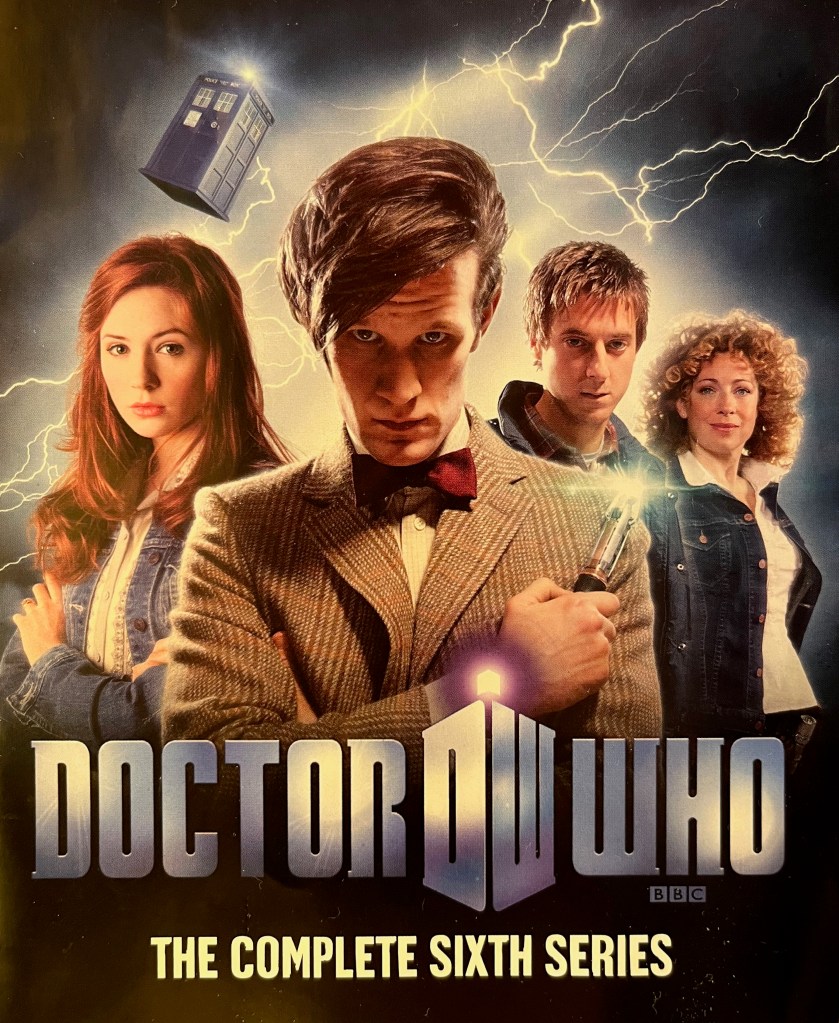
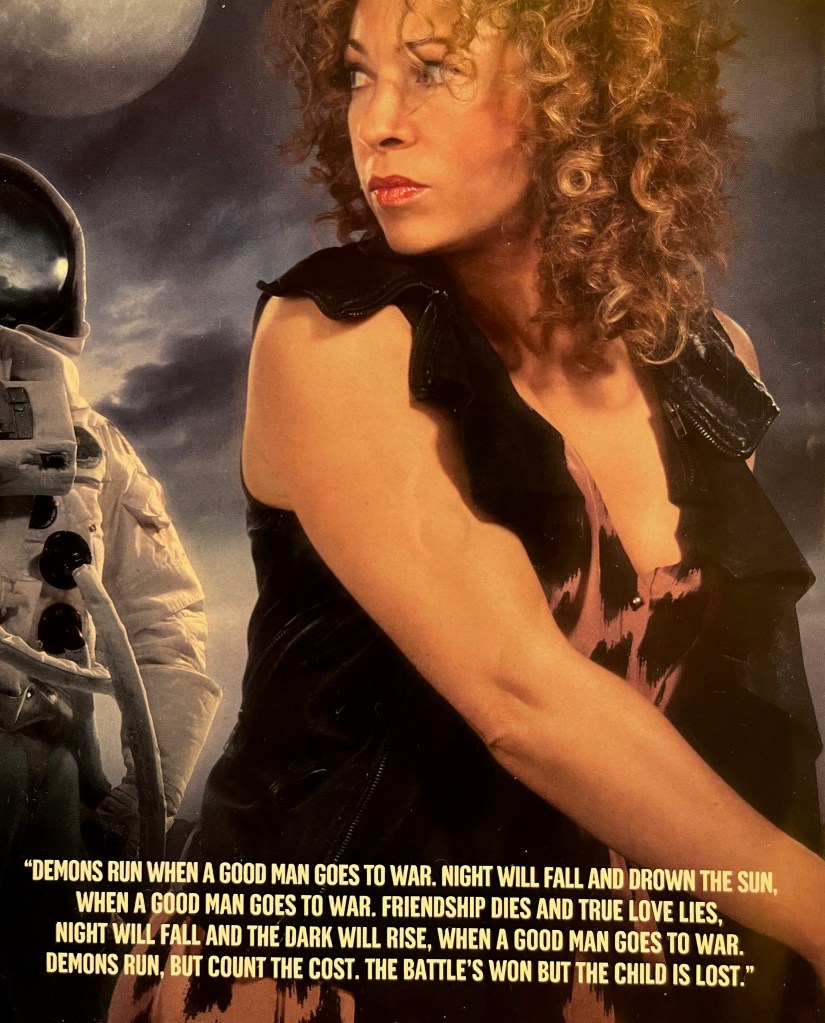
The cover of the Blu-ray steelbook for this series isn’t as bright and vibrantly colourful as the Series 5 set, but still looks very nice with the collection of characters portrayed in the artwork. It also reflects the light nicely when you hold it at certain angles. Again, however, the box set uses the wrong version of the Doctor Who logo, displaying the one from the year the steelbook was released (2020, during Jodie Whittaker’s era) rather than the one from Series 6 itself. It’s not the end of the world, but it is a niggling annoyance nonetheless.


The episodes are spread across 5 discs, while a 6th disc contains cut-down versions of Doctor Who Confidential – and this marks the last time that behind the scenes documentary series was made, sadly, until its Unleashed successor came along for the 60th anniversary 12 years later. The Confidential episode for A Christmas Carol is an exception, as that’s on the first disc with that special, and it’s an uncut hour-long edition at that!


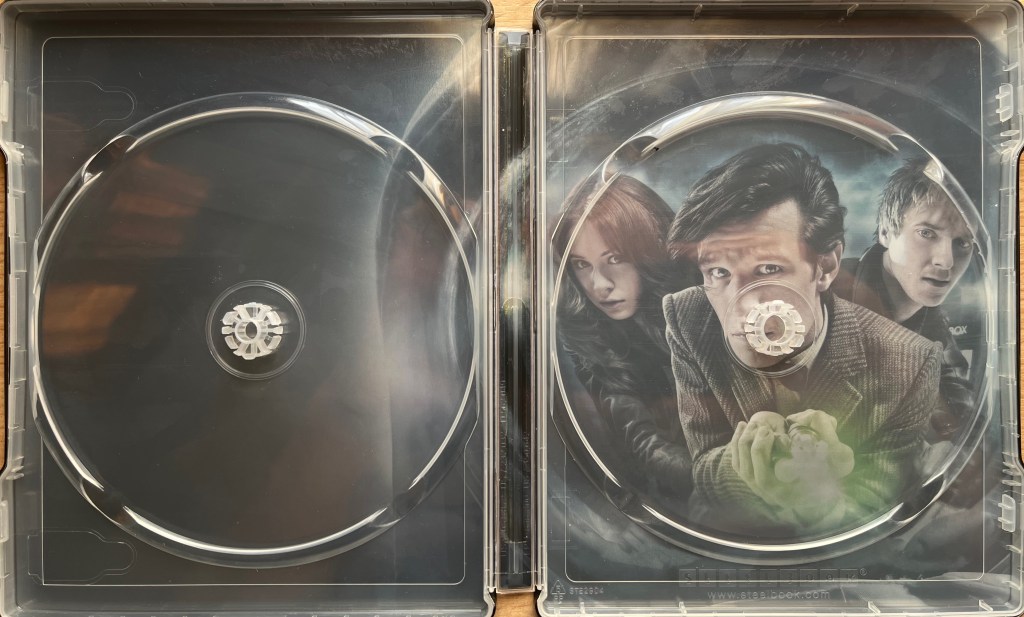
Disappointingly, however, the disc for the Christmas special does not contain the hour-long edit of the 2010 Doctor Who Prom that was on the standalone release. I do, therefore, own that individual release as well, in order to ensure I have a copy of the Prom in my collection. However, I’ve already discussed the Prom during my Series 5 review, because it took place only a month after that series ended, and thus only includes music up to that point.


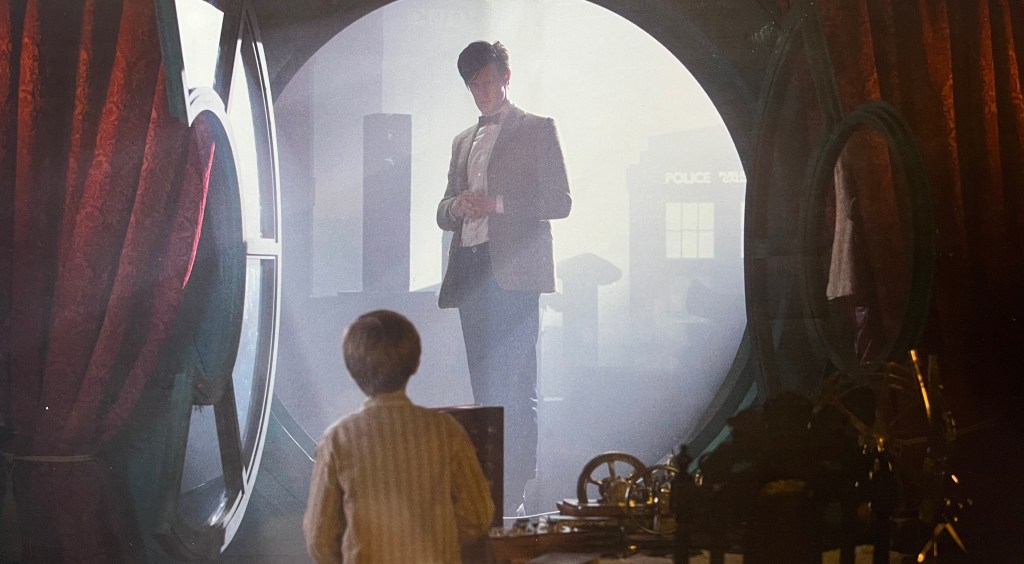
Anyway, back to the Series 6 steelbook, and it also contains a double-sided leaflet that simply lists the episodes and extras on one side, with a picture of the Doctor, Amy and Rory on the other. That’s in keeping with all of the steelbooks. But in the older standard Blu-ray set there was a booklet giving a brief, teasing synopsis of each episode as well, along with a nice bit of comic-strip style artwork.




On each disc of the steelbook, the animated main menu is based on the show’s title sequence and is thus accompanied by the theme tune. We see the Tardis flying through the vortex, but it keeps bumping into the show’s logo (the correct one unlike the packaging) and making it spin around. And various images from the series appear around it, although they’re a bit too quick to see easily sometimes. Then eventually it pulls back to show the astronaut helmet. The special features menu, meanwhile, has a much simpler animation that makes it look like you’re hanging on to the Tardis as it flies through the vortex, and the other menus just have a static image of the Tardis and the vortex.


Wonderfully, the box set also includes audio description and audio navigation, making it the first Blu-ray of the modern series to be fully accessible to visually impaired people. The separate release for the Christmas special doesn’t contain these accessibility features, so I’m glad that episode became accessible in the box set.
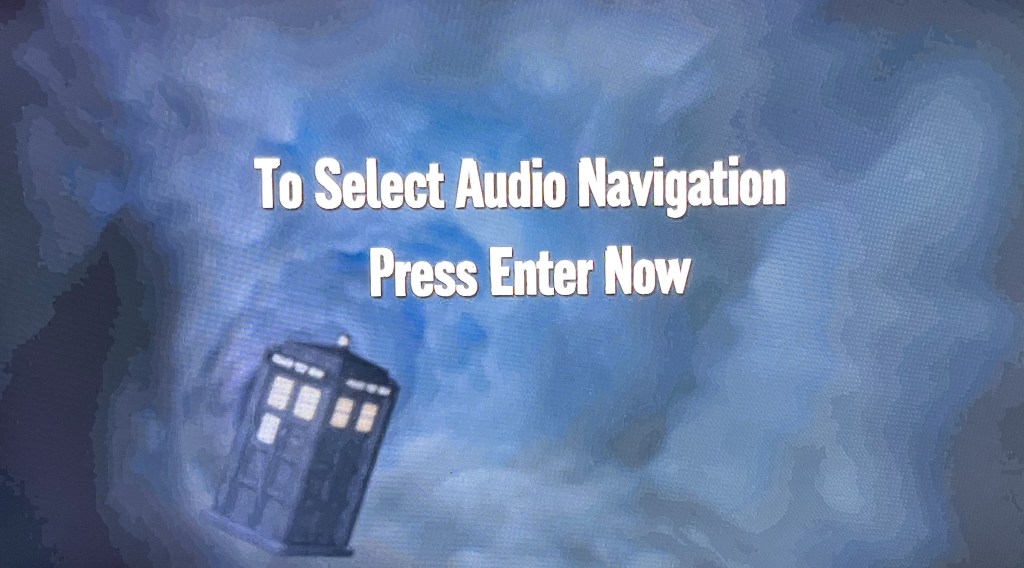
The audio navigation works by announcing the title of the disc when it loads, and then inviting you to press Enter after the copyright and logo screens to access the talking menu. On each menu screen you’re told how many options are available, and then they’re each spoken to you as you move down the list with your remote. On screen, this alternative menu has very large, bold, while text against an uncluttered, static background showing the time vortex, and the text for the currently selected option is highlighted in yellow, so it’s very easy to read.



These features had been available much earlier on the old DVDs though (with audio description from Series 1 onwards, and audio navigation from Series 2), so it’s very disappointing that they didn’t at least match that on the Blu-rays. Audio description was eventually included in a Blu-ray box set of Series 1-4 & the 2008-10 specials, but that didn’t help people who had already bought the individual releases. Still, audio description is available for every episode on BBC iPlayer, so you can enjoy accessible versions of Series 1-5 that way at least.
Episodes
Overview
This series consists of an hour-long Christmas special, followed by 13 episodes of 45-50 minutes each. Altogether they cover 12 stories, consisting of 10 single episodes along with just a couple of two-parters in the first half of the season (unusually we get a 2-parter at the very start instead of a 2-part finale). 5 stories are written by showrunner Steven Moffat, while the others each have a different writer, including esteemed author Neil Gaiman.
There are also some additional mini-episodes, including 2 Comic Relief specials, 5 prequels that had been posted online prior to the broadcasts of the main episodes, a set of 5 bonus scenes called Night & The Doctor that are exclusive to the DVD & Blu-ray releases (one of which is also a prequel really), and a special mini-episode written by children that can be seen in the accompanying Confidential series. So that effectively adds up to an extra episode’s worth of material.
Once again the beautiful music in this series was of course composed by Murray Gold, including familiar pieces that were introduced in the 5th series like the new iteration of the Doctor Who Theme tune, I Am The Doctor and Amy’s Theme.
For this series he actually released 2 albums – one dedicated to A Christmas Carol with 29 tracks (the first time he had ever produced an album exclusively for a festive special), and then a double-disc album for the main series with 67 tracks organised in episode order, making a whopping 96 tracks lasting just over 3 hours 10 minutes in total. So I’ve included all of the tracks on my Series 6 playlist, and I’ll mention my favourites as we go along. The booklets with each album are nice as well, containing brief notes by Murray on each episode and photos from the show.
Christmas Special: A Christmas Carol
- Writer – Steven Moffat
- First Broadcast – 25 December 2010
- Links – BBC / Wikipedia / Tardis Wiki
As the title suggests, this is a very enjoyable sci-fi spin on the classic Dickens tale. The Scrooge-like figure here is Kazran Sardick, played by the magnificent acting legend that is Michael Gambon, widely known by the audience at the time for playing Dumbledore in the Harry Potter films. So it was a huge coup for the Doctor Who team to get him on board, and well worth it too.
A spaceship is on a crash course with Kazran’s planet, and could be saved if he opens up the cloud layer that he has control of. But he refuses to do it, showing no care for the people on board. Among the passengers are Amy and Rory, who have clearly been having a lot of fun on their honeymoon, given that Amy’s in her skimpy police uniform and Rory is dressed as a Roman Centurion, in amusing callbacks to the previous series. Their involvement in this episode is quite limited really, but they do pop up fairly regularly and they do make some nice contributions.
The Doctor is able to get down to the planet in his Tardis though, as he had been away and turns up in response to the ship’s distress call. He makes a big and appropriately festive entrance into Kazran’s home by falling down the chimney, but Kazran rejects his pleas to save everyone, and is the only person who can operate the cloud machine. However, the Doctor learns how badly he was treated by his father, which explains his attitude and behaviour, and wants to show Kazran what it’s like to experience happiness and love.
So, despite the warnings he often gives people not to change history, the Doctor decides to become a fixture of Kazran’s past by time-travelling back to his childhood, effectively become the Ghost of Christmas Past, while the adult Kazran watches on from the present day and feels his memories changing.
The Doctor befriends the young Kazran (played by a very talented Laurence Belcher) and helps him to explore the clouds, which contain lots of little fish swimming through the air – but also a big shark that attacks them. The Doctor saves the boy, but not before the shark has swallowed half of his sonic screwdriver – although as the two halves of the device are able to signal each other, the Doctor is able to use that to his advantage during the episode.
More importantly, the young Kazran shows the Doctor a corridor full of people who have been kept frozen by his father, as security for loans that have been given to their families. And one who particularly gets their attention is Abigail, played by the stunning Katherine Jenkins, who the Doctor had seen was still being held in the present day. The two of them let Abigail out, and discover that her exquisite singing voice is perfect for calming the shark, which the Doctor is then able to send back into the sky.
The Doctor and child Kazran then continue to visit Abigail every Christmas Eve, releasing her for the day so she can enjoy the festive occasion with them. And as Kazran matures into a young adult (played by Danny Horn), he develops a strong romantic connection with Abigail (while the Doctor accidentally gets engaged to Marilyn Monroe at a party one year!).
However, both the Doctor and Kazran learn too late that Abigail can only be released a finite number of times, as she was already dying when she was frozen. So when they discover the truth, Kazran falls out with the Doctor, devastated that he can only have one more day with her, and he finds it impossible to choose which day that will be.
The Doctor isn’t done yet though. He sends Amy next, via a holographic projection from the ship, to be the Ghost of Christmas Present for the adult Kazran, showing him the people who are set to lose their lives if the vessel crashes. It still isn’t enough to change his mind, but it’s another piece of the jigsaw the Doctor is putting together for him.
Finally, the Doctor is the equivalent of the Ghost of Christmas Yet To Come – and in a clever twist, it’s not to show the old adult Kazran what lies ahead, but to show the child Kazran who he’s going to become in the future. And it proves to be a powerful and upsetting revelation for both of them. The resulting embrace between the two of them is thus very moving – and thankfully it doesn’t create the dangerous paradox that occurred for Rose in Father’s Day back in Series 1, presumably because the Doctor had been manipulating events so knew what he was doing.
It’s the pivotal moment that finally persuades Kazran to do the right thing, but with events having changed so much in his life, the cloud machine no longer responds to him. But by using the connecting halves of the sonic screwdriver, Abigail is able to sing to the shark high above, calming it and the other fish enough for the ship to make a safe landing. Then she and Kazran are able to fly off, with the shark’s assistance, for one final Christmas Day together.
That closing track, entitled Abigail’s Song (Silence Is All You Know), is truly gorgeous, especially because Katherine Jenkins is singing it with such perfection and delicacy, and it’s lovely that it’s so integral to the plot too. It was included on Murray Gold’s soundtrack album for this special, naturally, with the lyrics included in the accompanying booklet. But Katherine also featured it on her Daydream album in October 2011, as well as performing it on ITV’s This Morning and in concert.
And overall, despite having never done any acting before, Katherine is really wonderful in this special, clearly enjoying the experience while also handling the more emotional aspects of the story really well. You also can’t help but feel a bit envious of Danny Horn, who got to spend a good deal of time kissing her for a couple of important scenes!
Abigail’s Song naturally became a big hit with Doctor Who fans, so much so that over 200 of them got together on the 10th anniversary of the special, in Christmas 2020, to perform an impressive lockdown version, which you can also hear in a cappella form. The song was also later performed at the 2024 Doctor Who Prom, and has appeared in Doctor Who Symphonic Spectacular concerts. It’s all the more impressive when you consider that Murray Gold had to compose it with very short notice, writing it over a couple of days, so to put together a song so quickly that became instantly loved just further demonstrates his remarkable talents as a composer.
Talking of the soundtrack album though, the first to have been released for a Christmas special, there’s lots of other nice music on it too, evoking the mood and atmosphere really well during the episode. Among the other tracks, my favourites include the dramatic opening Come Along Pond, the contrasting trilogy of tracks from the first shark attack (Big Colour, I Can’t Save Her and The Other Half’s Inside The Shark), the pretty theme for Abigail, the cheery Shark Ride and Christmas Dinner, the very sweet Goodnight Abigail, and the concluding Everything Has To End Some Time that makes good use of the I Am The Doctor theme and builds to a nice crescendo.
So altogether it’s a very lovely episode, easily one of the best Christmas specials of the modern era, because it’s a lot of fun, it feels and looks delightfully festive, it tells a thoughtful and moving story, and it has top notch guest stars.
Comic Relief Sketches: Space & Time
- Writer – Steven Moffat
- First Broadcast – 18 March 2011
- Links (Space) – Wikipedia / Tardis Wiki / Youtube
- Links (Time) – Wikipedia / Tardis Wiki / Youtube
These amusing sketches form a mini two-part story, lasting for 7 minutes in total, giving a glimpse into life on the Tardis. Under the Doctor’s instructions, Rory is helping him to fly the ship, but makes a critical mistake, resulting in the Tardis materialising inside itself, which has never happened before. Walking through the doors therefore means they end up back where they started, in a seemingly inescapable loop. But there is a slight time delay, so they are able to give messages to their past selves, and eventually the issue is resolved.
It’s quite funny, being that it is for Comic Relief after all, with Rory in particular being distracted by his wife’s short skirt through the glass floor of the Tardis, or enjoying the thought of 2 Amys flirting with each other, for which he gets a slap! Can’t blame him though. Of all the female companions in the modern era, she is the sexiest in my eyes too, although they are all beautiful. There’s also a nod back to the finale of the previous series with Amy repeating her line that things are about to get complicated.
Matt Smith also appeared as the Doctor live on the telethon itself, chatting to hosts Jonathan Ross and Claudia Winkleman. And Claudia introduced one of the sketches by singing the theme tune with Michael McIntyre. Neither of those clips are included on the Blu-ray though.
1 & 2. The Impossible Astronaut / Day Of The Moon
- Writer – Steven Moffat
- First Broadcast – 23 & 30 April 2011 (the first episode was dedicated to Sarah Jane Smith actress Elisabeth Sladen, who had died 4 days earlier)
- Links (1) – BBC / Wikipedia / Tardis Wiki
- Links (2) – BBC / Wikipedia / Tardis Wiki
Steven Moffat upends expectations straight away here, with an excellent and epic two-parter to start the series rather than end it – although he was rightfully angry when a disrespectful so-called fan leaked the entire plot online after a press screening.
This is also the first of 5 stories in this series to come with a short prequel, which was originally released online before being included on the DVD & Blu-ray releases. Lasting less than 2 minutes, it shows President Nixon (played by Stuart Milligan) getting a mysterious phonecall in the Oval Office from a young girl, urging him to look behind him, where a member of The Silence is standing, although we don’t know that’s what it is when we first see them.
The two episodes themselves then have a lot packed into them, much of it setting things up for later in the series.
There’s a big problem in the Doctor’s future for starters. We first see him getting in trouble with Charles II (a fun cameo by Paul Critoph) and in World War II, and those incidents get the attention of Amy in the history books she’s reading. But she and Rory both miss the Doctor’s appearance in the Laurel & Hardy film The Flying Deuces when invitations in Tardis blue envelopes arrive at their house. River Song also receives the same invite and breaks out of her prison cell once again.
The invitations lead them to America – and there are several scenes shot on location in the USA in both episodes, with stunning views, giving the whole story a true sense of scale and beauty.
So the Doctor meets them in Utah, with River making a suitably iconic entrance by shooting off his Stetson hat. He then takes them to a diner (with Adele’s Rolling In The Deep playing in the background), where he tells them he’s been running but it’s time to stop.
They all then go for a picnic by Lake Silencio (Lake Powell in real life), where the Doctor is shot dead by an astronaut emerging from the water, wearing an Apollo 11 spacesuit. He of course starts to regenerate, but another shot from the astronaut interrupts that as well, seemingly killing him outright. HIs death is then confirmed by an old man called Canton Everett Delaware III (William Morgan Sheppard), who had also received an invitation.
It’s certainly a big and dramatic way to start the series, and gets more confusing still when the Doctor appears to Amy, Rory and River when they return to the diner, with River giving him a slap for his trouble, which is an amusing moment.
They soon learn, however, that this Doctor is 200 years younger than the one they saw killed, and also received one of the blue invites from his future self. But he doesn’t know who the invite was from or what his future holds, and his companions aren’t allowed to tell him, even though he can sense that they’re hiding something. Amy convinces him to trust her though, by swearing on fish fingers and custard, a nice reference to the opening episode of Series 5 where they first met. So that mystery about who killed the Doctor and why, and if he really is dead, is left hanging until later in the series.
The companions are, however, able to tell the Doctor about Canton and space in 1969, and that leads them to the White House, where we get to see – well, not see – the Tardis landing while staying silent and invisible for a change, thanks to River’s help in pressing the right switches on the console. The Tardis has never done that before in the modern era of the show, so it’s pretty significant, and it was also very rare in the Classic era, becoming invisible in The Invasion and landing silently in The Dalek Invasion Of Earth, neither of which I’ve watched. But it does come into play again in the second part as well.
Anyway, in the White House our heroes meet President Nixon and a younger adult Canton (Mark Sheppard – William Morgan’s son), and learn about the mysterious phonecalls. It takes some persuasion, given that the security personnel aren’t too pleased about a mysterious stranger arriving in the Oval Office, but the Doctor is able to convince Canton to help him investigate where the calls are coming from. And that leads them to explore a warehouse in Florida.
At both the White House and the warehouse, however, there are creatures known as the Silence, to whom several references were made in the previous series, right back to Matt Smith’s first episode when he was told “silence will fall”. So it’s good to see that paying off here.
They are easily one of the scariest monsters in the series, because aside from having freaky-looking faces, their modus operandi is that you completely forget about them as soon as you look away, and they’re able to put commands in your head to make you behave in certain ways. So you end up saying or doing things without quite knowing why, rather like post-hypnotic suggestion. It means they’ve been inhabiting the planet and controlling the human race unnoticed for a very long time because of those traits.
Defeating them therefore becomes the central mission of the story, and in the second part we see how our heroes are covering themselves with tally marks and using special recording implants in their hands, to remind themselves that they’ve seen the creatures. They even have an elaborate plan to fake their own deaths, as seen in the action-packed opening to the second episode – including a scene with Rory on the Glen Canyon Dam in Arizona, a name that naturally resonates with me! It therefore gets very tense sometimes, especially when Amy and Canton visit a former children’s home called Graystark Hall, run by the rather eccentric Dr Renfrew (Kerry Shale).
But once Canton manages to shoot one of the creatures, the Doctor is then able to use it to his advantage, when he confronts more of them in the makeshift Tardis room that he had first seen in The Lodger in the previous series (which he acknowledges here). He then inserts a message that Canton had recorded from the captured Silent into the live broadcast of Neil Armstrong’s famous speech on the moon, one of the most widely watched film clips around the world at the time and for generations to come, which ensures the Silence will never be safe from the human race again.
There is then an amazing final showdown as River takes out the Silence with her firing skills – during which the Doctor tries to help with his sonic screwdriver, but as it’s not much use in that scenario, she tells him to go and build a cabinet instead!
But while the Silence has been defeated, various questions still remain, and not just about the Doctor’s impending death.
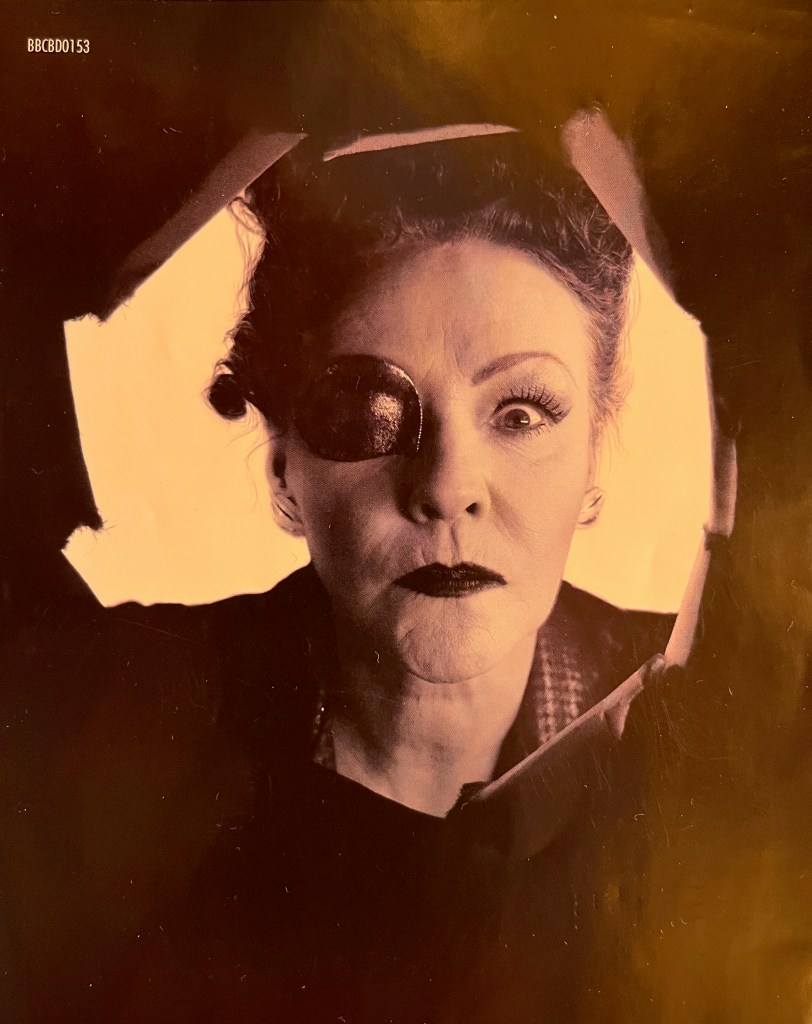
In particular, thanks to an order from a Silent she stumbled across in the White House bathroom, Amy tells the Doctor that she’s pregnant – only to later backtrack on that by telling him and Rory that she had made a mistake. The Doctor isn’t convinced though, especially as the Tardis scanner can’t make up its mind if she’s pregnant or not. And while exploring the children’s home, Amy sees a woman with an eye patch looking through a hatch at her, and she finds a photo of herself holding a baby.
There’s also a shock for Amy at the end of the first part, when the astronaut appears again, next to an unconscious Clayton, and without thinking she grabs his gun and fires at the spacesuit, only to discover there’s a little girl inside, the one who had made the phonecalls.
River, meanwhile, gives the Doctor a passionate kiss goodbye when he’s returned her to the prison, but to her dismay it’s the first time he’s experienced her doing that to him, so he feels incredibly awkward about it, whereas in her timeline they’ve embraced like that before. She also makes reference early on in the story to the fact that a worse day is coming for her.
And then finally, 6 months later, a dying homeless girl in New York repairs herself by regenerating…
So it’s a fabulous start to the series, with lots of action, intrigue, tension and mystery, great views of the American landscape, and plenty of things to learn about in later episodes. It kicks everything off really nicely.
In terms of the music, the first 10 tracks on the album are from this 2-parter. Among them, my favourites include the very apt opener I Am The Doctor In Utah, which updates that iconic theme with a nice guitar part, the beautiful episode title tracks for The Impossible Astronaut and Day Of The Moon, and the powerful and dramatic Help Is On The Way.
But best of all is the absolutely glorious bonus track that’s used to conclude the album, taken from the end of the second episode, called The Majestic Tale (Of A Madman In A Box). It builds strongly from the outset and is as majestic, triumphant and uplifting as the name implies, so it’s one of Murray’s best ever pieces. It’s a shame it has to fade out at the end really, as even then you can hear the choir getting louder, but hearing the voices trail off into the distance is a bit like the Doctor waving goodbye as he soars off into the universe for more adventures. There was a sequel track to this for Peter Capaldi’s Doctor in Series 8 as well, called The Majestic Tale (Of An Idiot With A Box), which I also love.
3. The Curse Of The Black Spot
- Writer – Stephen Thompson
- First Broadcast – 7 May 2011
- Links – BBC / Wikipedia / Tardis Wiki
This episode is all about pirates marooned at sea, and in the prequel, lasting just 1½ minutes, we see images of the “good ship Fancy”, as Captain Henry Avery (loosely based on real-life pirate Henry Every) narrates a journal entry about how something from the water is taking members of the crew.
He’s played by another significant guest actor in the form of Downton Abbey and Paddington star Hugh Bonneville, who had also been in the Doctor Who audio drama The Angel Of Scutari a couple of years earlier. So as you can imagine he’s brilliant in this story.
When the Doctor, Amy and Rory arrive on board at the start of this episode, they’re treated with distrust and deemed to be stowaways. But Amy saves the Doctor from walking the plank by donning a pirate outfit and getting into a sword fight, which is pretty cool! A crew member and Rory are both hurt as a result though, and that’s when our heroes discover what’s going on.
Anyone who becomes injured or sick is instantly marked with a black spot on their hand. A beautiful lady called the Siren (Lily Cole) then appears and charms them with her hypnotic singing (performed by Halia Meguid), before making contact with them so that they disappear. The crew member suffers this fate, while a delirious Rory is held back to stop the Siren taking him, which she isn’t happy about.
It also becomes apparent that the Siren can manifest through any reflective surface, not just water. And even the Tardis has gone out of control and disappeared, which naturally worries the Doctor, meaning they can’t just use that to escape.
So the Doctor, his companions and the pirates have to find a safe place to hide on the ship. And when they do, they discover an actual stowaway – the captain’s son Toby (Oscar Lloyd, another excellent child actor), whose mother had died back at home without the captain’s knowledge. So there are moving moments when Toby tries to confront his father about not having seen them for a long time. And Toby also has a black spot on his hand, as he’s quite sick.
The tension therefore gradually ramps up as they try to keep the Siren at bay, and the Doctor tries to work out what’s going on. But when a big storm hits, the Siren does take Toby, and also Rory after he falls into the ocean. So in an effort to see where they’ve gone, as there’s hope that everyone is still alive, the Doctor, Amy and the rest of the crew each draw a bit of blood to allow themselves to be taken as well.
As a result, they find themselves on a spaceship, invisibly parked in the same place as the pirate ship, and discover that the Siren is a virtual doctor, who has placed everyone she’s taken in a sick bay, keeping them on life support devices. And while Toby’s illness is incurable, Rory can be saved. He will continue the effects of drowning as soon as he’s taken off the life support, but being a nurse, he’s able to tell Amy how to save his life with CPR – which she then attempts to do in the Tardis. For a while it looks as though she’s failed, and it gets very emotional for her and the Doctor, with even the music building to the conclusion that he hasn’t survived. But he does pull through, much to everyone’s relief.
Amy and Rory then go off to rest and recover, still uneasy about not being able to tell the Doctor about his future death, while the Doctor has another look at the conflicting scans of Amy’s pregnancy. Amy has also had another glimpse of the lady with the eye-patch during the episode as well.
Captain Avery, meanwhile, decides to remain on the spaceship with Toby. And as it no longer has any crew of its own, he takes charge of flying it, with the help of Toby on life support, and the rest of his pirate crew mates. So they head off into space together – and it’s not the last we see of them…
For the music, tracks 11-15 on the first disc of the soundtrack album come from this episode. I like You’re A Dead Man, which starts off fairly calmly, but with a sense of foreboding, before the Siren’s voice comes in and it becomes much more fast-paced and dramatic. Likewise Deadly Siren, one of the 3 tracks on the album clocking in at 5½ minutes, is practically a suite with a wonderful mixture of textures and moods, and the Siren’s voice again of course. And All For One is powerful from the outset, to complete my top 3.
4. The Doctor’s Wife
- Writer – Neil Gaiman
- First Broadcast – 14 May 2011
- Links – BBC / Wikipedia / Tardis Wiki
The Doctor has a great affection for his Tardis, so he often talks to it, and we know that it’s alive at its heart. But what if he could actually have a two-way conversation with it? What if it were represented by a person? That’s exactly what we get to explore here, in a very entertaining and award-winning story by Good Omens creator Nell Gaiman. There’s never been a story where the Tardis takes centre stage like this, so it’s long overdue, and quite fascinating as a result.
The Doctor is lured to an asteroid outside of our universe by a distress call from one of his fellow Time Lords, all of whom he had assumed were dead. But when he, Amy and Rory land there, the Tardis dies, its soul having somehow vanished, and they’re welcomed by a strange couple who call themselves Auntie and Uncle (Elizabeth Berrington and Adrian Schiller). He then later discovers, to his fury, that they’re patchwork people, made from the body parts of Time Lords who had previously visited and perished there. Plus there’s an Ood as well, which has been enslaved.
But most importantly, there’s another woman present, called Idris, who appears to have gone mad – because the soul of the Tardis has been transferred inside her and it’s taken over her mind and body. And once the Doctor is eventually convinced that she’s a living version of his machine, the two of them have wonderful interactions together, which are often quite amusing – such as her confession that she stole him rather than vice-versa, his embarrassment at calling the Tardis “sexy”, her irritation that he pushes the door open rather than pulls it, and the fact that she always takes the Doctor where he needs to go even if it’s not where he wants to go.
Idris is played superbly by Suranne Jones, for whom this wasn’t her first experience in the world of Doctor Who, as she had already starred in Series 3 of spin-off The Sarah Jane Adventures two years earlier, in the episode Mona Lisa’s Revenge.
To complicate matters further, the asteroid is actually sentient, being an entity called House, voiced with incredible gravitas by the magnificent Michael Sheen – who of course went on to star with former Doctor David Tennant in Good Omens and Staged, plus I loved seeing him on stage playing Nye Bevan at the National Theatre last year.
Knowing that there are no more Time Lords out there, and that his bubble universe is going to cease existing soon, House transfers his own consciousness into the Tardis and tries to fly it back through the rift to our universe, with Rory and Amy trapped inside. And rather than just kill them, he messes with their heads by having them run around the corridors, even separating them and playing with time to distress them further. So that’s quite a fun and sometimes scary subplot.
Fortunately, the Doctor realises that the junk on the asteroid is from the Tardises that have previously landed there. So he works with Idris to put together a Tardis console (a great collection of random items which was actually designed by a child who won a contest on Blue Peter), and they use that to chase the Doctor’s Tardis.
Idris is able to send a telepathic message to Rory, that sends him and Amy to one of the archived console rooms – specifically the one used by the 9th and 10th Doctors, which is a wonderful surprise to see again. This allows the Doctor and Idris to come on board, and from there eliminate House by restoring the soul of the Tardis – though only after a very emotional farewell between the Doctor and Idris, which only makes their connection stronger.
So it’s a beautifully written and performed episode, offering a very unique insight into the close relationship between the Doctor and his beloved machine. The Tardis has always been a vital and central character in the series, so it’s high time it was celebrated and explored more. And yet again there are incredible guest stars who really bring this story to life.
There’s also a bit of foreshadowing during the episode, as Idris tells the Doctor that “the only water in the forest is the river”, which becomes relevant in a few episodes’ time. And when the Doctor is talking about the Time Lord called the Corsair who had sent him the distress call, he mentions that they had regenerated into a woman a couple of times, further underscoring the fact that a Time Lord becoming female is perfectly legitimate and canon, despite complaints from some people when Jodie Whittaker arrived on the scene several years later.
As for the music, there are just 4 tracks for this episode on the album, lasting less than 5½ minutes in total. I’ve Got Mail is nice though nothing exceptional to speak of, while My Tardis has some quite sweet moments, as it really does feel like the Doctor and his machine are connecting with one another, and even sounds like they’re dancing together at one point. Run, Sexy then starts off feeling very tense and builds to a dramatic finish, and Locked On has an action-packed opening and an atmospheric ending.
Finally, this story was so well received that Neil Gaiman was invited to write another for Series 7, called Nightmare In Silver, and he wrote Rory’s Story that was posted online during lockdown in 2020. So I’ll talk about those more in my next review post.
5 & 6. The Rebel Flesh / The Almost People
- Writer – Matthew Graham
- First Broadcast – 21 & 28 May 2011
- Links (5) – BBC / Wikipedia / Tardis Wiki
- Links (6) – BBC / Wikipedia / Tardis Wiki
The underlying premise of this story is pretty simple, but it has big ramifications, especially for Amy.
The Doctor, Amy and Rory go to an island monastery, where a team of people are mining acid and pumping it back to the mainland. But because the acid is so toxic, the group are using a special type of matter called the Flesh to create doppelgängers of themselves – called Gangers for short – who they can control remotely to do the dangerous work for them. That way, if a Ganger is injured or killed by the acid, another one can be grown quickly to replace it.
The Gangers are identical to their human counterparts in every respect, from their appearances and clothing to their memories and thoughts, so they consider themselves as humans. And when a solar storm strikes the monastery, the links between the humans and their Gangers are severed, meaning the Gangers become independent and determined to survive, even if that means going to war with their human creators. So there’s plenty of tension, danger and emotion throughout the story, and questions to be asked as to whether they deserve to live now that they’re living entities in their own right.
In amongst it all, the Doctor – who is trying to keep the peace between the two sides – also ends up with a Ganger of his own, and the only way to spot the difference between the two Doctors is their shoes (the real Doctor had to change his shoes after they got ruined by the acid, but the Flesh had only taken a sample of him with his original shoes on). It’s a lot of fun seeing Matt Smith playing against himself, as tricky as it must have been to film. And I like his references to previous regenerations, by mentioning Jelly Babies (a nod to Tom Baker’s Fourth Doctor) and reversing the polarity of the neutron flow (from Jon Pertwee’s Third Doctor). Plus at one point he says he wants to be called John Smith, an alias he sometimes uses (such as in the Human Nature story in Series 3).
Rory also gets to have an interesting adventure of his own, which is great to see, as he forms a bond with Jennifer (Sarah Smart) and is determined to protect her, not realising that it’s the Ganger version of her tricking him. And this obviously causes great concern for Amy.
But there’s a much bigger problem in store for the companions, when the Doctor reveals why they really visited the monastery. During the story he appears to dismiss her concerns about the lady with the eye patch, after Amy sees her again and finally tells him about it. But he’s actually been monitoring her, even deliberately swapping shoes with the Ganger Doctor to make her think it’s the real one. That, in fact, leads her to tell the real Doctor about his upcoming death, while believing he’s the Ganger.
So when they return to the Tardis at the end, the Doctor reveals that Amy has actually been a Ganger for quite some time. And he’s clearly angry at whoever might be responsible, given how firmly he orders Rory to stand away from her. So after promising her that he will find her, he destroys Ganger Amy, which causes the real one to wake up in a clinical facility, discovering to her horror that she really is pregnant, as the eye patch lady urges her to push.
It’s a huge twist to lead us into the mid-season finale, and even on a rewatch it still hits hard even though you know it’s coming, it’s cleverly done. Knowing that Amy was never real throughout the first half of the series adds yet another layer of confusion and mystery to everything, but in a good way. And there’s one more big twist to come in the next episode, when we learn why the baby is so important.
For the music, tracks 20 to 27 on the album are used for these two episodes, amongst which I would say my favourites are the atmospheric The Chemical Castle, the energetic Double Doctor, and the beautiful Loving Isn’t Knowing (The Almost People Suite), the latter being one of the triplet of 5½-minute pieces on the album, incorporating Amy’s Theme and her big cliffhanger.
There are also a couple of contemporary songs used in these episodes as well. During the opening scene in the Tardis before they arrive at the monastery, Supermassive Black Hole by Muse is playing in the background, while inside the monastery the Gangers enjoy listening to You Don’t Have To Say You Love Me by Dusty Springfield, both of which are great tracks.
7. A Good Man Goes To War
- Writer – Steven Moffat
- First Broadcast – 4 June 2011
- Links – BBC / Wikipedia / Tardis Wiki
This is the first of 2 finales this series, as it took us into the mid-series break on its original transmission – the first time a series in the modern era had been split in this way – and it’s suitably epic as a result, including a hugely significant revelation for the cliffhanger.
The prequel sets the tone by showing a deal being done between blue-headed Dorium (Simon Fisher-Becker, who had previously appeared in the Series 5 finale) and a couple of Headless Monks. He gives them a Judoon’s brain that contains security information, but also urges them to be cautious, as he knows they’re trying to imprison a child that has something to do with the Doctor, and they’ll no doubt regret it if they’ve made him angry.
The episode itself then opens with Amy imprisoned in an asteroid base called Demons Run by Madame Kovarian (Frances Barber), who takes Amy’s newborn baby Melody. She’s the lady who Amy’s duplicate had been seeing during her travels with the Doctor throughout the series, as the reality had been bleeding through whenever Kovarian checked on her.
Amy of course warns them that the Doctor will be coming. And indeed he is, although we don’t see him until 19 minutes into the episode. Instead, Rory – dressed in his Centurion outfit again – gets to be the tough guy, as he defiantly confronts a group of Cybermen, demanding to know where his wife is. The moment where the Cyber ships explode behind him, as he faces them with stern resolve, is a really cool shot to take us into the opening titles.
Rory then goes to meet River Song at the Stormcage prison, asking her to help them rescue Amy’s daughter, but to his surprise she says she can’t come along until the very end. She knows the Doctor will rise higher than ever before, only to fall further than he ever has, and it’s the day he’ll find out who she really is.
Meanwhile the Tardis appears in some other places as the Doctor calls in favours to help fulfil his mission. In Victorian London there’s a Silurian called Madame Vastra (Neve McIntosh, who had been a different Silurian in Series 5’s Hungry Earth story) and her human maid Jenny Flint (Catrin Stewart). And in the future we meet Strax (Dan Starkey), a Sontaran who has been forced to work as a nurse since his race was defeated by the Doctor. Altogether, Vastra, Jenny and Strax are an enjoyable trio known as the Paternoster Gang, and they became so popular that they appeared in 4 more episodes between 2012 and 2014, and even had their own spin-off audio series with Big Finish.
They all converge at Demons Run, where the Doctor surprises the army awaiting him by disguising himself as a Headless Monk. He then turns the monks against the warriors, takes control of the base, and forces Kovarian to flee, thanks to the assistance of the Paternoster Gang, as well as cameo appearances by Danny Boy in his spitfire from Series 5’s Victory Of The Daleks, and pirates Henry & Toby from from earlier in this series. Meanwhile Rory returns baby Melody to Amy, and the two of them are reunited with the Doctor.
It’s all very exciting to watch, as the episode doesn’t let up on the pace. But it’s also too easy of course, and it becomes apparent that the surrender was just part of an elaborate distraction, allowing Kovarian to take the real baby away. Amy had merely been given a duplicated Ganger baby, thus leaving her understandably distraught when it dissolves into a gloopy mess. That comes after a big battle which seemingly costs Strax his life, along with a young lady called Lorna Bucket (Christina Chong), who had encountered the Doctor as a child in the past, and had also given Amy a special prayer leaf with her new daughter’s name on it, written in the language of the Gamma Forest.
Only then, after the fighting is over, does River Song materialise on the scene, much to the Doctor’s anger. But she makes the Doctor face the harsh reality that he’s perceived by many not as a healer, as his title might imply, but rather an evil warrior to be feared, given all the races he’s defeated across time and space. It’s similar to the lesson he was taught by Davros in the Series 4 finale, where he was made to think about all the people who had given their lives for him. He’s devastated to have lost Amy’s baby in this way, but the Doctor needs powerful reminders like this every so often to stop him getting carried away. He’s not perfect, and this show never pretends that he is.
It thus explains why baby Melody has been taken. She was conceived on the Tardis while travelling through the time vortex, so she’s likely to have acquired some Time Lord qualities, including the ability to regenerate. Madame Kovarian has therefore taken Melody, in order to turn her into a weapon against the Doctor. To go to such lengths just demonstrates how much he’s feared.
But there’s a far bigger, and thankfully nicer, surprise for him, when River also reveals to him who she really is, much to his giddy delight. In response he excitedly flies off in the Tardis, leaving Amy and Rory behind, and Amy confronts River, demanding she also be told who she is.
River Song obliges, using the prayer leaf and the Doctor’s old cot to show Amy and Rory that she’s their daughter, Melody Pond – as the only word for the water in the forest is River, and Melody is another word for Song.
The revelation is an absolute stroke of genius by Steven Moffat, which explains everything, changes everything and further complicates everything. It’s impressive that he’d had that in mind for such a long time, and that they managed to keep the cliffhanger a secret until it was broadcast. It really was a monumental moment amongst the fanbase at the time. So even when you rewatch the episode, fully aware of its conclusion, it’s still brilliant because of the way it’s revealed (including some misdirection along the way that makes you wonder if River is the Doctor’s daughter or mother).
And when you watch the first half of the series back again, various clues that had been left along the way suddenly become very obvious, particularly Idris in The Doctor’s Wife saying that the only water in the forest is the river. Similarly, when revisiting all of River’s previous episodes from Series 4 onwards, it puts a whole new spin on her relationship with the Doctor, as it makes a lot more sense. Moffat’s planning and execution of River’s intricate story arc was amazing, and at this point there’s still plenty more of it to come.
The big reveal is also accompanied by one of my favourite ever pieces of music by Murray Gold on the soundtrack album, appropriately called Melody Pond, as it’s beautiful and builds to its conclusion perfectly. That comes after 3 other tracks that are specific to this episode, including the pleasant River’s Waltz (which gets a bit dramatic near the end), the pacy and powerful Pop, and (after its ominous intro) the lovely Tell Me Who You Are.
Incidentally, and presumably coincidentally, it’s interesting to note that, in the previous couple of years, Alex Kingston had played a character called Miranda Pond in 4 episodes of Law & Order: Special Victims Unit. I wonder if she knew or found out about River’s identity during that time.
8. Let’s Kill Hitler
- Writer – Steven Moffat
- First Broadcast – 27 August 2011
- Links – BBC / Wikipedia / Tardis Wiki
The prequel to this very eventful episode basically serves as a recap after the 12-week break, with Amy leaving a message on the Tardis answerphone, asking if the Doctor has found baby Melody yet. There are lots of nice close-up views of the Tardis console while she speaks, implying that the room is empty, but at the end we see that the Doctor has been listening, and he’s clearly upset.
Then, in the episode itself, Amy and Rory finally manage to get the Doctor’s attention by making a crop circle spelling his name. But they’re also joined by a young lady called Mels (Nina Toussaint-White), who has been a close friend of Amy and Rory’s since childhood. There’s a nice montage of the three of them growing up together, with Mels regularly getting into trouble at school and with the police, as well as making Amy realise how much Rory fancies her.
Of course, with Mels having been such a constant part of their life, and with a different skin colour after her regeneration in New York at the end of Episode 2, it doesn’t register with Amy and Rory that she could possibly be their daughter Melody, but I think it’s pretty obvious to the audience given her name and attitude. And that’s a good thing, as it makes you want to see how she becomes River Song.
With the police on her tail for stealing the car she arrived in, Mels forces the Doctor at gunpoint to take her, Amy and Rory away in the Tardis, and then shoots the console, much to the Doctor’s consternation, causing the ship to fly out of control. Mels had suggested that they kill Hitler, and that’s what they almost do, when the Tardis crashes through the window of Hitler’s office in Berlin in 1938, which is a fast but very cool effects shot.
In the process they knock over a German officer who was about to serve justice on Hitler himself. The man isn’t real, however, just a duplicate – but he’s not a Ganger either. Instead, they’re a Teselecta, a time-travelling, shape-shifting robot piloted by people who have been miniaturised to operate it from the inside. They work on behalf of The Justice Department, who hunt down criminals across time and space, taking them out of their timeline near the end of their life in order to torture them for everything they’ve done.
So our heroes inadvertently save Hitler’s life, but at a cost. Because when Hitler then tries to shoot the Teselecta, he misses and hits Mels instead. And that’s when the Doctor, Amy and Rory discover her true identity, as she regenerates into River Song (though she doesn’t know that’s her new name yet). It’s a lot of fun seeing her explore her new body.
She’s been programmed to kill the Doctor though – hence making friends with Amy and Rory early on, knowing that eventually they would lead her to him. He’s one step ahead of her, foiling each of her attempts, until she seals the deal with a kiss, using poisoned lipstick, and makes good her escape.
That leads him to plead with the voice interface of the Tardis for help to find a cure, to no avail. While doing this, he cycles through avatars to visually represent the interface, including former companions Rose, Martha and Donna – all of whom he associates with feelings of guilt, because of how he messed their lives up in one way or another. But he finally settles on little Amelia Pond (Caitlin Blackwood), who it’s lovely to see again both here and in the earlier childhood montage. There’s a sweet reference to fish fingers and custard too, from when they first met.
Meanwhile, Rory and Amy find themselves miniaturised and shrunk into the Teselecta. They’re almost killed by the Anti-Bodies – jellyfish-like robots that eliminate any intruders – but they’re saved and end up in the control room with the crew, where they can see through the Teselecta’s eyes.
The Teselecta then tries to kill River, given that she’s responsible for the Doctor’s death – but he stops them from doing so, questioning which Doctor she’s meant to have killed given that he’s still alive, by asking “Doctor Who?” – it’s often amusing when they work the title into the show like that. He learns that River was sent to kill him by The Silence, a religious order that believes silence will fall when a specific (but at this point unknown) question is asked.
Meanwhile, Rory and Amy escape the robot by turning the Anti-Bodies against the crew, and they’re rescued by River, who discovers she can fly the Tardis.
The Doctor is by now on the brink of death, and the poison has even prevented his ability to regenerate. But he and Amy are able to persuade River to help him, and she makes a spectacular sacrifice by using up all of her remaining regenerations to bring him back to life. It’s a really touching moment, and in return he gifts her the blue Tardis-like book that would become her diary.
So it’s a very busy story altogether, and it doesn’t really have much to do with Hitler – although there is a very amusing moment when Rory gets to shut him in a cupboard. But ultimately it ties up a lot of loose ends in River’s storyline, while deepening the mystery of the Silence and the Doctor’s death in America. So it’s a fantastic way to kick off the second half of the series.
Likewise, the music for this episode is at the start of the second disc on the soundtrack album, represented by 8 tracks altogether. These include the light-hearted pieces Growing Up Fast (from the childhood sequence) and When A River Forms (from her regeneration), the dramatic Pay Attention Grown Ups that gradually gains power as it progresses, and – my favourite – the gorgeous 4-minute Enigma Of River Song.
9. Night Terrors
- Writer – Mark Gatiss
- First Broadcast – 3 September 2011
- Links – BBC / Wikipedia / Tardis Wiki
This is a much simpler story than the recent episodes about River Song, but it’s also more sinister and suspenseful, as you’d expect from Mark Gatiss. And it works very well. It’s also a stand-alone episode, in that it has no relevance to the narrative arc of the series as a whole, apart from a little teasing moment at the very end.
The Doctor is drawn to a seemingly ordinary housing estate by a little boy called George, whose desperate pleas to be saved from monsters reverberate through the cosmos to the Tardis. George is played by a marvellous kid called Jamie Oram, who absolutely nails the fear and trepidation of his character, and makes you feel really sorry for him. It’s in complete contrast to what he’s like off set as well, as you get to see how bubbly and chatty he is in the Confidential documentary. Jamie also voiced a character called Charlie in the Doctor Who Adventure Game entitled The Gunpowder Plot that came out in 2011 (and you can find out more about those games in my Series 5 review).
The Doctor investigates with the help of Alex, George’s Dad (Daniel Mays), and discovers that there really are monsters in the cupboard, which the parents hadn’t believed. Amy and Rory are discovering this first hand though, having been shrunk in size for the second episode in a row, this time ending up in a doll’s house in the cupboard. The landlord and an old lady from the estate also end up there, as do the Doctor and Alex eventually, after they bravely open the doors of the cupboard. That in itself is scary enough, but there are terrifying wooden dolls that have come to life there, and anybody they touch turns into one of them – including Amy and the landlord.
The Doctor figures out that George isn’t an ordinary boy though, instead being an alien Tenza child who has taken on the appearance of his human parents’ desired offspring, yet lives in fear of being rejected by them. And so, with the help of father Alex in a very sweet moment, the brave young lad is able to save them all. It makes for a lovely, happy ending – although the unsettling and ominous Tick Tock nursery rhyme sung by some children at the end hints at the Doctor’s impending assassination as well.
That song is actually part of the track selection for the series finale on the album, where it’s most relevant. For this episode, however, there is a more innocent and uplifting instrumental version on the album (that gets a little bit dramatic near the end), along with a sweet piece called Bedtime For George, a suitably atmospheric and sometimes creepy 4-minute suite called A Malevolent Estate, and another sinister track called Night Terrors that also incorporates the Tick Tock theme. They all set the tone very effectively.
10. The Girl Who Waited
- Writer – Tom MacRae
- First Broadcast – 10 September 2011
- Links – BBC / Wikipedia / Tardis Wiki
Poor old Amy – quite literally in this case. As if she hasn’t had enough to deal with lately, she has another tough time in this episode. But good old Karen Gillan, as she gets to show off more of her acting range here, by playing 2 different versions of her character.
When she, Rory and the Doctor land in a strange facility, Amy inadvertently enters a room that’s on a different time stream to her friends. And from their perspective, time is moving much faster for her.
It transpires that they’ve landed in a quarantine building, due to a dangerous plague in the outside world that kills creatures with 2 hearts like the Doctor. So, thanks to that convenient plot device, he can’t just wander around the place in person to try and resolve things, and has to stay in the Tardis. Instead, therefore, he tells Amy to wait in the facility and to send him a signal as to where she is. And when he gets a fix on her location, he sends Rory out to look for her, wearing a pair of smart glasses that allow the Doctor to see and hear what’s going on, and to communicate through them.
When Rory locates her, however, time has moved on so rapidly that she’s now 36 years older. It was bad enough that as a child she had to wait 12 years for the Doctor when they first met – so spending three times that long in limbo, looking for a way to escape while trying not to be killed by freaky robots that are claiming to show “kindness’, has naturally had an effect on her. She’s lost her faith in the Doctor, and has become a badass warrior who is very handy with a sword, her self-made sonic probe and her physical moves.
She therefore refuses to help the Doctor and Rory find the young Amy, because it will mean that this older version of her is wiped from existence. But the Doctor is able to generate a connection with her younger self, who persuades her older counterpart to assist them. And that leads to the 2 versions of Amy meeting in person, fighting off the Handbots together.
The older Amy wants to join them on the Tardis though, which the Doctor knows is a paradox that must never happen. So when the younger Amy makes it back on board and the Doctor locks the older version out, there is a very moving scene where Rory gets angry with the Doctor and has a long, heartbreaking farewell with older Amy, who resignedly agrees that she should never be let on board.
So it’s another really good episode, with excellent performances by Karen Gillan as two distinct versions of Amy and Arthur Darvill going on an emotional rollercoaster as Rory. We also learn much more about how deeply Amy and Rory love each other, which is really sweet, and it’s nice that the two of them take centre-stage for such a character-led story, with the Doctor on the sidelines.
On the soundtrack album there are just 3 tracks for this episode – Apalapucia (which sets the general atmosphere), 36 Years (an alternative version of Amy’s Theme), and Lost In The Wrong Stream (my favourite of the three, as it has a variety of textures, surprising you regularly during its 3½-minute length).
11. The God Complex
- Writer – Toby Whithouse
- First Broadcast – 17 September 2011
- Links – BBC / Wikipedia / Tardis Wiki
In another episode that stands apart from the main story arc of the series, The Doctor, Amy and Rory arrive in a very unusual hotel, where corridors stretch and rooms move around, causing them to lose the Tardis early on. Every visitor has a room that’s specially for them, containing the thing they fear most, which could be anything from an irate PE teacher to Weeping Angels. And once they see it, they become possessed and start to praise a roaming minotaur (Spencer Wilding) as if it’s some kind of deity, welcoming the death it brings when it finds them. One such victim they meet early on is a man called Joe (Daniel Pirrie), who has gone quite delirious.
Nobody goes there by choice either, they just suddenly find themselves teleported there. So we meet some other guests who are trying to survive. They include a clever young Muslim lady called Rita (Amara Karan), who the Doctor takes a shine to and invites to become a companion, so her death during the episode sends him into a rage. And another one who comes a cropper is Howie (Dimitri Leonidas), who is obsessed with conspiracy theories.
The other guest is an alien called Gibbis, played really nicely by David Walliams, demonstrating that he has much greater acting ability than his Little Britain sketch characters might imply. Former Doctor Tom Baker provided the voiceover for that series, because David was a fan of Doctor Who, and David’s co-star Matt Lucas would later play Nardole, a companion of the 12th Doctor (Peter Capaldi) in Series 10.
Gibbis is from the Tivolian race, whose method of survival is cowardice, meekly surrendering in response to invasions by other species, even making things as comfortable as possible for potential conquerors. It also means they’re very easily persuaded to do things, so against the Doctor’s orders he releases a restrained Howie, thereby enabling his demise.
The Doctor looks inside his own room briefly – appropriately numbered 11 – but we don’t see what’s in there. It’s not until Matt Smith’s final episode in 2013, The Time Of The Doctor, that we learn he saw the crack in time, which formed a central part of Series 5, because he holds himself responsible for it.
That isn’t enough to make him possessed, but even so he does go on a difficult emotional journey soon after, and not just because of Rita’s death. It dawns on him that the minotaur isn’t feasting on people’s fears, but their faiths – not in a religious sense, but just anyone or anything that people turn to faithfully to reassure and distract them when they’re scared. The Doctor has encouraged everyone to focus on their faiths to help them get over their fears, little realising that he’s been leading them into a trap.
Consequently, when Amy gets the urge to start praising the beast, the Doctor has to shatter her faith in him in order to save her. He admits to her that he really is just a madman in a box rather than a hero, which is clearly very difficult for him to do, and for her to accept. But it works, effectively cutting off the food supply for the minotaur, and it retreats, before dying with the Doctor by its side. The hotel is revealed to have been a prison for the creature, and it had actually wanted to die, but it had felt compelled to feed on faith whenever it was presented. It also uses its final words to point out to the Doctor that he’s an ancient man drenched in the blood of the innocent, thus adding a further punch to the message that River Song gave him in the mid-season finale.
That in turn leads the Doctor to make the heartrending decision to leave Amy and Rory, by dropping them off at a new home he’s got for them, along with a new car. He’s had a stark reminder of the impact he has on people’s lives, making him realise that they’ve suffered enough and he doesn’t want to be responsible for their deaths. So there’s a sad but understanding farewell, before we see the Doctor cutting a lonely figure in the Tardis, which is a very moving way to end the episode. It’s not the last time we see Amy and Rory, far from it, but in that moment it feels like it could be.
So it’s a very interesting story, given the concept of people encountering their own unique fears, and because of the impact it has on the Doctor, which Matt Smith puts across superbly. And as for the music, there are 5 short tracks for this episode on the soundtrack album (the longest being just 1 minute 22 seconds), which are mostly electronic in nature. They include the cheesy muzak that plays in the hotel reception (The Hotel Prison), and I quite like the simple piano melody in What’s Left To Be Scared Of?. The other tracks all start off with action-related motifs before settling into a slower atmospheric style.
As a final aside, this wasn’t David Walliams’ first foray into Doctor Who. Back in 1999 he had played a character called Quincy Flowers in a Big Finish audio production called Phantasmagoria, alongside Peter Davison as the Doctor. That was written by Mark Gatiss, who had a role in the play as well, and David also appeared with him in 3 mildly amusing comedy sketches for Doctor Who Night on TV the same year.
12. Closing Time
- Writer – Gareth Roberts
- First Broadcast – 24 September 2011
- Links – BBC / Wikipedia / Tardis Wiki
There’s a much more light-hearted feel to this enjoyable episode, as we warmly welcome back James Corden as Craig, in a sequel to The Lodger from the previous series. He and Matt Smith make a wonderful double act together, and in the Confidential documentary accompanying this episode it’s really funny to see them going a bit crazy while keeping a video diary of their time together.
Having left Amy and Rory at the end of the previous episode, and knowing that his death in America is imminent, the lonely Doctor decides to drop in on Craig, who is struggling to cope with looking after his new baby Alfie while his girlfriend Sophie (Daisy Haggard) is away.
Indeed, there is a prequel to this episode on the DVD & Blu-ray releases called Up All Night (the final part of the Night & The Doctor collection), where Craig talks to Sophie about how terrified he is to be caring for the baby in her absence.
So Craig is grateful when the Doctor demonstrates his knack of making Alfie be quiet with a simple shushing gesture (which works on adults like Craig as well), and is amazed that the Doctor actually understands what the baby is saying.
However, there’s some unusual electrical interference going on, particularly in a local department store, plus a few people have disappeared. The Doctor tries to resist investigating, not wanting to put people in danger again, but of course he gives in. And Craig insists on joining him, knowing that he and his baby are safest being with the Doctor, though the Doctor doesn’t particularly agree.
It’s very amusing to see them trying to figure things out in the shop, especially when Craig is unintentionally creepy to Kelly (Holli Dempsey), a sales assistant in the lingerie section. That scene also has Radio 1 DJ Greg James making a fleeting background cameo appearance, as revealed in the Confidential documentary. Meanwhile another worker at the shop, Val, mistakes the Doctor and Craig as being a loving couple, thinking that they’re really cute together. She’s played by Lynda Baron, who I also like in her role as Nurse Gladys Emmanuel in the sitcom Open All Hours.
There’s also a very sweet moment when the Doctor spots Amy and Rory, and learns that Amy has become a bit of a local celebrity, being the face of a perfume advert with the very apt slogan “For the girl who’s tired of waiting”. He doesn’t approach them though, and it’s their only appearance in the episode.
But things take a more sinister turn when they discover Cybermats – little silver rat-like creatures that work for the Cybermen – darting around the store. They manage to catch one and take it back to Craig’s house to analyse it, but that leads to a moment where it attacks Craig, and the Doctor impressively smashes his way through the patio window to save him.
It gets worse for Craig too, because when they eventually stumble across the base that the Cybermen are using to rebuild themselves, they capture him and try to convert him into one of them. One of the aspects of becoming a Cyberman is having your emotions removed, but when Craig hears his crying baby, his parental love and instincts completely override their attempts to do that, and he’s able to break free of the suit he’s been encased in.
So everything ends happily for Craig, but the Doctor’s in a bleak place, as he regrets putting people in danger, and is resigned to his fate. And as Craig rightfully observes, he needs someone with him, but won’t admit it.
And from there, elements are set in motion for the big finale. The Doctor takes some blue envelopes from Craig’s house and his friend gives him a Stetson hat to wear for his trip to America, both of which we saw used in the first episode. The Doctor then says his farewells to some local children, who can tell that he’s troubled.
Meanwhile, elsewhere in the universe in the distant future, the identity of the astronaut who kills the Doctor is confirmed to be River Song, as part of a scheme by Madame Kovarian, who is forcing her to do it with the help of the Silence making River forget things. It was always obvious it was her, and easy to guess the way he would only appear to die without it actually happening, but it wasn’t clear how it would all come together. The ominous Tick Tock nursery rhyme then plays again at the end, just to set the tone.
As for the music, there are 6 tracks on the album for this episode. The first has a suitably light-hearted feel, and is called Stormageddon, Dark Lord Of All, reflecting the name that baby Alfie tells the Doctor he’d rather be called. The Ladieswear track has a similar vibe to it. Meanwhile, Fragrance is a lovely track, from when the Doctor sees Amy, and My Time Is Running Out is a thoughtful 5-minute piece, reflecting the Doctor’s state of mind as the end draws near.
13. The Wedding Of River Song
- Writer – Steven Moffat
- First Broadcast – 1 October 2011
- Links – BBC / Wikipedia / Tardis Wiki
The prequel for the series finale is naturally very teasing, with another version of the Tick Tock rhyme accompanying images of the Silence and a shot of River Song wearing an eye patch.
The main episode then revolves around the fact that time is collapsing. As we later come to learn, when River Song gets to the lake in America to kill the Doctor, the astronaut’s suit tries to take her actions out of her control, but her love for the Doctor gives her enough strength to stop it from happening. The trouble is, the Doctor’s death is a fixed point in time, so by interfering with the sequence of events, time stalls at 5:02pm on 22 April, causing the past, present and future to collide in a temporal pile-up.
Hence we see London in a completely mixed up state, with the skies full of pterodactyls, steam trains and cars, which does look pretty cool. There’s also the surprise return of Simon Callow as Charles Dickens, who had previously appeared in Series 1’s The Unquiet Dead (and there are also fleeting mentions of Rose Tyler and Jack Harkness later in the episode). Here Dickens is interviewed on the BBC’s Breakfast programme by Sian Williams and the now sadly missed Bill Turnbull. Americans, meanwhile, may recognise Meredith Vieira, who has a cameo as herself presenting the Today programme. It’s not a show I’ve ever watched, so she’s not familiar to me.
A much more significant returning figure is Winston Churchill, played brilliantly once again by Ian McNeice. The rewriting of history has elevated him from his previous role as Prime Minister in Series 5’s Victory Of The Daleks to the Holy Emperor. And he’s being advised by a soothsayer, who is of course the Doctor, who knows that he’s at the eye of the storm with time unravelling around him. The two of them also discover that Buckingham Palace, where Churchill now lives, is full of members of the Silence that they keep forgetting about.
The Doctor has also been travelling around to get information about the Silence, in particular from the shape-shifting Teselecta robot and the removed but still alive blue head of Dorium, both of whom we saw earlier in the series. Dorium explains that the Silence want to prevent the Doctor from having a future, because legend says that on the fields of Trenzalore, at the fall of the 11th, the oldest question in the universe will be asked that must never be answered – and at the very end we learn that the question is “Doctor Who?”. Given the Doctor’s survival in this story, therefore, this teases future developments in the next series.
Amy and Rory also return of course, who in this alternate reality are part of a team trying to work out why time has gone wrong, and through them the Doctor meets River Song and a captured Kovarian. They’re all wearing the eye patches, but we learn that they’re actually special drives that retain images of the Silence so you don’t forget them when you turn away. However, they are weaponised as well, so anyone wearing them can be killed on command, as the Silence try to do when they escape from their prisons. But it ultimately backfires on Kovarian when Amy ignores her pleas for mercy and puts the device back on the villain’s eye so it kills her. It’s an extreme act for this alternate reality version of Amy to take, one that the regular Amy feels awful about later as she remembers the events, but given what Kovarian did to her daughter Melody, you can hardly blame her.
The key event takes place on the top of the pyramid though, when the Doctor ‘marries’ River Song. Whether it can be considered a true wedding is up for debate, but its purpose is to bring River’s face close to the Doctor’s. He whispers something in her ear, which he claims out loud was his real name – a callback to River Song’s death in Forest Of The Dead in Series 4, where the Doctor expresses his surprise that she does actually know it.
But as is reiterated during this series, rule 1 is that the Doctor lies, and it’s later revealed that he told her to look into his eyes, to make her realise that the life-size Doctor is actually the Teselecta disguised as him, with the real Doctor miniaturised and hidden inside. That gives her comfort that she’s actually shooting the Teselecta on the beach and not him, so they kiss, causing them to return to the lake, and the assassination goes ahead. Time returns to normal and the Silence are fooled into thinking the Doctor is dead, so he’s able to slip quietly away, knowing that he needs to keep his head down for a while.
So it’s an enjoyable, epic story that wraps up the major points of the series nicely, and sets up a new mystery for the next series about Trenzalore. I don’t think it’s quite as strong as the mid-season finale, as that had the huge revelation about River Song’s identity and a lot of excitement leading up to it, and I think the Series 5 finale is also better. Plus I think using the Teselecta for his survival was obvious, because of the prominence given to its capabilities earlier in the series. But it’s still a great deal of fun nevertheless, as River Song is such a wonderful character.
The album, meanwhile, has 8 tracks from the episode, beginning with the sinister Tick Tock nursery rhyme. 5:02 PM then starts off in a pretty epic way, reflecting how busy everything has become since time stalled, before it settles down in the middle and gets a bit mysterious towards the end. Weirdly, however, the track is called 0.709722222 in various places online, because some spreadsheet or database has automatically converted the time to a number and nobody’s corrected it. Spreadsheets use the number 1 to represent a full day (think of it as 100% of the day), and therefore times within a day have values between 0 and 1. For example, the time 12pm is exactly halfway (50%), so has the value 0.5, while 6pm is 75% (three quarters) and becomes 0.75. Hence because 5:02pm is precisely 70.972222% of the way through the day (just under 71%), the title becomes 0.709722222. It’s incredible that nobody’s fixed that, so it makes more sense and allows people to find the track more easily.
The track Brigadier Lethbridge-Stewart also deserves a mention, because it aptly scores a moving scene in the episode where the Doctor learns of the character’s death. It was included in tribute to actor Nicholas Courtney, who had passed away earlier that year, in February 2011. He was an important and popular figure in the Classic era of the show, and made his only appearance during the modern era at the end of Series 2 of the Sarah Jane Adventures, in Enemy Of The Bane. So it was really lovely that they set aside a brief moment in the episode to honour his memory.
Then beyond that I also like Forgiven, with its reversed elements and triumphant conclusion, and the stirring 5½-minute piece named after the episode. But all the tracks are great.
Mini-Episodes: Night & The Doctor
- Writers – Steven Moffat (episodes 1-4) & Tom MacRae (episode 5)
- First Released – 21 November 2011
- Links – Wikipedia / Tardis Wiki
These entertaining and interesting mini-episodes are exclusive to the DVD & Blu-ray releases. The first 4 episodes are on Disc 3, and explore what the Doctor gets up to in the Tardis after his companions are in bed, plus they explain some key aspects of River’s storyline:
- Bad Night (3:37) – The Doctor returns from a party where important people have been turned into a goldfish and a fly, to Amy’s bemusement.
- Good Night (4:51) – When she sees the Doctor carrying a euphonium, Amy asks him what he does at night, and talks to him about how her life doesn’t make sense, as she has memories of 2 timelines since the Series 5 finale.
- First Night (2:15) & Last Night (3:34) – The Doctor rescues River from her first night in the Stormcage prison (where she’s being held for his murder despite him not actually dying), and he tells her the parents are asleep (referring to Amy and Rory). He also gives her instructions regarding her diary, to keep track of their out-of-sequence encounters, so it’s great to see the origin of that recurring plot point. She then goes to get changed, but another version of her enters the Tardis from a shootout and collapses in the Doctor’s arms. He then has to stop the 2 Rivers from meeting, only for a third to turn up, along with a future version of his Doctor. The two Doctors recall her death when he first met her back in Series 4, then the current Doctor introduces the younger River to the word “spoilers”, thus explaining her love of that catchphrase.
The remaining part, Up All Night (1:56), is on Disc 5, because it acts as a prequel to the episode Closing Time, so I’ve mentioned it with that episode above. An interesting point to note, however, is that it’s credited on screen to Steven Moffat, but it’s actually written by Tom MacRae. This is noted by a correction in the booklet with the old Blu-ray set, as shown at the very bottom of the image below, but it’s not mentioned anywhere in the steelbook edition.
Extras
The box set contains 5 audio commentaries plus 4 hours of bonus features, making around 7 hours 45 minutes of extra material altogether.
Audio Commentaries
There are 5 audio commentaries in this set, which is one less than the previous series. They’re not quite as engaging and interesting as some of the commentaries in previous series, especially those in the Russell T Davies era. And we don’t hear from Matt Smith or Karen Gillan unfortunately. But Arthur Darvill appears a couple of times, while Steven Moffat is part of the trio who discuss the finale, and we’re treated to a solo commentary by Neil Gaiman on his episode. So they are still interesting to listen to if you’re a die-hard fan and want some extra little bits of trivia, but I wouldn’t say they’re essential listening.
- 1. The Impossible Astronaut – Actor Arthur Darvill (Rory), Producer Marcus Wilson & Line Producer David Mason (for the filming in America)
- 4. The Doctor’s Wife – Writer Neil Gaiman is all on his own for this laid-back commentary, where he gives nice insights into the development of the story.
- 5. The Rebel Flesh – Actors Marshall Lancaster (Buzzer) & Mark Bonnar (Jimmy) with Director Julian Simpson.
- 7. A Good Man Goes To War – Actors Arthur Darvill (Rory) & Neve McIntosh (Madame Vastra) with Visual Effects Supervisor Tim Barter.
- 13. The Wedding Of River Song – Writer Steven Moffat, Actor Frances Barber (Madame Kovarian) and Director Jeremy Webb.
Doctor Who Confidential
Sadly, we’ve reached the final series of this brilliant behind-the-scenes programme, and it’s presented on the box set as follows:
- For the Christmas special we actually get the full hour-long edition included on the disc with that episode, which is wonderful.
- For the main 13 episodes, the final disc presents cut-down versions of Confidential as usual, running for a total of 2½ hours (so just over 10 minutes each on average). However, I’ve watched the full 45-minute editions that are available on BBC iPlayer, so that’s what I’m reviewing below.
- The last disc also contains an exclusive 15-minute bonus episode called The Nights’ Tale, which looks at the making of the first 2 Night & The Doctor episodes and the 2 Comic Relief sketches.
Altogether it’s a lot of fun and very interesting as always. Alongside the usual interviews and making-of material, we also get some nice Day In The Life segments that follow individual members of the cast and crew, and Neil Gaiman gets to poke around the prop store.
Plus, in terms of the lead actors, Matt, Karen and Arthur have a lot of fun and random chats on set, the three of them turn on the Christmas lights in Cardiff, Karen and Arthur take a fascinating tour of Monument Valley in America, Matt and Karen discover that Caerphilly Castle in Wales is haunted, Karen learns to drive for the very first time on a racetrack, and Arthur gets to swim with sharks.
On top of all that, we also get to see another mini-episode of the show called Death Is The Only Answer, where Albert Einstein (Nickolas Grace) accidentally arrives in the Tardis, which is good fun. It was written by a group of children from Oakley Church of England Junior School who won a Script to Screen competition. So the creation and filming of this fun little sketch is spread over a few editions of Confidential, before we then get to see the finished product in the final episode.
There’s also about an hour’s worth of extra Confidential clips on the BBC’s Youtube channel that are fun to look through, as most of them present brand new material, while a few of them expand upon footage that was in the show. So as well as a few extra glimpses behind the scenes, they also include blogger Charlie McDonnell (a founder member of the band Chameleon Circuit) meeting the cast and crew on set, Matt, Karen and Arthur doing amusing interviews with each other and singing silly songs together (Arthur’s very good on the piano too), Matt having a good laugh with James Corden, chats with David Walliams and Mark Gatiss, and a Q&A session at the school that won the script writing competition. It’s an enjoyably random mixture that showcases the happy atmosphere that was present during filming, especially between the three lead actors, and it’s a real shame those clips aren’t included on the Blu-ray set.
It’s also a real shame that Confidential ended at this point. Sure, it’s pretty obvious how a lot of things are achieved, and there were still behind the scenes features for later series that were released on DVD and Blu-ray or posted online. But Confidential was great at bringing everything together, by giving you lots of wonderful insights, putting things into context, showing how they related to the history of the show, and celebrating the work of the people behind the scenes who we otherwise would never get to see. Consequently it often pointed out things that you wouldn’t otherwise have noticed or known about, it gave you a window into the fun and banter amongst the cast and crew, and it inspired many people to explore careers in TV production and special effects. So it’s still very much missed.
It took 12 years before its successor, Doctor Who: Unleashed, began from the 60th anniversary specials onwards. And while it’s not quite as good as Confidential, it’s still a very enjoyable behind the scenes programme that I hope continues alongside future series of Doctor Who.
Other Bonus Features
There’s just over an hour of other material on the discs as well:
- Prequels (7:58) – There are short prequels for 5 episodes, lasting between 1 & 2 minutes each, as mentioned in my reviews above for The Impossible Astronaut, The Curse Of The Black Spot, A Good Man Goes To War, Let’s Kill Hitler and The Wedding Of River Song. They don’t add much to the stories, as they’re just little teasers that were originally posted online before each episode aired, but they’re nice to have nonetheless.
- Night & The Doctor (16:13) – 5 fun additional scenes, as reviewed above.
- Monster Files (43:21) – These features, which range from 9 to 13 minutes in length, take a closer look at the creation of the Silence, the Gangers, the Anti-Bodies and the Cybermats.
- Trailers (1:47) – Just a couple of promos for the first and second half of the series.
Other Content
Here are a few other bits and pieces that I haven’t already mentioned during this post:
- BBC Website – There are bonus video clips, picture galleries and more available on the episode pages for A Christmas Carol and Series 6 that are nice to look through as well. In the Clips section for each episode, for example, you’ll find trailers, previews, prequels and introductions, as well as bits and pieces from behind the scenes that aren’t in the Confidential documentaries. Meanwhile in the galleries you’ll find character images, storyboards, concept art, backstage photos and so on.
- National Television Awards – A fun sketch from January 2011 where the Doctor helps Dermot O’Leary get to the ceremony on time, meeting some famous stars including Ant & Dec, Bruce Forsyth, Amanda Holden and more along the way.
- Doctor Who Experience – This was an interactive exhibition that opened in London in February 2011, and also in Cardiff the following year. I didn’t get a chance to go, but it looks like it was very cool from the videos I’ve seen online.
- Children In Need – This is a little sketch from November 2011 where the Doctor strips off, donating his clothes for people to bid on to raise money for the charity. The winner paid £50,000 for the outfit, while other items up for sale included Pudsey bears signed by Matt Smith and John Barrowman that sold for £1,800 and £361.87 respectively. The Doctor’s appearance on the telethon was followed by a trailer for the next Christmas special.
- Other Dramas – In 2011, as well as Series 6 of Doctor Who, the three lead actors grasped a variety of opportunities to demonstrate their acting range and talents elsewhere too. Matt Smith played novelist Christopher Isherwood in the powerful BBC TV film Christopher And His Kind, Karen Gillan made her theatre debut as Shirley in the play Inadmissible Evidence by John Osborne at the Donmar Warehouse, and Arthur Darvill was also on stage at Shakespeare’s Globe playing Mephistopheles in Doctor Faustus by Christopher Marlowe.
- Douglas Is Cancelled – Much more recently, in 2024, Series 6 guest star Hugh Bonneville joined Karen Gillan & Alex Kingston in this ITV comedy-drama, that was also written by Steven Moffat, which I reviewed in July last year. It’s well worth a watch.
Conclusion
And now silence will fall, as we’ve reached the end of another review. I hope you liked it as usual. I myself have very much enjoyed revisiting these episodes, and I’ve dug out lots of videos and music tracks for my Youtube playlist as well.
Next up will of course be Series 7, which is again split in half, features the departures of Amy and Rory, introduces new companion Clara, has no multi-part stories for a change, gives us 2 Christmas specials, and takes us towards the show’s 50th anniversary. So there will plenty to look at as always. See you then!
Share this:


 Well Eye Never
One thought on “Doctor Who Review – Series 6”